
Orbital Matter Achieves First In-Space 3D Printing of Rigid Beam for Satellite Construction
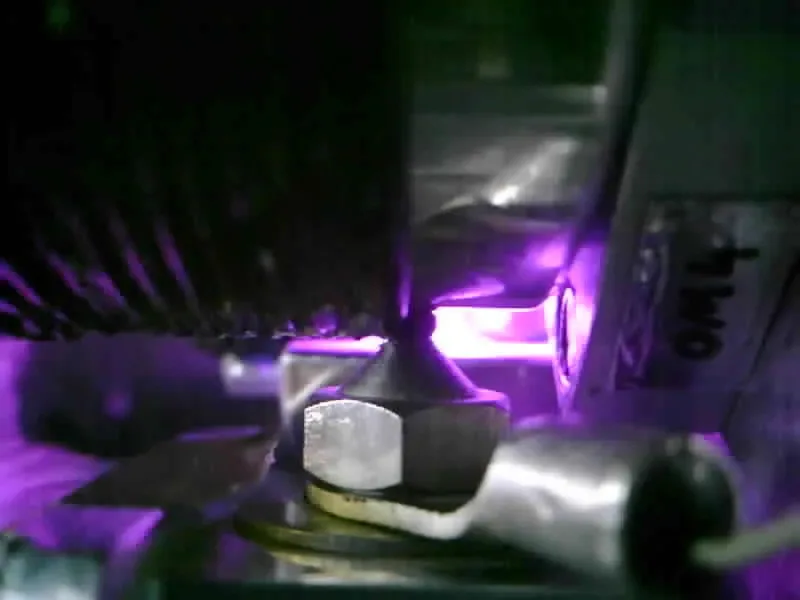
Image: TechCrunch · Source
German startup Orbital Matter 3D printed a rigid beam aboard a free-flying satellite in orbit, marking a milestone in building large space structures. This technology promises easier deployment of power-generating and heat-radiating spacecraft components.
Orbital Matter, a German startup specializing in space-based manufacturing, has successfully 3D printed a half-meter-long rigid beam from a custom plastic material aboard their Replicator-2 satellite in orbit. This accomplishment represents a first for a free-flying spacecraft, demonstrating the feasibility of in-space additive manufacturing for constructing large structural elements in the vacuum of space.
Replicator-2, launched in mid-2026 on a SpaceX rideshare mission, carries four 3D printers capable of extruding coils of resin cured by ultraviolet light to form rigid cylindrical beams. The process is analogous to mixing cement and water and then shaping it into structural components. With such printers, spacecraft can create and assemble large-scale parts directly in orbit, circumventing size constraints imposed by rocket fairings.
This advancement is particularly significant for future spacecraft that require substantially increased electrical power and efficient heat dissipation, such as envisioned orbital data centers. Traditional approaches involve folding and deploying large structures like solar arrays or telescope mirrors, which complicates engineering and limits scalability. Orbital Matter’s technology offers an alternative by enabling on-demand construction tailored to mission needs.
Jakub Stojek, CEO and co-founder of Orbital Matter, highlighted that Replicator-2 serves as proof that arrays of any size can be built in space. The company collaborates with the European Space Agency and Thales Alenia, a leading European satellite manufacturer, reaffirming its role in advancing in-orbit manufacturing capabilities.
Although one of the printers aboard Replicator-2 malfunctioned during the deployment of a flexible solar array, the successfully printed boom managed to deploy the array, confirming the system’s viability. Orbital Matter’s CTO, Robert Ihnatisin, noted that carrying multiple printers was a strategic choice to allow testing and software adaptability directly in orbit rather than extensive pre-launch ground testing.
The resin supply onboard limits the boom length to current sizes, but Orbital Matter’s engineers estimate that producing beams up to 100 meters long is achievable. By comparison, SpaceX’s Starlink V2 satellites use solar arrays approximately 20 meters in length. The startup, founded in 2022 and backed by a $3 million seed round, is preparing a follow-up mission set for 2028 to test a larger printer capable of deploying solar arrays generating 5 kilowatts, serving as a foundation toward 100+ kilowatt wings by 2030.
Orbital Matter is also engaging with satellite manufacturers interested in integrating its Printer-Assisted Deployment System (PADS) to extend solar panels, antennas, or other components, indicating broader applications for their technology in future spacecraft design and assembly.
Sources and original reporting
Read the original source ↗
Comments (0)
No comments yet. Start the discussion.
Write a comment
Comments are published after moderation. Your name and comment will be visible publicly. Account