
Apple Refreshes Entry-Level MacBook Pro with New M6 Chip
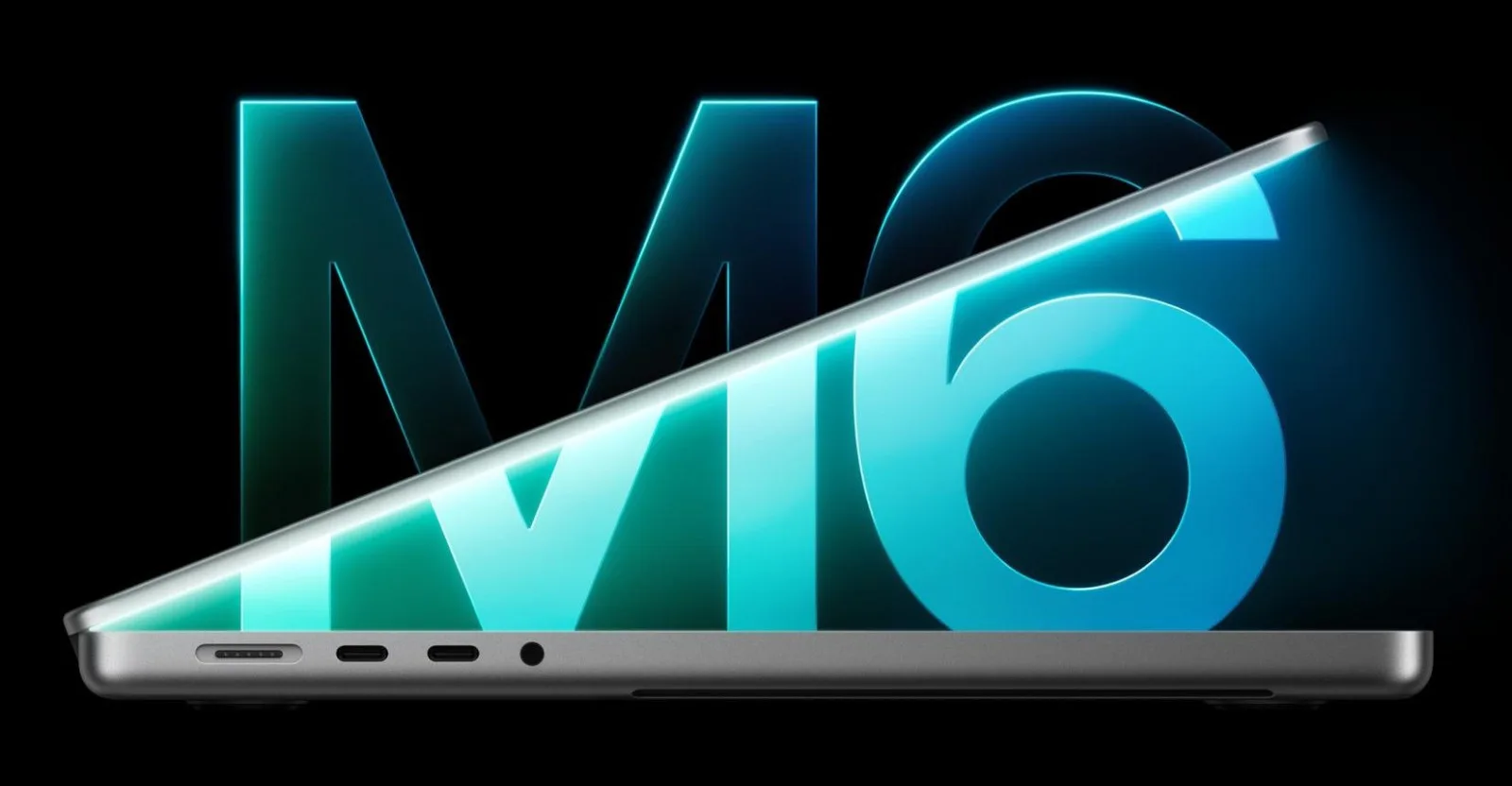
Image: Apple updates the MacBook Pro with M6 chips · Source
Apple has updated its entry-level MacBook Pro with the new M6 chip, enhancing CPU and GPU performance and improving power efficiency.
Apple has announced an update to its entry-level MacBook Pro, replacing last year's M5 chip with the newly introduced M6 processor. This refresh follows a similar update last year when the M5 chip was added, but this time the improvements are more substantial.
The new M6 chip represents Apple's first use of 2-nanometer process technology. It features a 12-core CPU, a step up from the 10-core CPU found in the previous M5 model. According to Apple, this enhancement yields up to 1.2 times faster multithreaded performance compared to its predecessor.
In addition to the CPU gains, the M6 includes a dual 16-core Neural Engine designed to accelerate demanding on-device artificial intelligence tasks. The graphics capabilities have also been boosted with an upgraded 12-core GPU that incorporates a Neural Accelerator in each core, delivering improved graphical processing power.
Beyond raw performance, Apple highlights greater power efficiency in the M6 chip, which should translate to longer battery life and cooler operation for the updated MacBook Pro.
Since last year's update, the entry-level MacBook Pro retained the same design, ports, webcam, and speakers, with the key differentiators being the updated processor and faster storage options. This latest iteration continues with those features while enhancing computing capabilities through the M6 chip.
No changes to the laptop’s physical design or port configuration have been announced alongside this chip upgrade. Apple positions this refresh as a meaningful performance boost for users seeking improved speed and efficiency in its entry-level MacBook Pro model.
The M6 chip was unveiled earlier this year as part of upgrades to the new Mac Mini. Its inclusion in the MacBook Pro marks Apple's ongoing rollout of next-generation silicon across its Mac lineup.


Sources and original reporting
Read the original source ↗
Comments (0)
No comments yet. Start the discussion.
Write a comment
Comments are published after moderation. Your name and comment will be visible publicly. Account