
NASA Revises Artemis Lunar Lander Plans, Addresses Orion Spacecraft Limitations
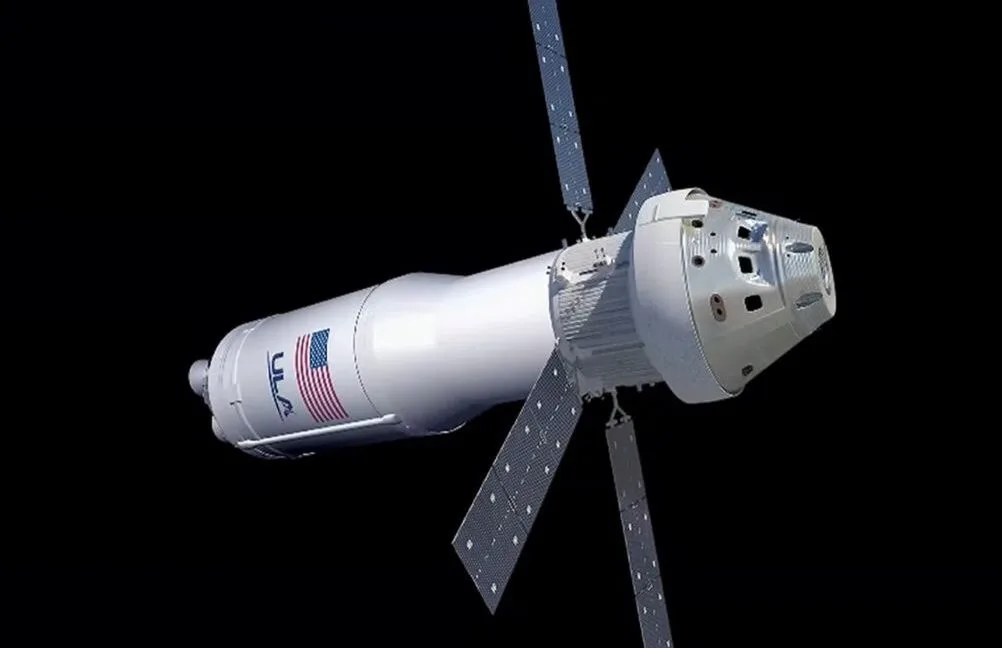
Image: Ars Technica · Source
NASA updates Artemis program strategies, detailing SpaceX Starship and Blue Origin Blue Moon lunar landers, and announces enhanced Orion capabilities via a new extended Centaur upper stage, aiming for lunar missions in 2027-2028.
NASA has unveiled substantial revisions to its Artemis lunar exploration plans, including updated mission architectures for the SpaceX Starship and Blue Origin Blue Moon lunar landers, alongside a significant propulsion enhancement for the Orion spacecraft. These announcements underscore NASA’s commitment to returning astronauts to the Moon by 2028 and reveal strategic shifts designed to simplify mission complexity and improve feasibility.
At a comprehensive briefing, NASA detailed that the Artemis III mission, set for summer 2027, will demonstrate docking maneuvers near Earth using both the Starship and Blue Moon landers, with Artemis IV targeted for a 2028 lunar surface landing. NASA Administrator Jared Isaacman emphasized that the agency possesses the mandate, resources, and stakeholder support to execute these plans.
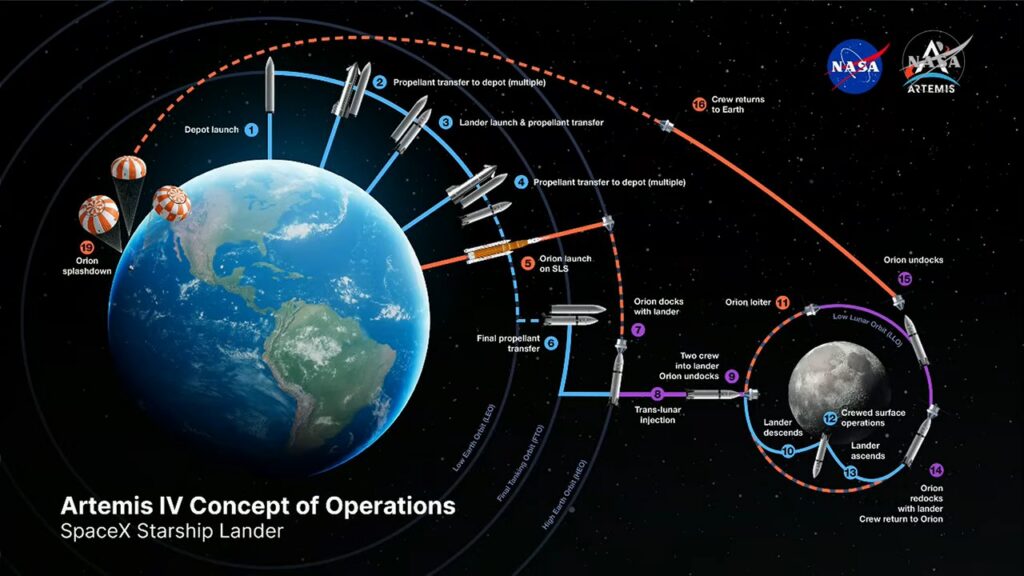
A major adjustment is SpaceX’s revised approach: instead of docking with Orion near the Moon in a near-rectilinear halo orbit—a requirement canceled alongside NASA’s Lunar Gateway—the Starship lander will now be refueled in low-Earth orbit, then dock with Orion in high-Earth orbit before travelling to the Moon. This change reduces energy demands and simplifies the mission. However, uncertainties remain regarding the volume of Starship refueling launches; Elon Musk estimates 6 to 8, significantly fewer than NASA’s earlier figure of approximately 22 launches.
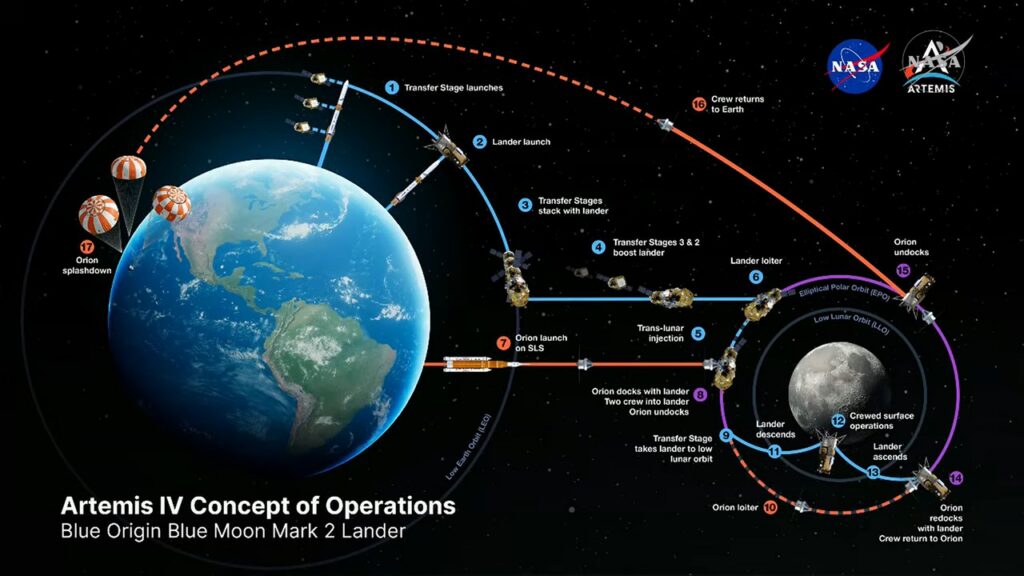
For Blue Origin, NASA’s accelerated timeline has led to a new concept that avoids spacecraft-to-spacecraft refueling for initial Artemis missions. The plan involves up to four launches of the New Glenn rocket carrying modified ‘‘transfer stages’’ to low Earth orbit to propel the Blue Moon Mark 2 lander to the lunar vicinity. NASA revealed a potential shift to enable Blue Moon to rendezvous and dock with Orion in low-lunar orbit, only a few hundred kilometers above the lunar surface, rather than at an elliptical orbit 8,500 kilometers away. This would markedly reduce propellant requirements and improve safety and mission flexibility.
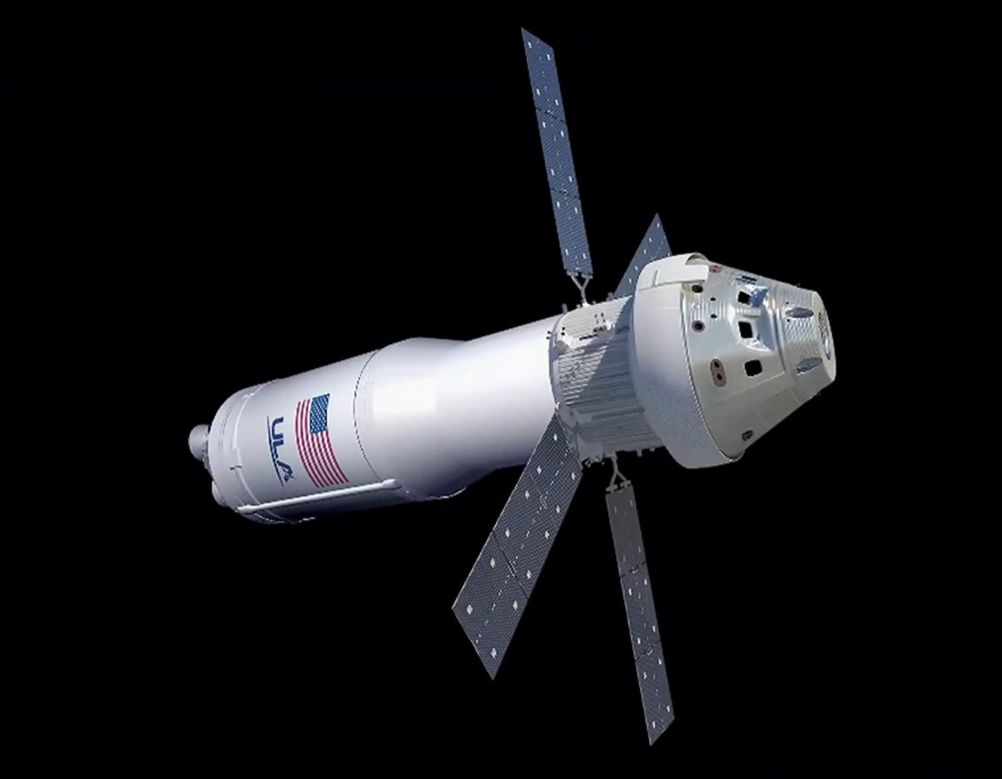
Additionally, NASA announced collaboration with United Launch Alliance to develop an extended version of the Centaur V upper stage. Paired with the Space Launch System core stage, this new upper stage enhances Orion’s propulsion, enabling it to reach low-lunar orbit independently, a critical upgrade addressing Orion’s previous delta-V limitations. Historically, Orion’s underpowered Service Module necessitated relying heavily on lunar landers and the Lunar Gateway for orbital logistics; the extended Centaur changes this dynamic.
NASA’s leadership acknowledges that these modifications respond to both technical challenges and partners’ operational feedback, aiming to reduce risks and accelerate progress. While ambitious, NASA remains cautiously optimistic about adhering to the 2027-2028 timeline, continuously assessing partner readiness and technology performance to adapt as needed. This strategic evolution in Artemis lander operations and Orion’s enhancements marks a pivotal step toward sustainable human lunar exploration.

Sources and original reporting
Read the original source ↗
Comments (0)
No comments yet. Start the discussion.
Write a comment
Comments are published after moderation. Your name and comment will be visible publicly. Account