
Comcast Plans Job Cuts, Blames 'Irrational' Fiber Pricing as Broadband Customers Decline
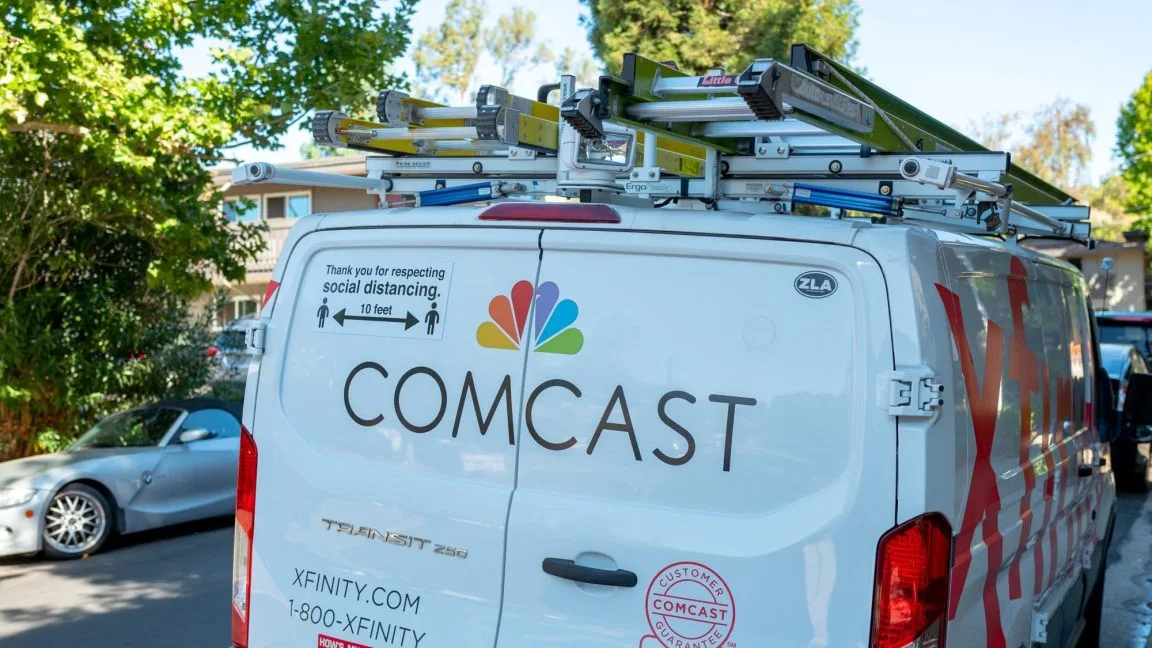
Image: Ars Technica · Source
Comcast faces ongoing broadband and video customer losses, criticizing competitor fiber pricing as unsustainable while planning job cuts and increasing AI-driven customer service.
Comcast has revealed further declines in its residential broadband and video subscriber numbers for the third quarter of 2026, continuing a trend of customer losses in the face of growing competition. The company reported a loss of 144,000 residential broadband customers during Q3, worsening from a loss of 91,000 in the same quarter a year earlier. Concurrently, Comcast’s video subscriber base shrank by 274,000. These results underscore mounting challenges as fixed wireless and fiber optic providers gain market share against Comcast’s cable-based network.
On the company’s recent earnings call, Comcast’s co-CEO Mike Cavanagh described fiber and fixed wireless providers as "aggressive," highlighting that fiber providers in particular are engaging in what Comcast executives termed “irrational pricing” strategies. Comcast CFO Jason Armstrong noted fiber broadband offers as low as $30 to $40 per month in certain markets, which he considers unsustainable given the high capital expense of deploying fiber networks—estimated at $1,500 or more per home, with costs rising in suburban and rural expansions. Although Armstrong did not specify competitors, Verizon’s FiOS fiber service is reported to start at roughly $30 monthly.
The company acknowledged that customer losses often coincide with "pricing transitions," referring to promotional pricing expirations. Comcast is adjusting its offer structures and retention approaches to better manage these transitions and boost customer loyalty, although these efforts have yet to reverse the subscriber decline.
In response to the changing market and customer base shrinkage, Comcast plans significant organizational restructuring, including job cuts primarily within its cable division. This restructuring is anticipated to generate a “significant charge” exceeding $1 billion in the company’s upcoming Q4 financial results. Part of the strategy involves expanding the deployment of AI agents for customer service interactions; this initiative has already helped reduce service contact rates by approximately 20%, removing over 30 million service interactions year-to-date compared to the prior year.
Armstrong emphasized that Comcast’s wireless business, which operates as a mobile virtual network operator (MVNO) reselling Verizon’s network capacity, offers free wireless lines to broadband customers for one year, with a conversion rate to paid service of around 70%. He argued the wireless promotions are sustainable and rational because they require no capital expenditures on network infrastructure from Comcast.
In addition to immediate operational changes, Comcast announced plans to spin off NBCUniversal and Sky into a separate publicly traded company by mid-2027. This move aims to streamline the business amid challenging connectivity market conditions. Comcast’s Q3 revenue decreased to $29.3 billion from $31.2 billion year-over-year, though net income rose slightly to $3.45 billion.
Comcast’s recent losses mark a continuation of several years of subscriber declines in broadband and video segments, ending over two decades of steady broadband subscriber growth. Despite initiatives such as introducing unlimited data plans and five-year price guarantees, customer attrition continues. The company is now focusing on operational efficiency, customer retention innovation, and AI integration to adapt to an increasingly competitive broadband landscape.

Sources and original reporting
Read the original source ↗
Comments (0)
No comments yet. Start the discussion.
Write a comment
Comments are published after moderation. Your name and comment will be visible publicly. Account