
NVIDIA Expands Agent Toolkit to Empower Enterprise AI Agents with Company Data and Security
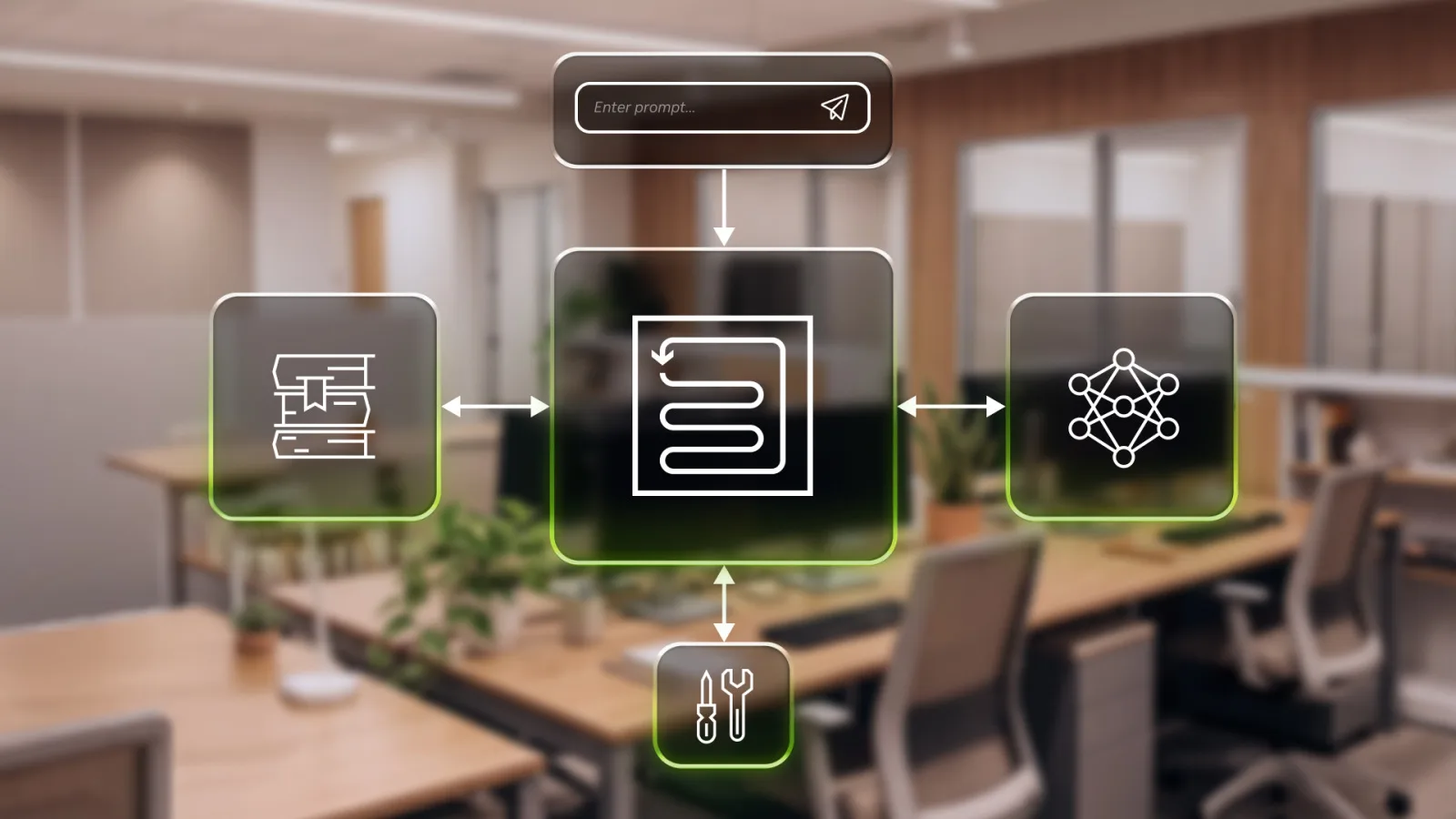
Image: NVIDIA · Source
NVIDIA enhances its open source Agent Toolkit with new components enabling enterprises to build customized, secure AI agents that leverage company data for informed actions, backed by the OpenShell Reference Architecture for robust safety and governance.
NVIDIA has announced significant expansions to its open source NVIDIA Agent Toolkit to better equip enterprises in creating customized, trustworthy AI agents grounded in their proprietary data. The updated toolkit integrates several components—such as the new Agent Knowledge Foundation, open models including Nemotron Retriever and the Kumo family, and secure runtimes with OpenShell and NemoClaw blueprints—to help developers build agents capable of executing real work within strict security and governance boundaries.
Central to the enhancement is the NVIDIA Agent Knowledge Foundation, which transforms enterprise data into actionable intelligence without forcing data relocation or changes to governance. Powered by CUDA-X libraries and the new Auto-Ontology library, it semantically organizes raw business data like customers, products, and orders, enabling agents to understand and utilize this information accurately. The inclusion of NVIDIA’s Nemotron Retriever and Kumo open models aids agents in finding relevant data to answer queries and forecast outcomes.
To ensure that these agents operate securely and within defined constraints, NVIDIA provides the OpenShell secure runtime environment. OpenShell creates a hardened boundary controlling agent access and actions, while the NemoClaw secure blueprints offer reference designs to develop specialized, optimized agents whose intelligence can progressively improve over time.
The toolkit's adoption is already underway at major organizations. NVIDIA’s supply chain division leverages Agent Knowledge Foundation through Palantir Foundry to deploy specialized agents for supply chain predictions and decision-making optimization. Databricks, Snowflake, Amazon, SAP, ServiceNow, and Zoom are also utilizing various parts of the toolkit to enhance search accuracy, predictive capabilities, and enterprise AI services.
Complementing the toolkit, NVIDIA has introduced the OpenShell Reference Architecture—an enterprise-grade infrastructure that brings together hardware and software including Vera Rubin systems, Vera CPUs, and BlueField DPUs with NVIDIA’s Sentry security framework. This architecture enforces in-silicon security policies, continuously monitors AI agent behavior, and quarantines agents in milliseconds if they attempt unauthorized actions. OpenShell supports diverse operating systems and container orchestration platforms, appealing to industries from healthcare to telecommunications.
Industry leaders such as AWS, Google Cloud, IBM, Meta, Microsoft, Cisco, CrowdStrike, and leading banks like BBVA and Santander are collaborating with NVIDIA to implement and build upon this framework—demonstrating a broad commitment to safe, scalable AI agent deployment.
Further, NVIDIA offers Auto Ontology, an open library that builds a semantic context layer from enterprise metadata. Auto Ontology enables natural language querying of structured data with validation, reconciliation of diverse data definitions, and provision of trusted business meaning to AI agents. It supports flexible deployment including Kubernetes and Docker and integrates authentication and role-based access control.
Together, these expansions and new architectures from NVIDIA seek to advance AI agent utility, reliability, and security for enterprises preparing for large-scale AI agent deployment. By combining sophisticated data grounding, secure runtime environments, and comprehensive governance tools, NVIDIA aims to help businesses harness AI’s potential with confidence.
More details and demonstrations of these capabilities were presented at NVIDIA’s GTC Berlin conference.
Sources and original reporting
Read the original source ↗
Comments (0)
No comments yet. Start the discussion.
Write a comment
Comments are published after moderation. Your name and comment will be visible publicly. Account