
ReactOS Achieves NTFS Installation Capability, Marking a Major Progression
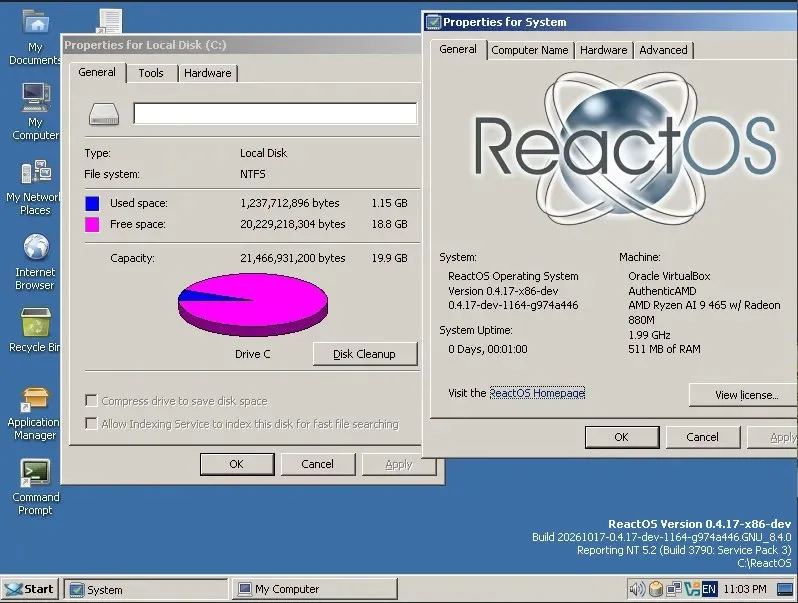
Image: Ars Technica · Source
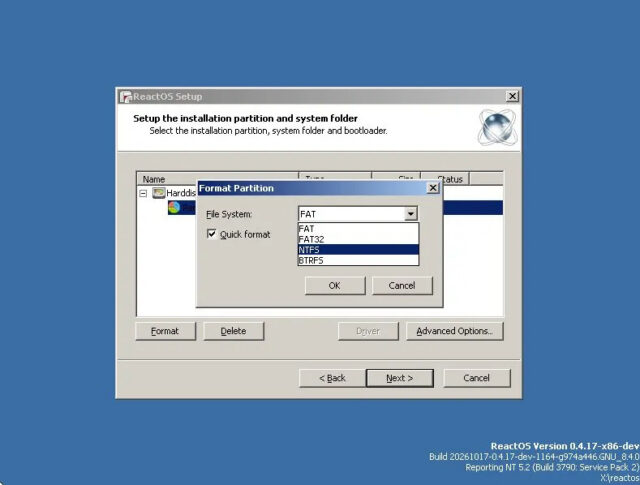
ReactOS can now be installed directly onto NTFS partitions thanks to a new driver, overcoming a significant limitation and moving closer to beta status. The driver lacks some features and may contain bugs, cautioning early users.
ReactOS, the open-source operating system designed as a Windows alternative, has reached a significant project milestone. As reported by Ars Technica, ReactOS now supports installation directly onto NTFS (New Technology File System) partitions through a newly developed driver.
This achievement removes a longstanding limitation where installations required FAT32-formatted partitions. Given NTFS’s role as the standard filesystem across modern Windows systems—originating with Windows NT 3.1 in 1993 and solidified in Windows XP—the new capability aligns ReactOS closer with genuine Windows environments. Since ReactOS aims to achieve binary compatibility with Windows Server 2003, enabling direct installation to NTFS is a practical and symbolic step forward.
Despite this advancement, the ReactOS team highlights that the new NTFS driver currently lacks key functionalities such as caching, journaling, and security support. These omissions result in reduced performance and potential stability issues. Additionally, the developers caution about possible undiscovered bugs within the driver, advising users to proceed with care.
This development closes a decade-long gap in ReactOS’s NTFS support. While read-only NTFS access was introduced back in 2016 and NTFS boot support added in 2022 via the FreeLoader bootloader, full write-capable installation to an NTFS partition was previously unattainable.
ReactOS remains a community-driven project mainly staffed by volunteers coordinating through platforms like GitHub and the project's official forums. The lengthy alpha development phase illustrates the complexity of replicating a Windows-compatible operating system from the ground up.
Although ReactOS may not yet serve as a practical Windows replacement for most users, the ability to install on NTFS partitions represents a crucial technical breakthrough. It brings the project a step closer to fulfilling its mission of offering users an open-source operating system compatible with Windows environments.

Sources and original reporting
Read the original source ↗
Comments (0)
No comments yet. Start the discussion.
Write a comment
Comments are published after moderation. Your name and comment will be visible publicly. Account