
NVIDIA Boosts Europe's Scientific Research with Open Tools, AI Supercomputers, and BioNeMo Agent Toolkit
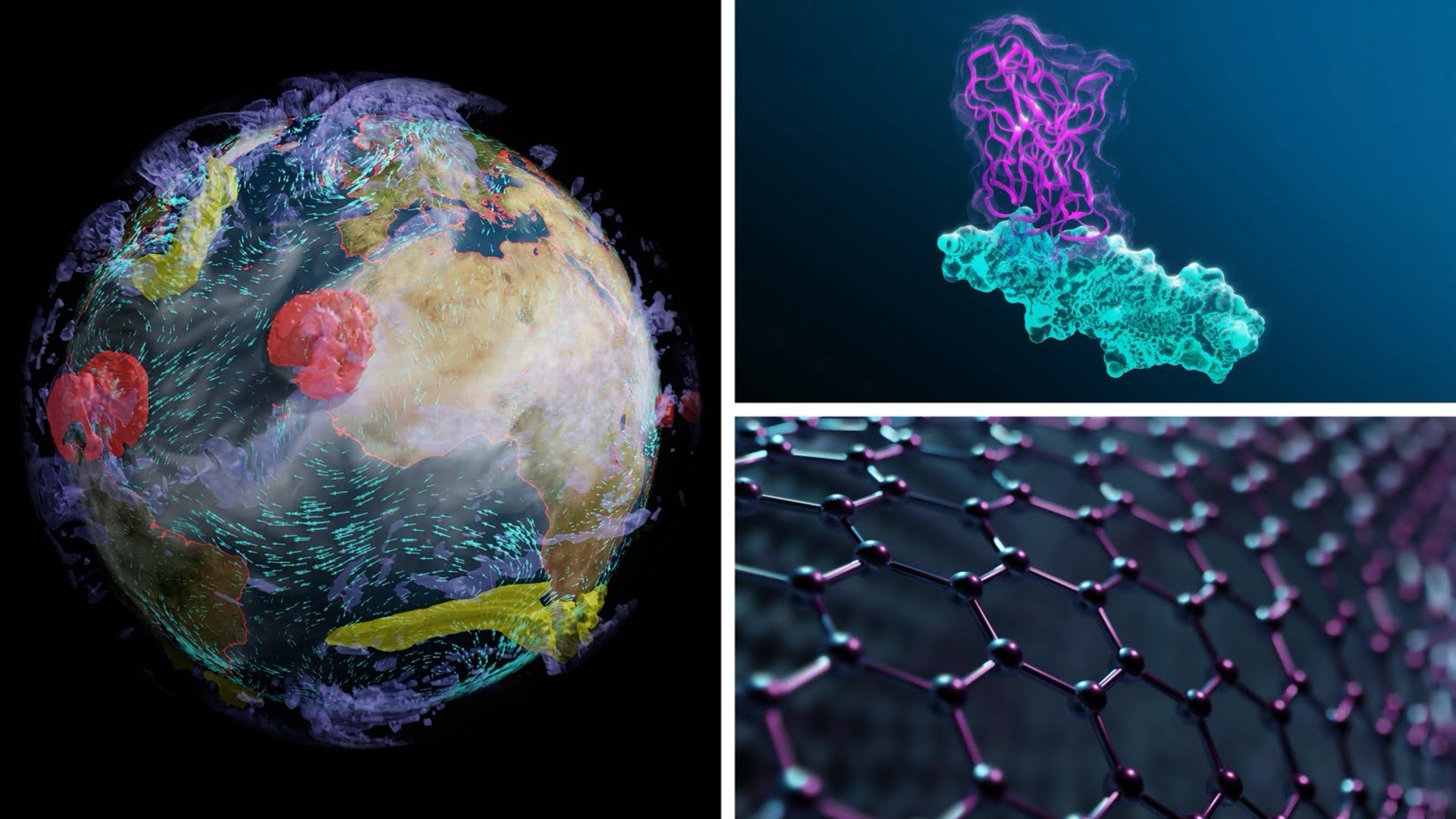
Image: NVIDIA · Source
NVIDIA partners with the European Commission to expand AI and accelerated computing resources for European scientists, launching open models, training, and 35 new AI supercomputers. The BioNeMo Agent Toolkit aids life sciences research by enabling AI agents to accelerate discovery in biology, chemistry, and genomics.
Scientific research increasingly relies on advanced computing to model complex systems, design molecules, and simulate materials. Recognizing the challenges faced by smaller labs and early-career researchers in accessing cutting-edge computational tools, NVIDIA has launched several initiatives across Europe to democratize access to AI and high-performance computing resources.
At the recent AI in Science Summit in Dublin, the European Commission introduced the AI in Science Enablers Initiative under the RAISE framework, intended to bridge private-sector capabilities with Europe's research community. NVIDIA is actively supporting this effort through the provision of accelerated computing tools, cloud resources, collaborative projects, technical training, and ecosystem support for startups and researchers.
NVIDIA's contribution centres on openness and accessibility, offering over 250 open-source models and datasets across diverse domains including climate science, healthcare, and robotics, hosted on platforms like Hugging Face and GitHub. Their technological suite includes NVIDIA Nemotron architectures and scientific software such as BioNeMo Agent Toolkit, PhysicsNeMo, Earth-2 models, and ALCHEMI microservices, accelerating research in biology, chemistry, materials science, physics, and energy.
To build skills alongside infrastructure, NVIDIA's Deep Learning Institute has released freely available courseware designed for flexible use in academic and community settings, supporting the development of expertise in accelerated computing and deep learning.
NVIDIA is also collaborating with European cloud and AI factory partners in countries like France, Spain, and Sweden to enhance sovereign compute access, notably via its Inception program that lowers entry barriers for startups through resource and support offerings. These partnerships extend to EuroHPC supercomputing centres like CINECA and JSC, which provide free GPU access coupled with workshops and hackathons for researchers.
In a landmark expansion, NVIDIA announced 35 new AI-powered supercomputers being developed across 23 European countries, marking the continent's largest single-year growth in supercomputing capacity. Facilities such as the Barcelona Supercomputing Center, BavariaAI's Blue Swan, IT4LIA, HLRS’s HammerHAI, and NAISS’s Mimer AI Factory will leverage NVIDIA's latest Hopper and Blackwell GPU platforms combined with Quantum InfiniBand networking and CUDA-X software stacks. These systems will deliver exascale computing capabilities, boosting research in climate science, healthcare, clean energy, quantum computing, and more.
NVIDIA is simultaneously advancing quantum-classical computing integration in Europe through CUDA-Q, enabling hybrid application development at premier centres including CINECA, Fraunhofer, Barcelona Supercomputing Center, and Jülich Supercomputing Centre.
Complementing infrastructure efforts, NVIDIA introduced the BioNeMo Agent Toolkit—a comprehensive AI platform designed to accelerate life sciences research. Incorporating tools for protein design, molecular docking, genomic analysis, and biomedical research, BioNeMo empowers AI agents to navigate complex scientific workflows, improving accuracy, efficiency, and iterative discovery. Industry leaders like Dassault Systèmes, Lilly, Schrödinger, and OpenAI utilize BioNeMo to enhance drug discovery and biological design processes.
The toolkit integrates NVIDIA’s life sciences software libraries, microservices, and open-source models, enabling agents to carry out tasks such as virtual screening of drug candidates, genomic target prioritization, and medical imaging analysis. This approach fosters faster, data-driven scientific advancements by automating reasoning and experiment planning within AI-powered workflows.
This suite of initiatives by NVIDIA in partnership with the European Commission aims to empower over three million researchers across Europe with state-of-the-art AI infrastructure, open-source tools, and educational resources, catalysing innovation from climate modeling to medical breakthroughs. Through expanding compute capacity, training, open models, and agentic AI, Europe is poised to significantly accelerate scientific discovery and maintain global leadership in AI-enhanced research.
Sources and original reporting
Read the original source ↗
Comments (0)
No comments yet. Start the discussion.
Write a comment
Comments are published after moderation. Your name and comment will be visible publicly. Account