
Amazon Employs Over One Million Robots and Plans Expansion Amid Worker Safety Concerns
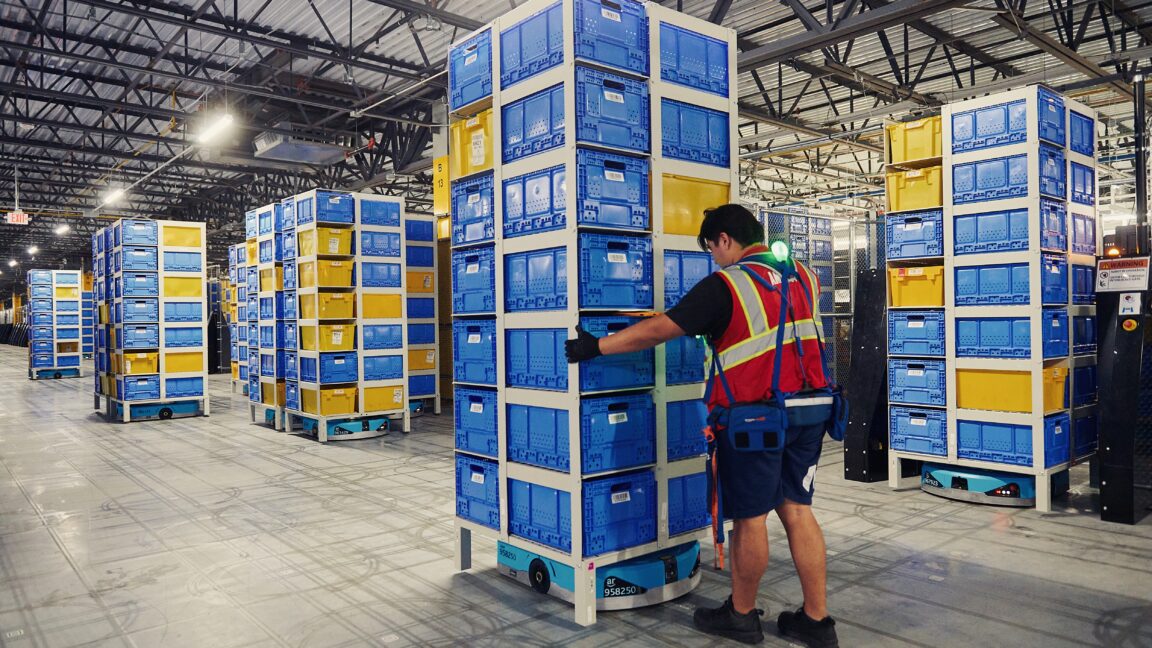
Image: Ars Technica · Source
Amazon operates the world’s largest robotic fleet—over one million robots in warehouses—while also employing 1.5 million human workers. The company is expanding robot production and deployment but faces scrutiny over the impact on employee workload and injury rates.
Amazon currently operates the largest robotic workforce globally, with over one million robots active in its fulfillment centers. These robots play vital roles in processing tens of millions of same-day and one-day deliveries daily. The company continues to expand its robotics production facilities, recently announcing new factories in Austin, Texas, and Greenwood, Indiana, aiming to significantly grow this robotic fleet in the coming years.
Despite this rapid automation, Amazon remains the world’s second-largest corporate employer, with over 1.5 million human workers globally as of its 2025 annual report. Company executives emphasize that robots have alleviated human workloads by undertaking the physically demanding and injury-prone tasks in warehouses. Vice President of Amazon Robotics, Scott Dresser, highlighted that robots help improve efficiency and workplace safety by tackling challenging technical problems.
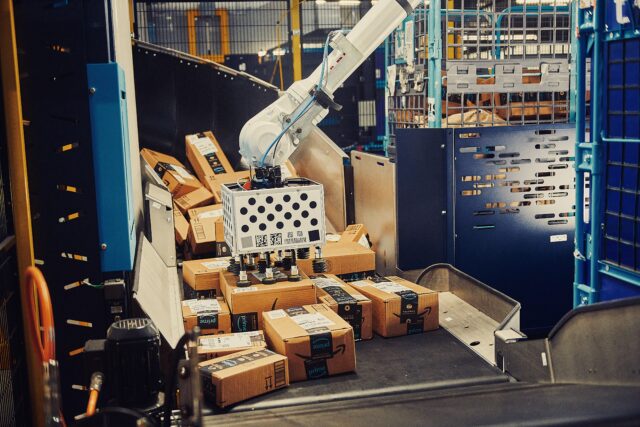
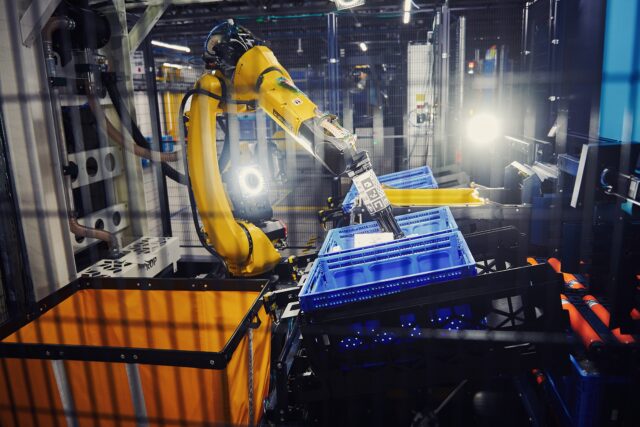
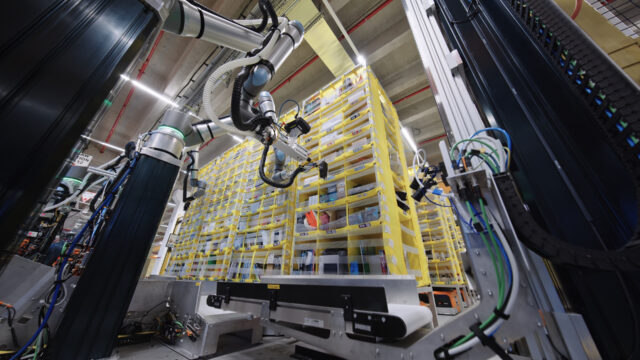
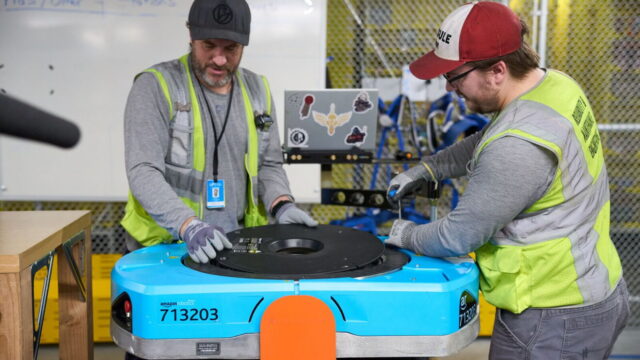
Amazon’s robotic fleet largely comprises wheeled mobile robots that transport storage pods to human workers, streamlining item retrievals. The company is also ramping up deployment of robotic arms, such as Robin and Cardinal, which are designed respectively to sort packages and densely pack items into delivery carts. These robotic arms leverage AI-driven machine learning models to improve pick success rates—for example, Robin’s success rate exceeds 93 percent, which translates to thousands fewer failed picks and increased operational efficiency.
Further advancements include the Sparrow robotic arm, which uses AI foundation models to handle the vast diversity of products Amazon sells, and Vulcan, a robot combining vision with force feedback sensors to mimic a sense of touch for precise picking and stowing tasks. Vulcan began limited deployment in 2025, with plans to scale up in 2027.
However, increased automation has triggered concerns about working conditions. Labor groups and researchers report higher injury rates and faster-paced, repetitive work linked to robots dictating workload pace. A 2025 academic study found robotic warehouses saw a 40 percent reduction in severe injuries but a 77 percent increase in less serious physical strains among human workers. Labor advocacy groups argue that despite Amazon’s claims of improving injury rates overall, robotic integration often intensifies physical demands on employees.
Amazon maintains that robotics growth coincides with expansion requiring more human roles, such as robotic maintenance technicians, logistics engineers, and manufacturing jobs at robot production sites. The company cites a 30 percent increase in such higher-skilled positions. Nevertheless, internal discussions leaked in 2025 indicated that robotics could reduce hiring needs by hundreds of thousands in the coming decade, though Amazon stated these reflect views from specific internal groups only.
The dialogue around automation, worker safety, and labor relations continues, especially as only a small fraction of Amazon’s workforce in the U.S. has unionized. Experts suggest enhanced cooperation between management and labor unions could be beneficial to reduce injury rates and improve workplace conditions.
Overall, Amazon’s commitment to scaling its robotic operations represents a significant evolution in e-commerce fulfillment logistics, but balancing technological gains with human workforce impacts remains a key challenge for the company going forward.

Sources and original reporting
Read the original source ↗
Comments (0)
No comments yet. Start the discussion.
Write a comment
Comments are published after moderation. Your name and comment will be visible publicly. Account