
NVIDIA Designs AI Factories for Maximum Productivity, Durability, and Flexibility
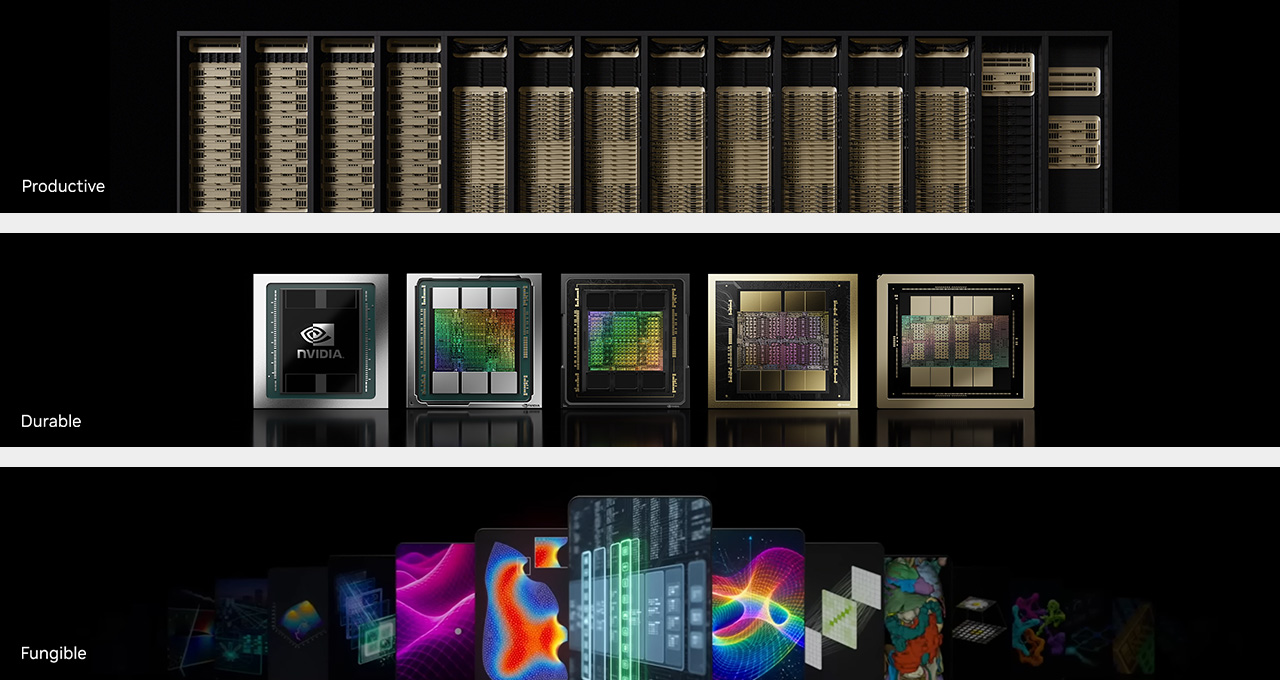
Image: NVIDIA · Source
NVIDIA’s AI factories are engineered to optimize return on investment by maximizing throughput, extending hardware lifespan, and supporting diverse AI workloads and non-AI applications.
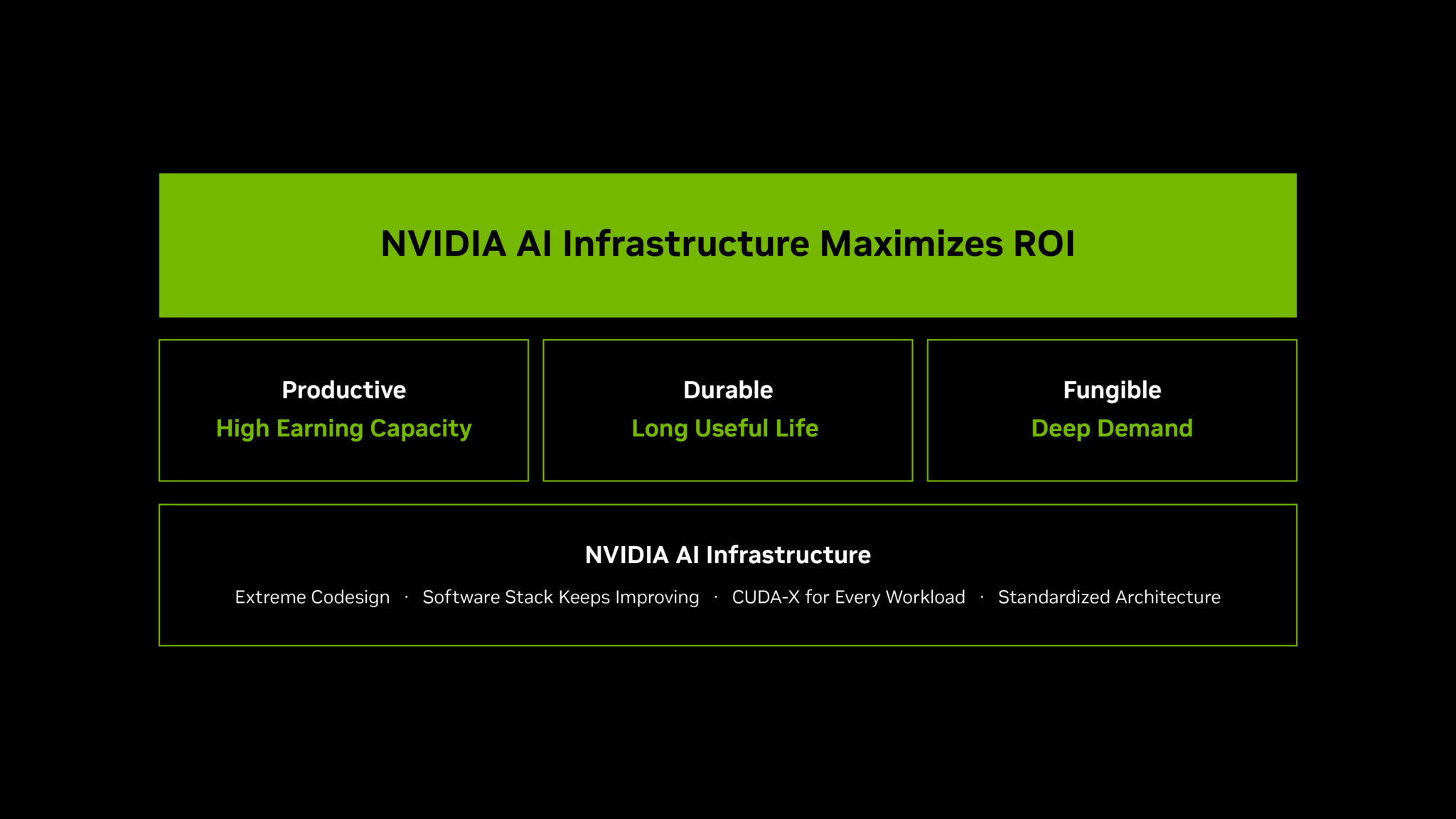
NVIDIA outlines a strategic approach to building AI factories—large-scale GPU-based computing operations designed to serve growing demand for AI workloads. Each megawatt of AI factory capacity costs about $60 million, so operators require clear indicators of value and returns before investing at this scale. According to NVIDIA, three crucial factors determine the return on investment for these AI factories: earning capacity, useful life, and demand.
Earning capacity is defined as the potential annual revenue if an AI factory sold every token it could produce. Useful life refers to how many years the factory’s AI hardware remains economically productive. Demand denotes the market need for the tokens and workloads the factory produces.
NVIDIA’s AI factories focus on three core qualities to optimize all these factors simultaneously: productivity, durability, and fungibility. Productivity means delivering the highest throughput per megawatt and the lowest cost per token, enhancing earning capacity. NVIDIA cites data showing their Vera Rubin NVL72 systems provide over 30 times the throughput per megawatt and up to 45 times lower cost per million tokens compared to previous generations, thanks to extensive full-stack co-design from hardware to software.
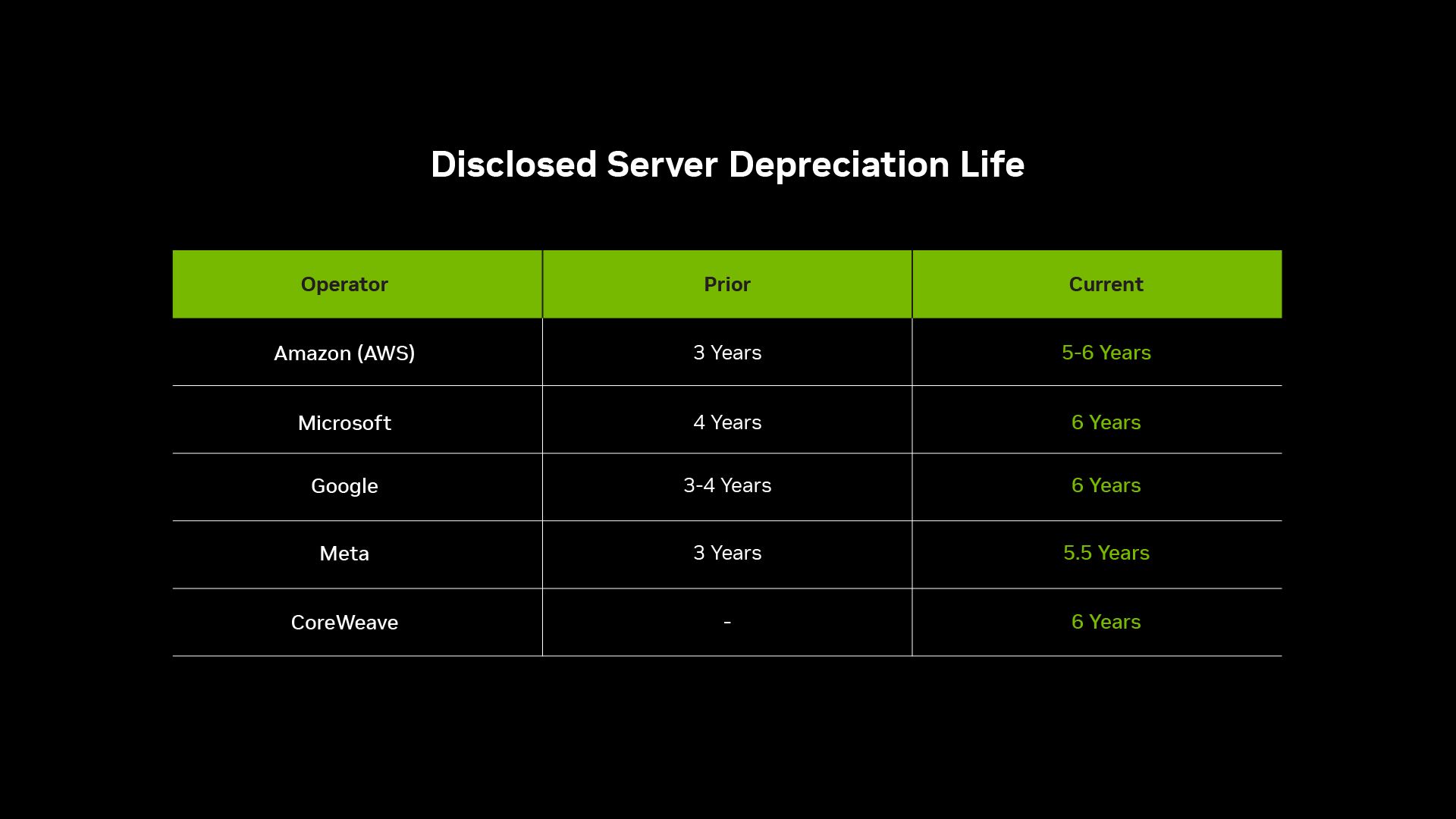
Durability ensures that installed NVIDIA GPUs continue producing value years after deployment. For example, the NVIDIA A100 GPU launched in 2020 remains in commercial use over six years later. Market analyses suggest GPUs retain significant resale and rental value well beyond traditional depreciation schedules, underscoring their lasting economic viability. The CUDA software platform supports cross-generational compatibility, enabling operators to leverage existing hardware with ongoing kernel and software optimizations.
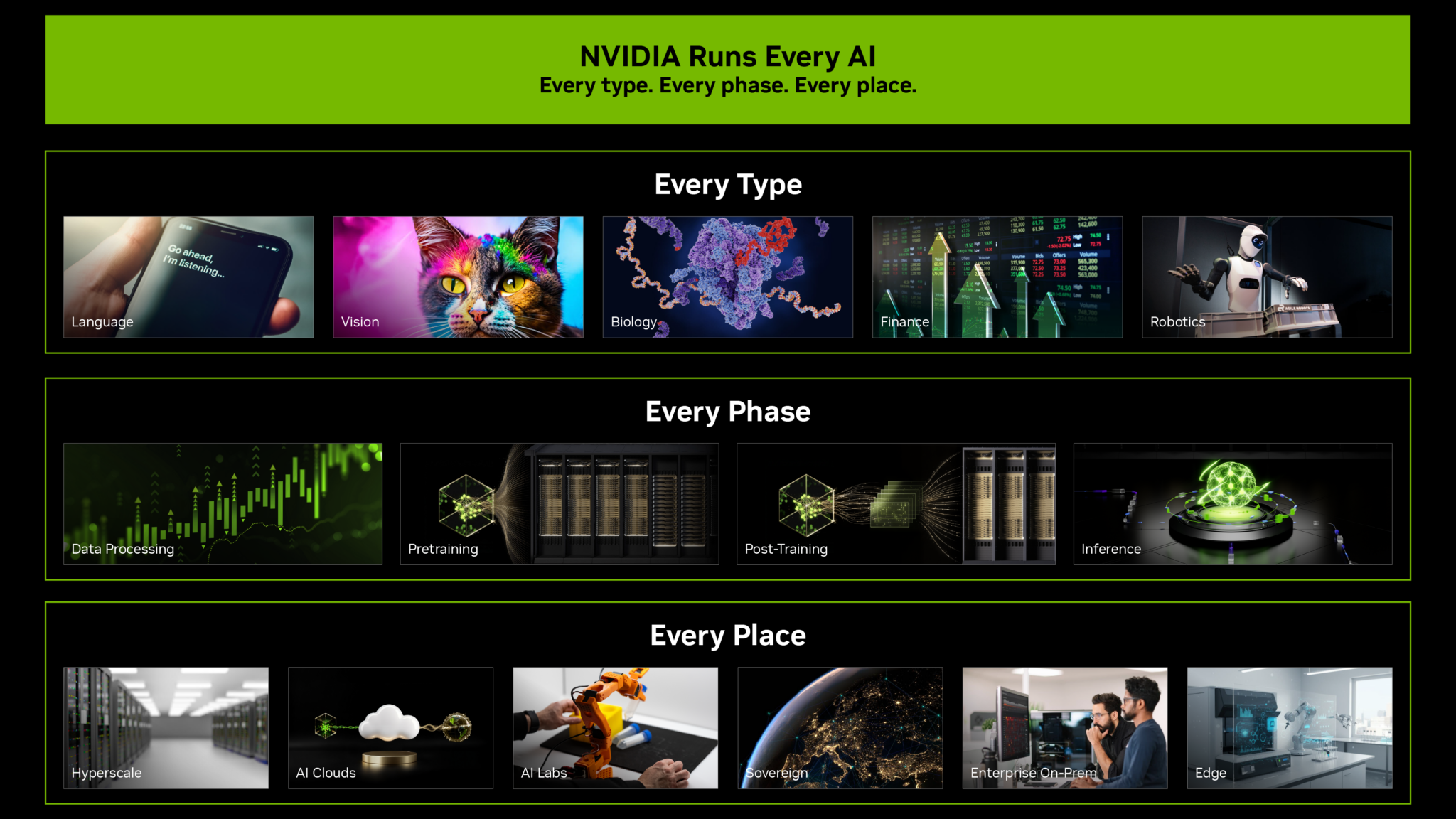
Fungibility refers to the capability of the AI factories to run a broad spectrum of AI workloads—across language, vision, biology, physics, and robotics—as well as non-AI tasks such as scientific computing and graphics. This versatility keeps demand robust even as workloads evolve, minimizing downtime and maintaining high utilization rates. NVIDIA GPUs facilitate this through thousands of parallel cores and specialized units like Tensor Cores and the Transformer Engine housed within a programmable architecture. Over 1,000 CUDA-X libraries support diverse applications, with a developer community exceeding 10 million.
Real-world customers like Eli Lilly, Pinterest, Revolut, Runway, and Texas A&M University illustrate the range of applications NVIDIA’s AI factories support, from protein folding and genomics to large-scale data processing and molecular simulations. Additionally, industries such as media streaming, vehicle design, and consumer product imagery benefit from the same infrastructure, demonstrating its broad applicability.
By focusing on these three attributes—maximum token production efficiency, extended equipment lifespan, and broad workload adaptability—NVIDIA positions its AI factories to deliver strong financial returns and meet shifting demands in AI and beyond. Further insights into these developments were presented by NVIDIA CEO Jensen Huang during the GTC Berlin keynote in October 2026.
Sources and original reporting
Read the original source ↗
Comments (0)
No comments yet. Start the discussion.
Write a comment
Comments are published after moderation. Your name and comment will be visible publicly. Account