
Google Introduces Temporary Threads in AI Mode for Private Searches
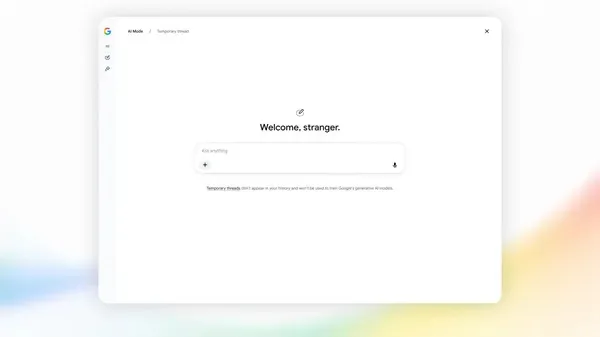
Image: Google · Source
Google Search's AI Mode now supports temporary threads, allowing users to conduct private searches with no history saved and no impact on personalization, available globally on desktop and mobile.
Google has launched a new feature called temporary threads within the AI Mode of its Search service, aimed at providing users with a private and ephemeral way to explore queries. Announced on November 17, 2026, this addition allows users to initiate a temporary session where conversations and questions are isolated from their main account activities.
To use temporary threads, users simply click on the dedicated icon in the upper right corner of AI Mode. This starts a session detached from their Google account, meaning that queries and responses during this session do not get saved to search history or influence future personalized results. This privacy ensures that sensitive or one-off searches won’t impact recommendations or personalization settings.
Once the temporary thread is closed, all the conversation data within that session is deleted, and users return to their regular Search experience as usual. The feature is designed for scenarios like brainstorming ideas or looking up information users prefer to keep private and not have tied to their profiles.
Google is rolling out temporary threads globally across all languages supported in AI Mode, making it accessible via both desktop and mobile browsers. Users do not need to adjust any settings to access this feature, facilitating seamless transitions between regular and private AI-assisted search sessions.
This move by Google reflects growing user demand for privacy and control over their search data in an era of enhanced AI integration. By implementing temporary threads, Google offers a simple way to explore information confidentially without permanently altering search history or personalized experiences, enhancing user trust and flexibility in search interactions.
Sources and original reporting
Read the original source ↗
Comments (0)
No comments yet. Start the discussion.
Write a comment
Comments are published after moderation. Your name and comment will be visible publicly. Account