
Google AI Aids in Restoration of Disappearing Giant Kelp Forests in Australia
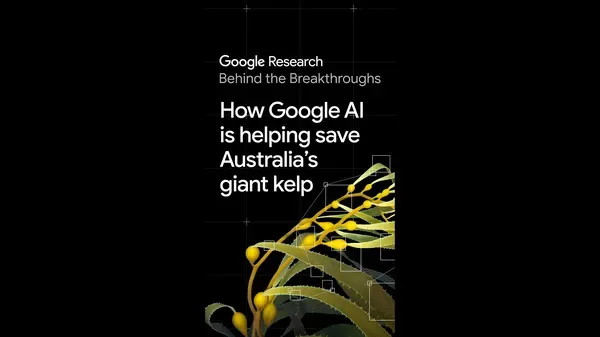
Image: Google · Source
Collaborating with Australia's CSIRO, Google uses AI and genomics to analyze kelp DNA, supporting efforts to replant heat-tolerant giant kelp and restore coastal ecosystems.
Giant kelp forests, vital underwater ecosystems that protect coastlines and provide habitats for marine life, are rapidly disappearing due to rising ocean temperatures. In a recent initiative highlighted at COP31, Google partnered with Australia's national scientific agency, the Commonwealth Scientific and Industrial Research Organisation (CSIRO), to combat this environmental crisis through advanced technology.
The collaboration leveraged AI and genomics to deepen understanding of giant kelp populations along the Tasmanian coast, an area where these forests have dwindled to just 5% of their historic levels. Researchers sequenced 600 wild kelp specimens from 40 different sites, using a specialized version of Google’s open-source AI tool, DeepVariant, to analyze the genetic data accurately and efficiently.
This genetic analysis represents a significant advancement in conservation genetics, enabled by the publication of two high-quality reference genomes for Australian giant kelp, which serve as a crucial foundation for ongoing research. By integrating lab-based cross-breeding studies that focus on developing heat-tolerant kelp variants, the project aims to inform real-world restoration strategies.
The ultimate goal is to repopulate affected coastal areas with genetically diverse and heat-resilient kelp, bolstering ecosystem resilience against future climate challenges. This initiative forms part of Google Australia's broader Digital Futures Initiative, which drives sustainable innovation using AI technologies.
By applying cutting-edge AI tools to environmental conservation, this project exemplifies how technology can assist in addressing climate-induced biodiversity loss. As efforts progress, it may pave the way for similar approaches to protecting other vulnerable ecosystems worldwide.
Sources and original reporting
Read the original source ↗
Comments (0)
No comments yet. Start the discussion.
Write a comment
Comments are published after moderation. Your name and comment will be visible publicly. Account