
NVIDIA-Powered AI Enhances Patient Care by Streamlining Clinical Data Analysis
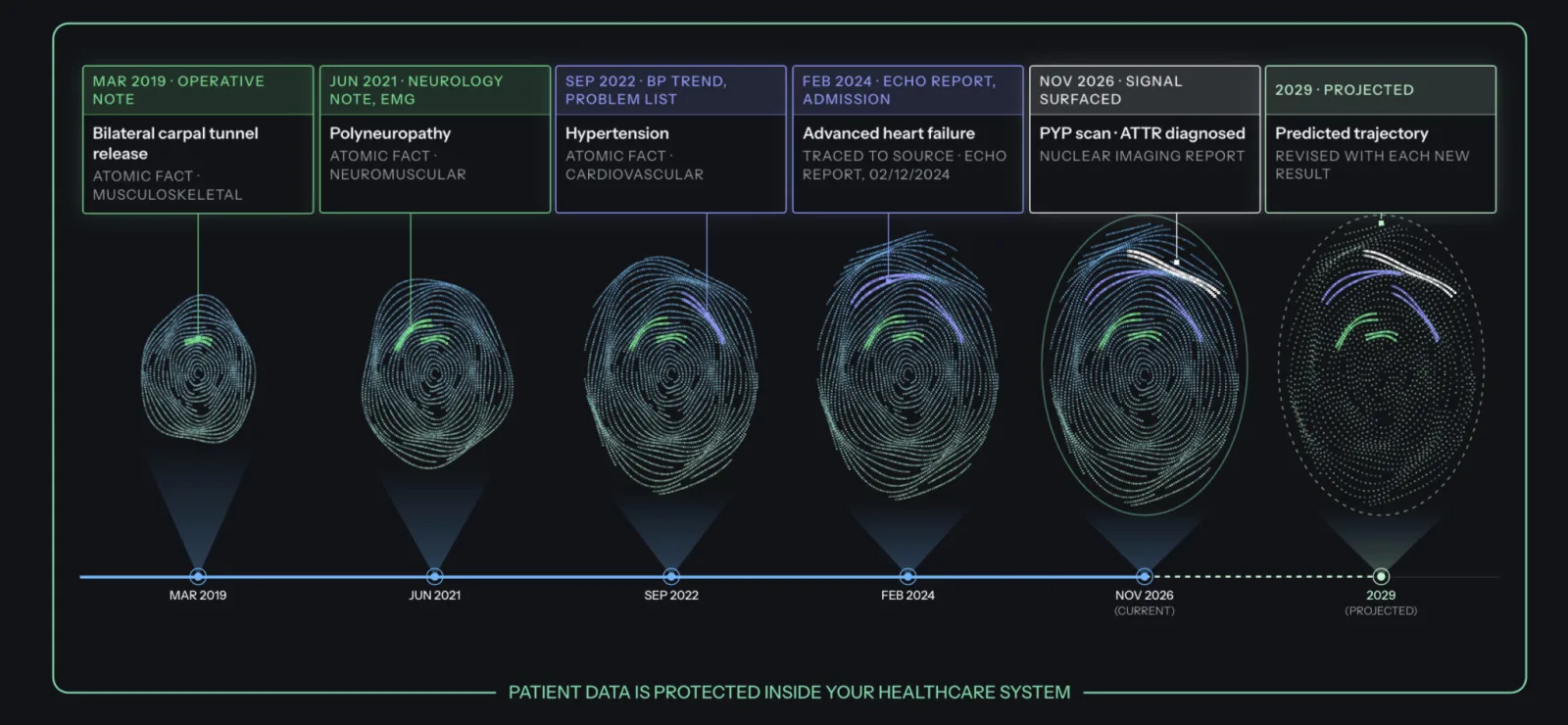
Image: NVIDIA · Source
NVIDIA-supported AI tools help healthcare teams turn extensive patient records into actionable insights, enabling faster, personalized care while keeping data secure within hospital systems.
Healthcare providers are increasingly leveraging artificial intelligence to improve patient care, focusing on reducing time clinicians spend on routine data review and increasing direct patient interaction. NVIDIA technologies underpin a range of AI applications that assist care teams, from pediatric research to hospital management.
One notable example is Dyania Health, a clinical AI company based in New Jersey, which developed Synapsis AI. This clinical reasoning engine scans decades of patient records—including physician notes, imaging results, pathology reports, and discharge summaries—extracting connections across lengthy timelines that a specialist might uncover. The system delivers clinical signals pointing to patients requiring attention, with each finding traceable to its source document. However, clinicians remain central; they evaluate the AI’s output and make final care decisions.
A significant feature of Synapsis AI is that it operates entirely within a hospital’s own secure computing environment using NVIDIA-accelerated hardware. This ensures that sensitive patient data never leaves the hospital firewall, addressing privacy and security concerns. The AI models are developed using NVIDIA NeMo open libraries and optimized for hospital GPU servers through NVIDIA TensorRT and TensorRT-LLM, allowing efficient processing of large datasets onsite.
In practice, the Cleveland Clinic applied Synapsis AI to analyze over 7,800 cases of aortic valve replacement patients treated between 2005 and 2021. The AI reviewed comprehensive patient records, including echocardiograms taken years post-surgery, to build predictive models assessing risks of valve deterioration and need for reintervention at 3, 5, and 10 years. Tasks that would have taken clinicians years manually were completed rapidly by the platform.
Dr. Lars Svensson, chief of the Heart, Vascular & Thoracic Institute at Cleveland Clinic, highlighted the promise of this technology for personalizing patient outcomes. Beyond cardiology, the approach is applicable to identifying patients for clinical trials, closing care gaps in specialties like oncology, and enriching clinical registries.
Overall, AI tools powered by NVIDIA enable healthcare teams to harness vast amounts of unstructured medical data securely and effectively, accelerating the delivery of precise and timely patient care while preserving human oversight.
Sources and original reporting
Read the original source ↗
Comments (0)
No comments yet. Start the discussion.
Write a comment
Comments are published after moderation. Your name and comment will be visible publicly. Account