
Ancient Martian meteorite Teghaza 001 reveals Mars' early crust and water activity
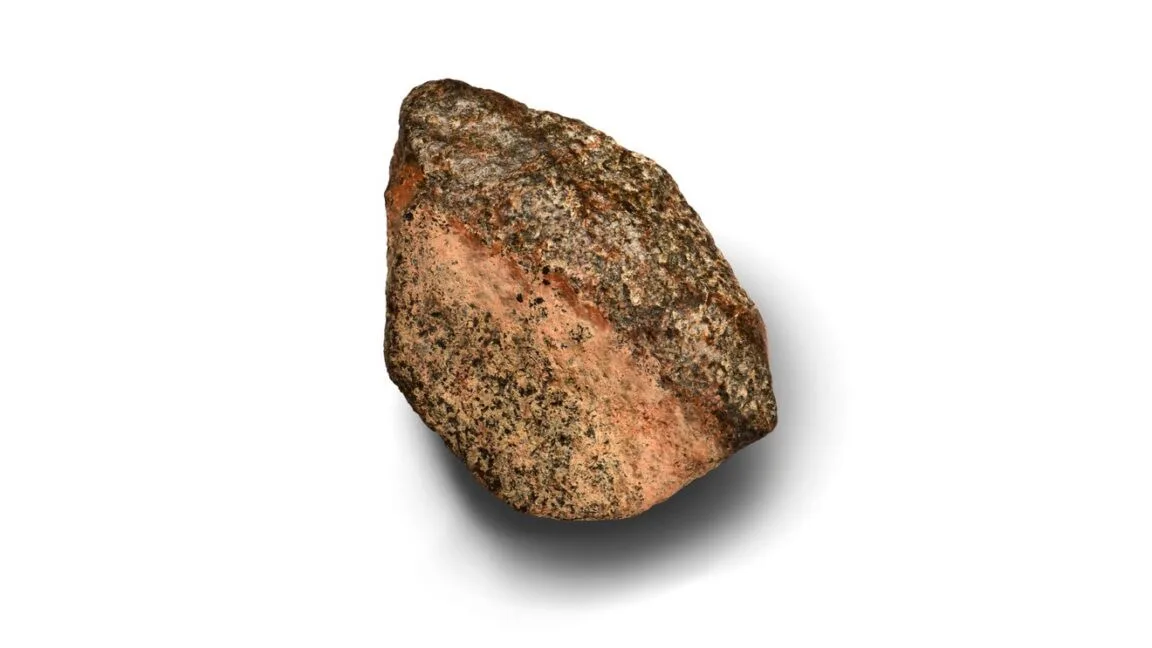
Image: Ars Technica · Source
The newly studied Teghaza 001 meteorite, found in the Sahara, formed over 4.1 billion years ago, offering insight into Mars' ancient crust and early hydrosphere.
Scientists have identified a rare Martian meteorite named Teghaza 001, discovered in the Sahara Desert in 2022, that originated from Mars' crust more than 4.1 billion years ago, making it one of the oldest known Martian rocks on Earth. This team, led by NASA’s Jet Propulsion Laboratory planetary scientist Yang Liu, published their findings in Science. Unlike most Martian meteorites collected so far—which tend to be younger than 2.4 billion years—Teghaza 001 provides a window into Mars' earliest crustal history. The rock is mainly composed of feldspar and pyroxene, indicating slow cooling deep within the crust rather than surface volcanic activity. Using multiple dating methods, including zircon and rubidium-strontium techniques, the researchers consistently dated the meteorite's formation to over 4.1 billion years ago. Evidence of sodium-rich rims and oxygen isotope signatures suggests that the rock underwent alteration by circulating hydrothermal fluids soon after crystallization, supporting the idea of an active early Martian hydrosphere with water interacting extensively with the crust. The meteorite's unique elemental ratios hint at a mantle source from depths over 160 kilometers, pointing to a more complex early mantle differentiation on Mars than previously understood. While the precise location of Teghaza 001’s origin on Mars is not definitively known, the southern highlands northwest of the Hellas basin are a likely candidate based on orbital chemistry maps. The study underscores the importance of obtaining additional samples, preferably with geological context like those currently being collected by rovers such as Perseverance, to deepen understanding of Mars’ primordial environment and interior evolution. Teghaza 001 thus offers crucial evidence of a wet, dynamic early Mars and informs models of planetary differentiation in the early solar system.

Sources and original reporting
Read the original source ↗
Comments (0)
No comments yet. Start the discussion.
Write a comment
Comments are published after moderation. Your name and comment will be visible publicly. Account