
US Tech Giants’ Trans-Pacific Subsea Cables at Increasing Risk from Chinese Surveillance and Sabotage
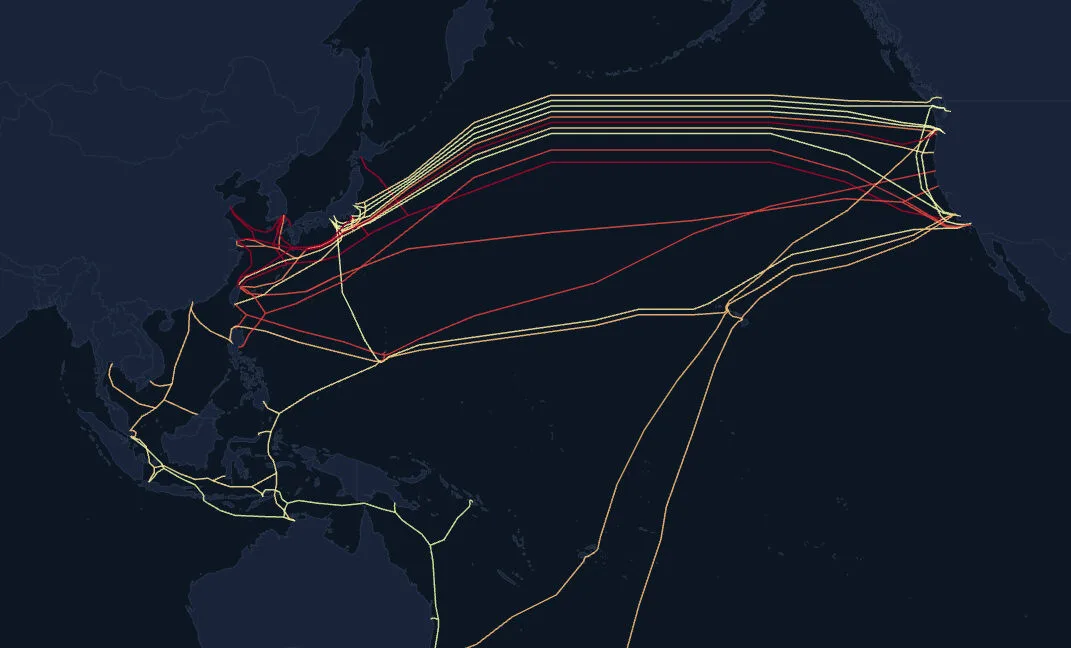
Image: Ars Technica · Source
US-owned trans-Pacific undersea cables critical for internet connectivity face heightened risks from possible Chinese sabotage and surveillance activities in the Pacific Ocean, according to recent US government reports.
Subsea cables, essential for global internet communications, are increasingly vulnerable to disruptions linked to geopolitical tensions in the Pacific Ocean region. A new report commissioned by the US-China Economic and Security Review Commission highlights that undersea cables owned or co-owned by major US technology companies such as Google and Meta are among the most at risk of sabotage and unauthorized surveillance. These cables form critical links between the United States, Taiwan, Japan, and the Philippines.
The vulnerability arises amid heightened activity from Chinese research vessels reportedly conducting detailed surveys along subsea cable routes, an unusual behavior compared to other nations’ research ships. This is compounded by incidents involving Chinese vessels implicated in damaging undersea cables near Taiwan, including a notable 2025 case where a Chinese ship captain was convicted after damaging the Tai-Peng 3 cable.
The report introduced an interactive Trans-Pacific Cable Gray Zone Vulnerability Index, which factors in parameters such as cable depth, shipping traffic, ownership, and proximity to disputed regions like Taiwan. The index ranks cables passing through shallow waters and busy shipping lanes near Taiwan, Japan, and the Philippines as having the highest susceptibility to disruption. Notably, projects like Google’s TPU cable, Meta’s ORCA cable, and Verizon’s co-owned E2A cable rank within the top five most vulnerable.
Disruption of even a single major trans-Pacific cable could overwhelm existing network capacities, forcing traffic onto slower or less direct routes, potentially causing significant economic impacts on internet services, cloud operations, and financial markets. During geopolitical crises, simultaneous damage to multiple cables could severely degrade connectivity between the United States and the Indo-Pacific region.
Experts point to the development of dual-use technologies, such as undersea cable cutting tools designed for repair but capable of sabotage, alongside a build-up of military submarines and undersea drones, intensifying risks to cable security. Further, damage investigations in other regions, such as the Baltic Sea and the Arctic, have revealed patterns of suspicious activities by Russian and Chinese-linked vessels targeting similar infrastructure.
These emerging threats underscore growing concerns about the security of the internet’s physical backbone amid international tensions. Analysts emphasize the need for improved monitoring, protective measures, and international cooperation to safeguard these critical communication channels against sabotage and espionage.

Sources and original reporting
Read the original source ↗
Comments (0)
No comments yet. Start the discussion.
Write a comment
Comments are published after moderation. Your name and comment will be visible publicly. Account