
Orange and Telefónica Introduce AI and Virtual Reality in Spanish Classrooms
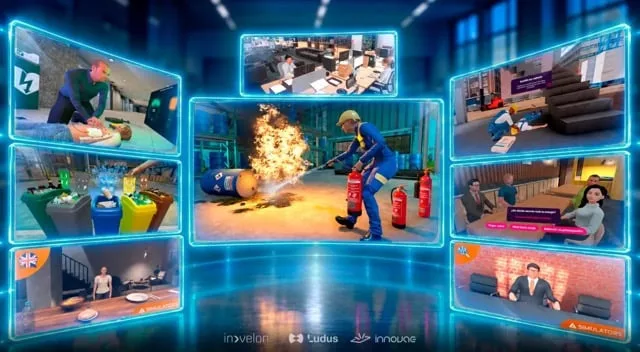
Image: A digital collage displays multiple virtual reality training simulations framed in glowing blue rectangles. Scenes include a person using a fire extinguisher on a blaze, office and warehouse safety scenarios, and people interacting in virtual meeting · Source
Spanish telecom giants Orange and Telefónica launch innovative educational projects using AI and VR to enhance secondary and vocational training.
Spain's two leading telecommunications operators, Orange and Telefónica, have each initiated distinct educational technology projects aiming to modernize classroom learning through artificial intelligence and virtual reality. Orange has introduced MentorIA, an AI-based educational assistant designed for secondary school students aged 14 to 18. Developed by the Spanish company BQ and conceptualized by HUMANSDID, this software operates within a controlled environment aligned with the national curriculum. MentorIA employs the Socratic method by engaging students with successive questions, hints, and challenges to stimulate reasoning rather than providing direct answers or text generation. This approach addresses the growing trend of cognitive outsourcing, where students might rely excessively on open-access generative AI tools for assignments. Currently, MentorIA is available for History and Biology for 4th-year secondary students (Educación Secundaria Obligatoria). The platform complies with the European General Data Protection Regulation (GDPR), enables teachers to manage virtual classrooms, and offers monitoring dashboards to track student reasoning development. After a pilot phase in three Madrid-area schools, Orange plans to expand the program to additional subjects and institutions.
Meanwhile, Telefónica Educación Digital, the training and digital skills division of Telefónica Spain, will supply content for 53 simulators and digital twins over four years to 2,811 public vocational training centers (Formación Profesional or FP) across the country. This initiative, supported by the Spanish Ministry of Education, Vocational Training and Sports and funded with €37.9 million from the European Union’s Next Generation funds, targets approximately 1.2 million students. The simulators cover all 26 vocational training fields and incorporate virtual reality devices developed in collaboration with the startup Ludus (a Wayra portfolio company), and manufacturers Innovae and Invelon. These tools allow learners to practice professional protocols and handle risk scenarios safely within classrooms. The virtual training focuses on transversal skills such as occupational safety, risk prevention, health, sustainability, employability, and language abilities. There are initially over 157,000 licenses available, with room to increase by 12,000. The project includes a centralized platform managed by the Ministry providing technical support, maintenance, and updates through 2030.
Together, these programs mark significant steps by Spain’s major telecom operators to integrate cutting-edge AI and VR technologies into education, enhancing student engagement and practical skill development in both secondary and vocational settings.
Sources and original reporting
Read the original source ↗
Comments (0)
No comments yet. Start the discussion.
Write a comment
Comments are published after moderation. Your name and comment will be visible publicly. Account