
Pascal Innovates 170-Year-Old Heat Pump Technology with Sponge-Like Material
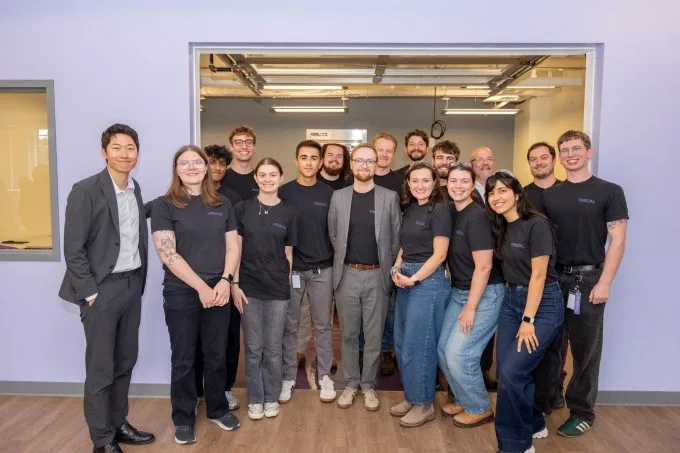
Image: A group of people standing in a wide doorway. · Source
Startup Pascal introduces a new heat pump and refrigerator technology using a porous material that enhances efficiency by about 20% and eliminates harmful refrigerants.
Heat pump technology, foundational for refrigeration and cooling, has remained largely unchanged for over 170 years. However, Pascal, a startup led by CEO Adam Slavney and CTO Jinyoung Seo, is pioneering an innovative approach that could transform this field. Reports from TechCrunch detail how the company has developed a new heat pump system incorporating a proprietary sponge-like material designed to interact with compressed carbon dioxide, promising roughly 20% greater efficiency than conventional models.
Traditional refrigerants have been problematic due to environmental concerns; earlier gases like Freon damaged the ozone layer, while current refrigerants such as R-134a are potent greenhouse gases. Over decades, scientists have sought alternatives, including solid-state refrigerants that eliminate gas leaks by utilizing solids to transfer heat. Pascal's breakthrough goes a step further by compressing carbon dioxide gas into cartridges filled with their novel porous material. As CO2 molecules enter the material’s pores, their collisions warm the solid, enabling effective heat transfer via a heat exchanger.
Pascal’s system operates with two cartridges simultaneously—one absorbing heat from inside a refrigerator compartment and transferring it to CO2, and the other expelling heat from CO2 to the surrounding air. The system periodically reverses flow to maintain optimal temperatures. Rigorous testing has shown the material sustaining over 300,000 cycles, equating to about one year of continuous operation, with no loss of robustness.
The design benefits from moving heat more efficiently than other solid-state refrigerant methods, thereby working at conventional pressure levels instead of requiring extraordinarily high pressures. This compatibility with existing refrigeration infrastructure suggests Pascal can produce affordable and widely deployable cooling solutions.
Pascal has already secured a pilot contract with a multinational beverage company and raised $8.5 million in funding from investors including Sazze Partners and LB Investment. The company plans to deliver its first prototype heat pump early next year, targeting commercial production of improved refrigerators by 2028.
Overall, Pascal’s technology offers a promising upgrade to an aging industry by combining novel material science with environmentally friendlier refrigerant cycling, potentially making refrigeration and air conditioning systems more efficient and sustainable.
Sources and original reporting
Read the original source ↗
Comments (0)
No comments yet. Start the discussion.
Write a comment
Comments are published after moderation. Your name and comment will be visible publicly. Account