
Russian Military Satellite Executes Unprecedented Close Maneuver Near US-Owned Commercial Imaging Satellite
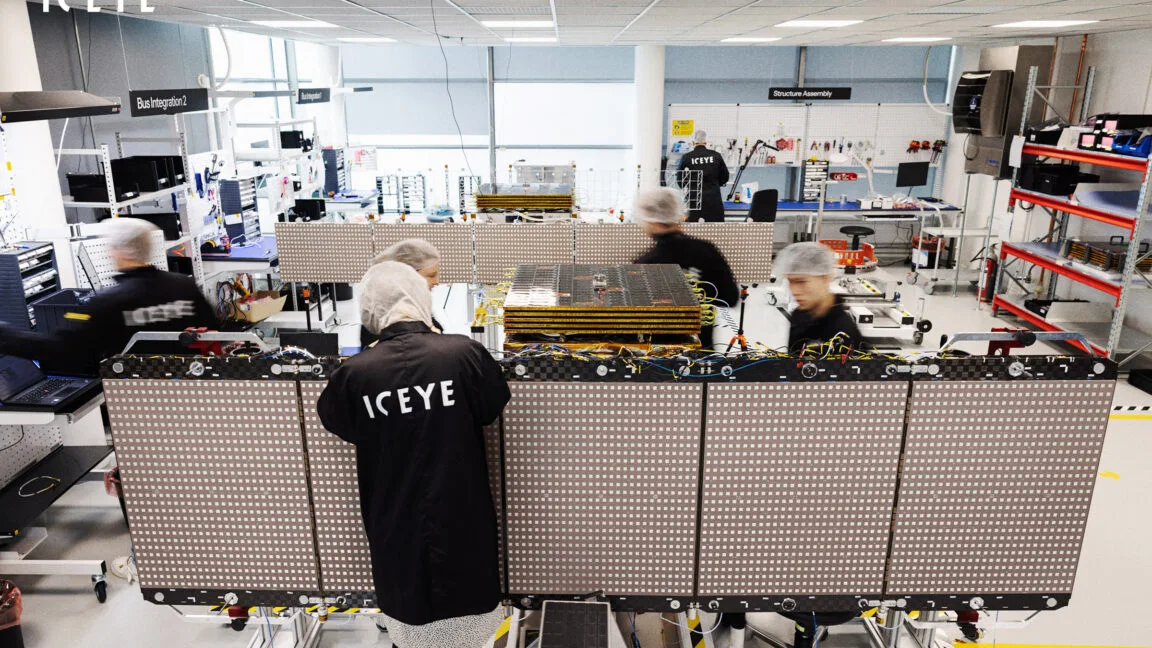
Image: Ars Technica · Source
Russian satellite Kosmos 2612 intentionally approached and lingered extremely close to ICEYE-X36, a US-operated commercial Earth-imaging satellite used by Ukraine, marking the first unsanctioned rendezvous in low-Earth orbit, per LeoLabs.
In a significant escalation of space-domain operations, the Russian military satellite Kosmos 2612 conducted a series of deliberate maneuvers bringing it into "extreme proximity" of ICEYE-X36, a US-operated commercial Earth-imaging satellite extensively used by Ukraine for reconnaissance, according to the orbital tracking firm LeoLabs. The incident marks the first known instance of an unsanctioned close rendezvous between two active satellites in low-Earth orbit.
Kosmos 2612 was launched in April 2026 aboard a Russian Soyuz rocket and has been tracked by US military and independent analysts since then. Initially separated by hundreds of kilometers, Kosmos 2612 gradually adjusted its orbit over several months to align closely with ICEYE-X36. Last week, it rapidly closed the distance, at one point positioning itself just 500 meters or less from ICEYE-X36 and loitering near the commercial satellite for several days with controlled movements around it.
LeoLabs described the approach as involving a "controlled approach, changes in relative position, close-proximity loitering, additional small maneuvers, and a controlled departure," consistent with sophisticated rendezvous and proximity operations (RPO). The proximity was so close that tracking radars occasionally struggled to distinguish the two spacecraft independently. As of October 19, 2026, Kosmos 2612 was moving away at a relative speed of approximately 17 kilometers per hour.
ICEYE, a Finnish firm with a constellation of radar imaging satellites capable of penetrating cloud cover and darkness, provides near-real-time intelligence to various military customers, including Ukraine. ICEYE-X36 is owned by their US subsidiary and is part of a constellation designed for resilience and continuity, with dozens of satellites and more launches planned. While losing a single satellite would minimally affect service, the close approach was seen as an intentional show of force.
This unprecedented Russian action represents a stark warning, especially since past incidents of Russian space maneuvers primarily targeted US government spy satellites rather than commercial platforms. Experts note this behavior mirrors Russia's aggressive tactics across military domains, sending a clear message of willingness to aggressively monitor or potentially disrupt satellites perceived as threats. Retired US Space Command officials interpret the move as part of Russia's broader operationalization of anti-satellite weapons and provocative behavior in space.
No physical damage to ICEYE-X36 has been reported. However, the event raises concerns about the weaponization and militarization of space, particularly involving commercial assets supporting military operations. The US military has acknowledged deploying weapons in orbit, though details remain classified. The incident highlights growing space security challenges and the potential vulnerabilities of commercial satellites in contested orbital environments.

Sources and original reporting
Read the original source ↗
Comments (0)
No comments yet. Start the discussion.
Write a comment
Comments are published after moderation. Your name and comment will be visible publicly. Account