
Stoke Space Advances Reusable Nova Rocket Testing as Rocket Lab Delays Neutron Launch

Image: Ars Technica · Source
Stoke Space ships its reusable Nova upper stage for testing, while Rocket Lab postpones the Neutron rocket debut to 2027 due to manufacturing issues, highlighting ongoing developments in reusable rocket technology.
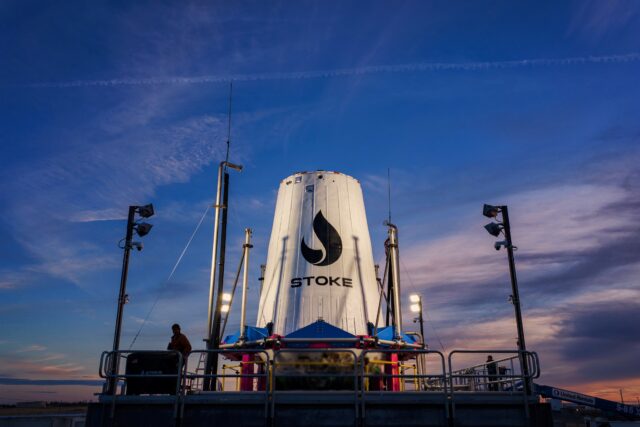
In recent developments within the aerospace sector, Stoke Space has progressed with testing its reusable rocket technology by shipping the upper stage of its Nova rocket from its Kent, Washington factory to its Moses Lake test facility. This upper stage will undergo critical cryogenic pressure and hotfire testing with its Andromeda engine, marking a major milestone as the company moves closer to its planned orbital launch in 2027. Notably, the Nova rocket stands out as one of the few fully reusable medium-lift launch vehicles under active development in the West, featuring an innovative heat shield and multiple thrusters on the upper stage to enable reuse.
Meanwhile, Rocket Lab has publicly confirmed delays in its Neutron rocket program. Originally aiming for a first flight potentially by the end of 2026, Rocket Lab now pushes the debut to 2027, citing difficulties with manufacturing large carbon composite structures for the reusable first stage. The issue pertains specifically to small air pockets within the carbon fiber layers of the forward dome of the propellant tank. This complexity reflects broader challenges in aerospace manufacturing related to advanced composite materials, which offer benefits such as weight reduction and corrosion resistance but require precise fabrication techniques.
Additionally, the aerospace startup LEAP announced plans for a smallsat launcher named Bighorn set for first orbital launch in 2028. LEAP aims to build mass production capabilities, targeting six rockets per year initially with scalability to two per month, to meet growing demand for dedicated small-satellite launches.
On the launch services front, California-based Reflect Orbital secured two launches with Indian private launcher Skyroot Aerospace, with one slated for the Vikram-1 rocket and another for the upgraded Vikram-1U. This move highlights concerns among satellite operators about future U.S. launch capacity, particularly as SpaceX shifts focus from Falcon 9 to the larger Starship vehicle.
SpaceX continues its active launch cadence, recently delivering its 35th cargo resupply mission to the International Space Station and deploying U.S. military data relay satellites via Falcon 9. The company is also seeking FAA approval to nearly 18-fold increase annual Starship-related launch and landing operations at its Starbase facility in Texas. Following a successful ocean splashdown test, SpaceX returned the first flight-proven Starship vehicle to Starbase for detailed inspections, aiming to gather novel data on thermal protection, engines, and avionics.
These developments underscore the dynamic nature of the space launch industry as companies pursue advanced reusable rocket technologies while addressing manufacturing challenges and ramping launch rates to meet expanding demand.




Sources and original reporting
Read the original source ↗
Comments (0)
No comments yet. Start the discussion.
Write a comment
Comments are published after moderation. Your name and comment will be visible publicly. Account