
PC Shipments Plunge Over 20% in Q3 2026 Amid Rising Component Costs and Inventory Challenges
Image: Ars Technica · Source
Global PC shipments dropped more than 20% year-over-year in Q3 2026, marking the steepest decline since early 2023. Industry analysts attribute the downturn to elevated component prices, supply constraints, and inventory overstocking.
The global personal computer market experienced a significant downturn in the third quarter of 2026, with PC shipments falling sharply by approximately 20 percent year-over-year. Research firms Omdia and IDC both reported this marked decline, attributing the drop to a combination of rising component costs, supply shortages, and cautious buying behavior.
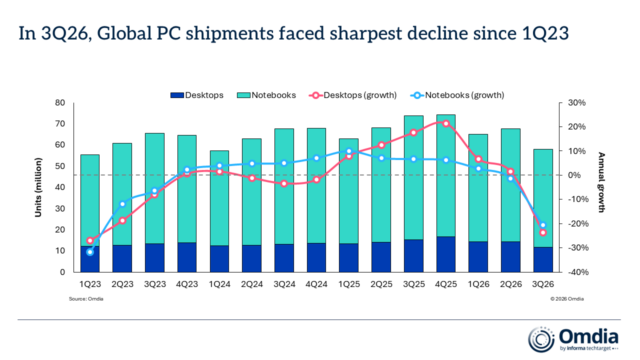
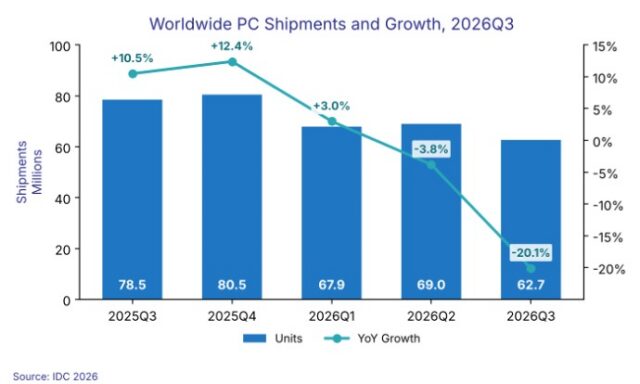
According to Omdia, worldwide shipments of laptops, desktops, and workstations totaled 58.1 million units in Q3 2026, representing a 21.2 percent decrease from the same period last year. Desktop PC shipments declined 23.5 percent to 11.7 million units, while laptop shipments dropped 20.6 percent to 46.4 million units. IDC's figures were slightly higher, citing a 20.1 percent year-over-year decline to 62.7 million units shipped, down from 78.5 million in Q3 2025. This represents the largest decline IDC has recorded in a third quarter.
Furthermore, IDC noted that Q3 shipments were 9.1 percent lower than in Q2 2026, a notable trend since Q3 shipments typically surpass those of Q2. The softening demand was exacerbated by PC vendors and sales channels carrying excess inventory accumulated earlier in the year in anticipation of rising prices for memory components. This built-up stock reduced purchasing urgency during the quarter, contributing to the shipment drop.
Industry experts pointed to increasing component prices as a core factor. Memory and storage now account for nearly 40 percent of PC manufacturing costs, up from the usual 15 percent, due largely to surging demand for high-bandwidth memory (HBM) and server DRAM driven by artificial intelligence workloads. These cost pressures have led to PC price hikes exceeding four times inflation, though pricing increases have not yet fully compensated for component cost surges.
Omdia's research director Ishan Dutt described the Q3 decline as expected, noting that rising production costs have pushed vendors and original design manufacturers (ODMs) to reduce output while channel partners work through elevated inventories. The tight supply of processors, graphics cards, and integrated circuits has further complicated supply chain and inventory management.
Looking forward, Omdia forecasts a continued contraction with a projected 24 percent year-over-year decrease in Q4 2026 shipments and an additional 7 percent decline extending into 2027. Executives from major memory manufacturers Micron and Samsung have indicated that component shortages could persist through 2028, suggesting ongoing challenges for PC vendors.
While some short-term price promotions may emerge as retailers seek to clear stock, analysts expect PC prices to remain generally elevated with only modest and temporary decreases. The combination of macroeconomic headwinds and supply constraints underscores the possibility that this recent sharp decline represents the start of a new downward cycle in the PC market.

Sources and original reporting
Read the original source ↗
Comments (0)
No comments yet. Start the discussion.
Write a comment
Comments are published after moderation. Your name and comment will be visible publicly. Account