
Nathan Fielder's Documentary Explores Elizabeth Holmes' Complex Persona
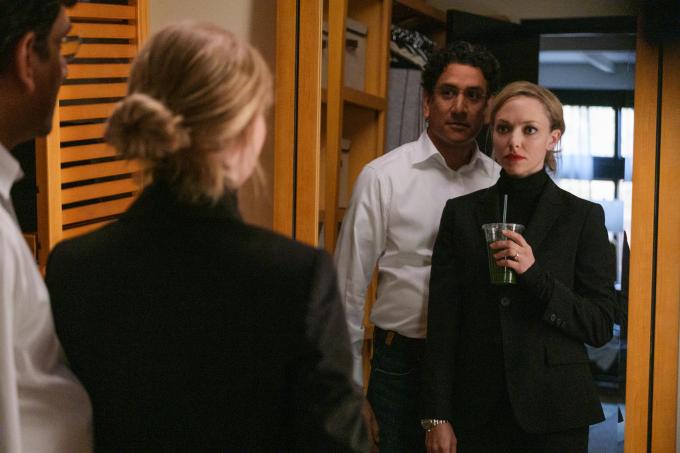
Image: A screen from the Dropout where Holmes and Balwani stand in front of a mirror, Holmes drinking green juice in a black turtleneck · Source
Comedian Nathan Fielder's documentary on Theranos CEO Elizabeth Holmes probes the blurred lines of authenticity and performance in her life and public image, revealing a layered exploration of identity and perception.
Nathan Fielder, known for his satirical show “Nathan for You,” directed a documentary capturing the last days of Elizabeth Holmes' freedom before she began serving an 11-year sentence for fraud related to Theranos. Holmes and her husband approached the filmmaker and A24 to create a film that might reshape public understanding of the disgraced CEO. Fielder, whose work often blurs fact and fiction for comedic and critical effect, seized this unusual opportunity to delve into Holmes' multifaceted persona.
Holmes consistently maintains her innocence despite widespread evidence presented at her trial, including testimonies from defrauded investors and whistleblowers. In conversations with Fielder, she insists the allegations were unfounded, reflecting a complex interplay between self-perception and external judgment.
The documentary interweaves perspectives, including those of Holmes’ husband, Billy Evans, who has created an AI avatar of Holmes to symbolically keep her presence at home with their children. It also features actress Amanda Seyfried, who portrayed Holmes in Hulu’s miniseries “The Dropout,” providing meta-commentary on the act of representation itself. Seyfried watches Holmes’ reactions to her portrayal, highlighting the recursive layers of identity and performance.
Fielder himself becomes a key figure in the narrative, questioning Holmes and Evans about disputed quotes and struggling to distinguish genuine moments from those possibly staged for the camera. Evans’ contentious behavior and attempts to control the narrative add further complexity, casting him as an ambiguous character who may be manipulating public sympathy.
After Holmes begins her prison term, restrictions force Fielder to reconstruct conversations from memory, collaborating with Seyfried to authentically capture Holmes’ voice in reenactments, underscoring the challenges of portraying a figure partly defined by persona and perception.
The film ultimately presents a constellation of colliding realities and personas, highlighting how Holmes, Fielder, Evans, and Seyfried navigate the murky territory between truth, performance, and public image. It refrains from exonerating Holmes but offers a nuanced examination of her enigmatic character and the cultural fascination with authenticity in the age of media spectacle.
Sources and original reporting
Read the original source ↗
Comments (0)
No comments yet. Start the discussion.
Write a comment
Comments are published after moderation. Your name and comment will be visible publicly. Account