
NVIDIA Broadens Confidential Computing with OpenShell Architecture to Enhance Secure AI Agent Deployment
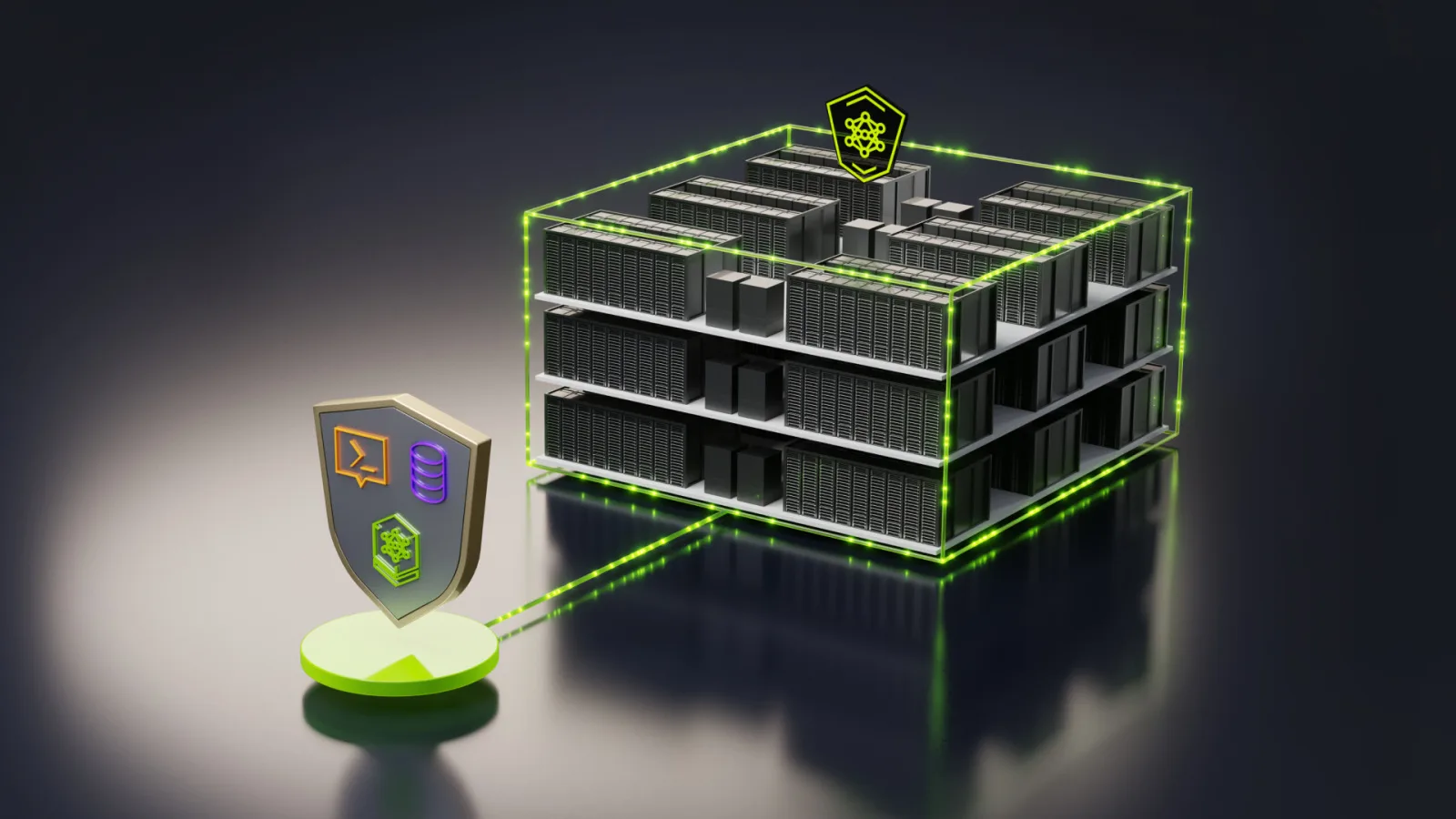
Image: NVIDIA · Source
NVIDIA unveils OpenShell Reference Architecture and expands Confidential Computing with Confidential Bare Metal, enabling secure, scalable AI agent deployment across global infrastructures and diverse hardware, supported by leading cloud and enterprise partners.
NVIDIA continues to advance the security and scalability of AI model deployment with its newly announced OpenShell Reference Architecture and expanded Confidential Computing offerings. The OpenShell Reference Architecture provides enterprises with comprehensive governance, isolation, and security tools designed to build, contain, observe, and enforce safe AI agents across data centers and edge systems.
Central to OpenShell is a full-stack industrial-scale infrastructure that includes NVIDIA Vera Rubin systems for model inference workloads, NVIDIA Vera CPUs optimized for AI agent management, and NVIDIA BlueField-4 data processing units (DPUs) running the in-silicon enforcement framework NVIDIA Sentry. This software-hardware integration supports continuous monitoring of AI agent behavior and rapid in-silicon policy enforcement, substantially improving security by quarantining agents that attempt unauthorized actions. OpenShell is compatible with major enterprise operating systems and container platforms, including Canonical Ubuntu, Red Hat, Microsoft Windows, and Kubernetes distributions.
Moreover, NVIDIA Confidential Computing is expanding with a new deployment mode called Confidential Bare Metal, enabling high-value model builders to run sensitive workloads on dedicated third-party infrastructure while maintaining full control over their models and data. Unlike virtualized environments, Confidential Bare Metal supports bespoke software stacks and strong hardware-enforced data protection, allowing secure operation across diverse provider infrastructures globally.
Alongside Confidential Bare Metal, NVIDIA offers Confidential Containers for Kubernetes clusters and Confidential Virtual Machines for virtualized settings, allowing organizations to select security and deployment models that best fit their operational and trust requirements. This scalable security architecture extends across an expanding range of NVIDIA systems such as Grace Blackwell and Rubin platforms and integrates with NVIDIA's DSX OS, which serves as a reference for cloud providers constructing AI factories.
Industry leaders are adopting these technologies: Cohere plans to use Confidential Bare Metal within its Model Vault to protect models and data in GPU memory and across interconnects, while Google Cloud will employ Confidential Bare Metal on A4X Max instances powered by NVIDIA GB300 NVL72 chips, combining non-virtualized GPU acceleration with cryptographic data protection.
NVIDIA’s broader ecosystem includes cloud, infrastructure providers, and enterprise hardware manufacturers like CoreWeave, Microsoft Azure, Google Cloud, Dell Technologies, HPE, Lenovo, and Cisco supporting Confidential Computing deployments. Additionally, numerous AI model developers and cybersecurity companies are collaborating to ensure the secure deployment and governance of AI agents leveraging the OpenShell platform.
Overall, these initiatives underscore NVIDIA's commitment to enabling organizations to safely scale AI workloads worldwide through advanced hardware-rooted security, platform integrity verification, and unified software controls. This robust security foundation aims to foster trust in AI agents operating in production environments across sectors ranging from finance and healthcare to retail and telecommunications.
Sources and original reporting
Read the original source ↗
Comments (0)
No comments yet. Start the discussion.
Write a comment
Comments are published after moderation. Your name and comment will be visible publicly. Account