
US Officials Describe Russian Military Satellite Maneuvers Near Commercial Spacecraft as Potential Orbital Weapon Activity

Image: Ars Technica · Source
The US accuses Russia's Kosmos 2612 satellite of dangerously close maneuvers near a US commercial radar satellite, suggesting possible anti-satellite weapon use, while Russia denies hostile intent and insists its space activities are peaceful.
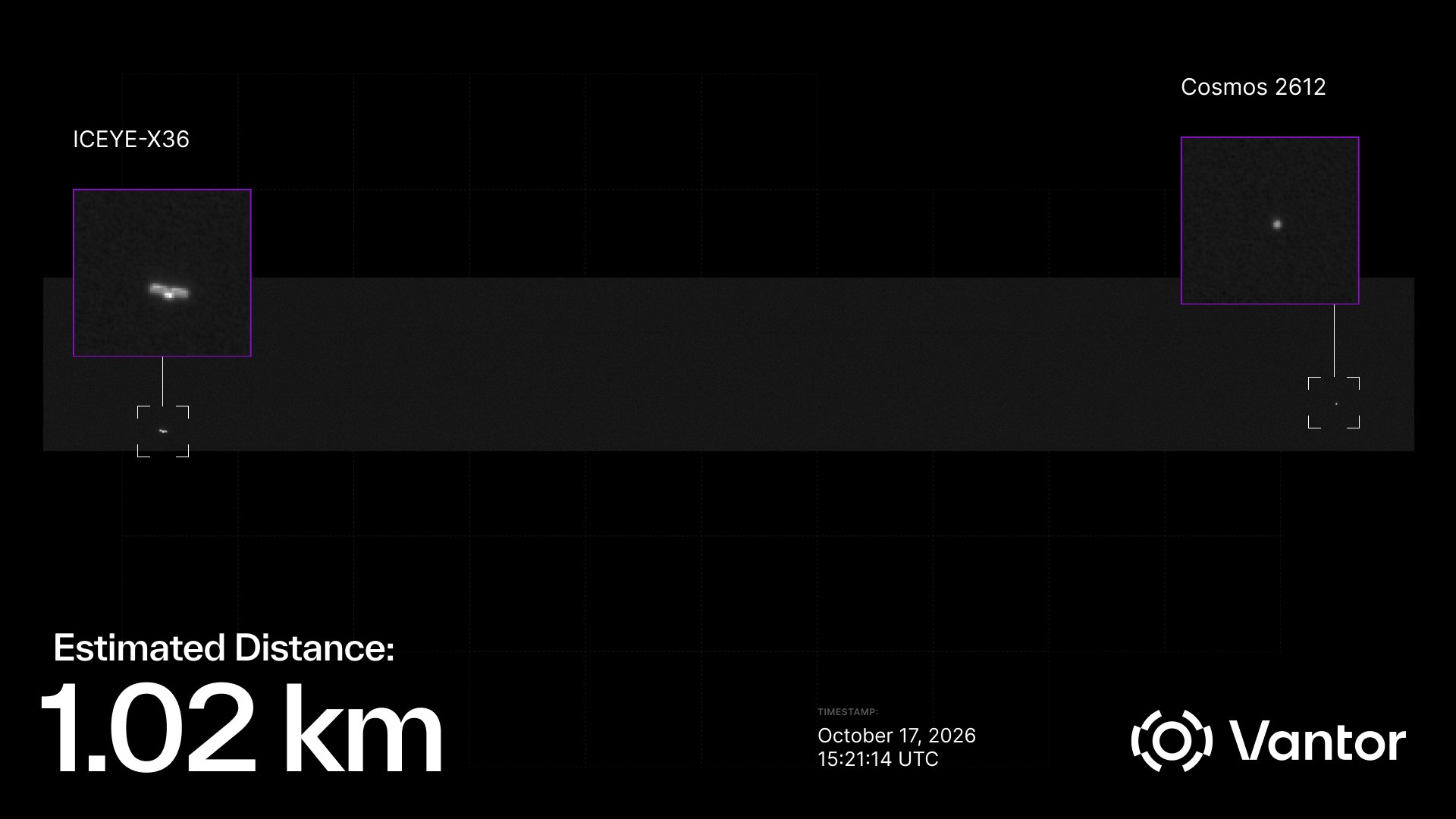
Tensions in space escalated recently when US officials called attention to aggressive maneuvers by Kosmos 2612, a Russian military satellite, near ICEYE-X36, a US-registered commercial radar surveillance satellite. During a UN session, Brian Hardesty of the US State Department criticized Russia for intentionally approaching the commercial satellite at a dangerously close distance approximately 340 miles above Earth. Hardesty described these actions as consistent with operating an on-orbit weapon, terming the Russian conduct deliberately reckless and in violation of established safety protocols in low-Earth orbit.
Thomas DiNanno, US Under Secretary of State for Arms Control and International Security, echoed these concerns publicly on the social platform X, marking the US government's formal response following the close encounter. According to orbital tracking data from LeoLabs and imagery provided by the satellite monitoring company Vantor, Kosmos 2612 approached within roughly 500 meters, possibly closing to as near as 100 feet of ICEYE-X36, though exact proximity is difficult to confirm due to tracking limitations.
In stark contrast, Konstantin Vorontsov, deputy head of Russia’s UN delegation, dismissed these concerns as “unfounded,” asserting at the UN First Committee that all Russian space activities, including those involving Kosmos 2612, are purely peaceful. This statement contrasts markedly with Vorontsov’s earlier 2022 remarks that named commercial satellite infrastructures assisting Ukraine as legitimate targets for retaliatory strikes.
Kosmos 2612’s recent orbital behavior involved a series of precise rocket burns designed to synchronize its orbit with ICEYE-X36, raising suspicions of testing anti-satellite (ASAT) capabilities analogous to previous Russian tests of the Nivelir system—an orbital weapon capable of physically colliding with other objects. The US Deputy Representative to the Conference on Disarmament, Jessup Taylor, emphasized that while Russia denies weaponization of its satellites, their “observable and confirmable behaviors are hard to deny.”
Despite the close approach, Kosmos 2612 did not engage any hostile actions and has since moved away, though its orbital pattern indicates potential for future proximity operations. This interaction occurs amidst a broader geopolitical context where the US, Russia, China, and India possess or have tested anti-satellite weapons, and global discussions continue over proposals for international treaties banning weapons in space.
US officials critique such blanket bans as ineffective since major space powers already have space-based weapon capabilities, advocating instead for reaffirmation and enforcement of the 1967 Outer Space Treaty’s prohibition on weapons of mass destruction in orbit. Meanwhile, Russian opposition to a recent UN Security Council resolution reaffirming this ban—vetoed by Russia—reflects ongoing international divisions on space security governance.
Notably, these developments coincide with reported slowdowns in satellite internet services like SpaceX’s Starlink in Ukraine, impacting military drone operations. Satellites like ICEYE’s continue to play vital roles providing reconnaissance and targeting support in conflict zones, underscoring the strategic importance and vulnerabilities of commercial satellites amid rising militarization of space.
The international community watches closely as the dynamics of space operations evolve, balancing peaceful uses with emerging orbital security challenges.


Sources and original reporting
Read the original source ↗
Comments (0)
No comments yet. Start the discussion.
Write a comment
Comments are published after moderation. Your name and comment will be visible publicly. Account