
NVIDIA Expands Cosmos Platform with Advanced Tools for Building and Deploying Physical AI World Models
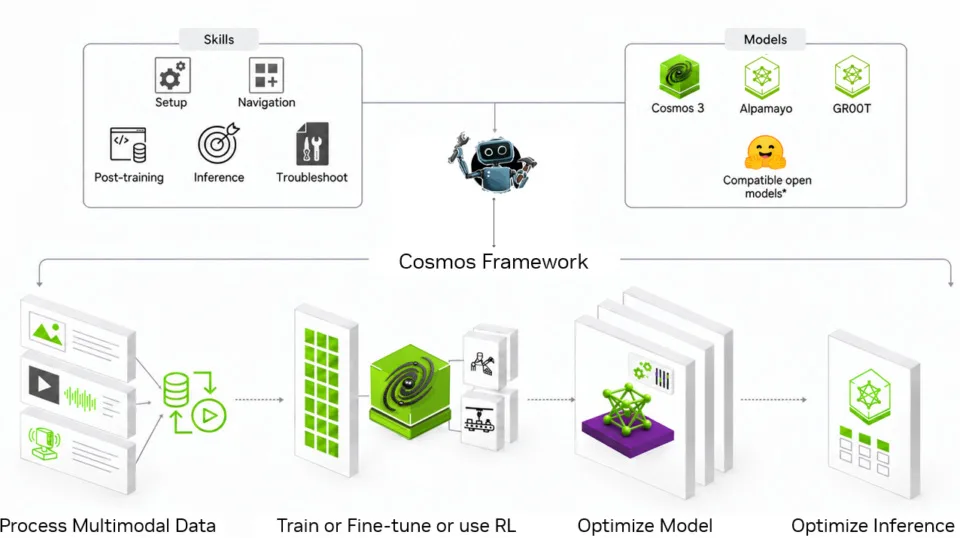
Image: NVIDIA · Source
NVIDIA has enhanced its Cosmos platform by introducing new training tools, simulation checkpoints, and Cosmos Data Factory blueprints to accelerate the development, evaluation, and deployment of physical AI world models that simulate real-world interactions across multiple industries.
NVIDIA has announced significant enhancements to its Cosmos platform aimed at advancing the creation and deployment of world models—complex AI systems that help machines perceive, understand, and simulate the physical world. These capabilities are critical for applications such as autonomous vehicles, robotics, and industrial inspection.
At its core, the Cosmos platform provides world model developers with cutting-edge open models, extensive training data, and comprehensive optimization and deployment toolkits. NVIDIA reports that Cosmos models rank among the top five on six different open-model leaderboards, underscoring their competitive performance.
A vital part of the update is the Cosmos Data Factory, a suite of cloud-native blueprints designed to build and enrich large, labeled multisensory datasets essential for training physical AI. These blueprints automate tasks such as data labeling, curation, augmentation, and synthetic data generation across diverse scenarios. For example, specialized blueprints enable autonomous vehicle dataset generation with curated and synthetic driving data, event video generation to simulate rare or unsafe occurrences, and defect image generation for quality inspection models. Supported on platforms including GitHub, Microsoft Azure, Nebius, and CoreWeave, Cosmos Data Factory accelerates data workflows using agentic skills and GPU acceleration.
Automotive company Porsche leverages Cosmos Data Factory via Voxel51 on Microsoft Azure to create a shared autonomous vehicle (AV) data ecosystem among Volkswagen Group brands. This initiative aims to reduce repeated physical test drives by up to 90% and shorten development cycles by up to 85%. Similarly, robotics firm ANYbotics used Cosmos tools to generate over 1,500 synthetic video clips to train inspection robots, and computer vision company Ultralytics enhanced its YOLO model for defect detection using targeted synthetic defects.
In addition to data tools, NVIDIA has expanded the Cosmos Framework's training and deployment capabilities. Developers can now fine-tune and optimize leading open models like GR00T, Alpamayo, QWEN, and Pi0.5 through techniques such as reinforcement learning, distillation, and quantization. For instance, robotics research lab MicroAGI adapted Cosmos 3 to specialize in egocentric manipulation tasks, reducing model size substantially without accuracy loss.
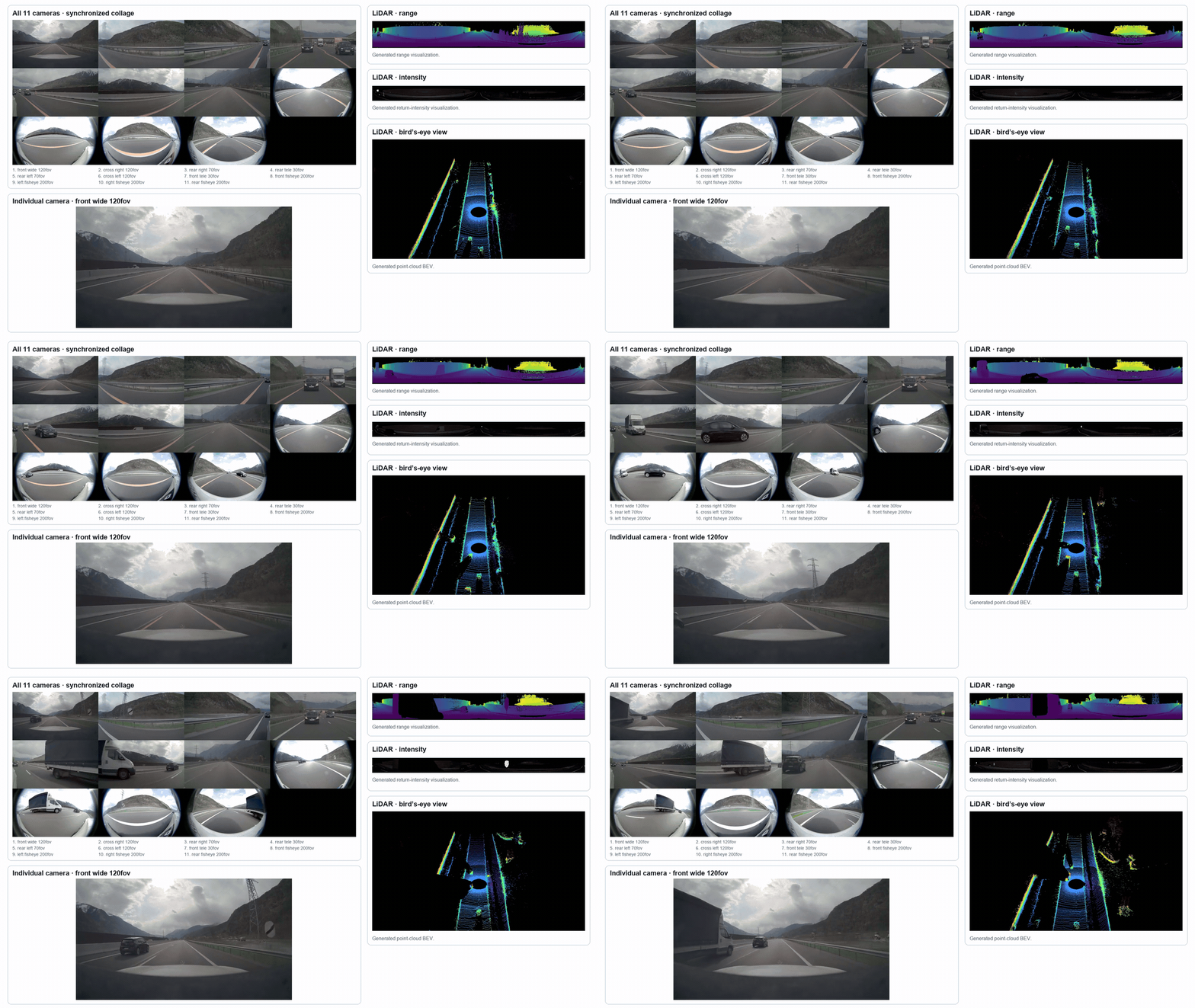
The platform also includes simulation enhancements with Cosmos 3 Nano model variants, enabling developers to test autonomous policies in complex, multiview, multisensor simulations before real-world deployment. NVIDIA’s Cosmos 3 NIM microservices provide up to 2x faster inference while maintaining quality, supporting continuous video analysis with sub-second alerts. Building on these technologies, NVIDIA Metropolis Blueprint 3.3 offers efficient video search and summarization capabilities, helping teams monitor significantly more video streams per GPU.
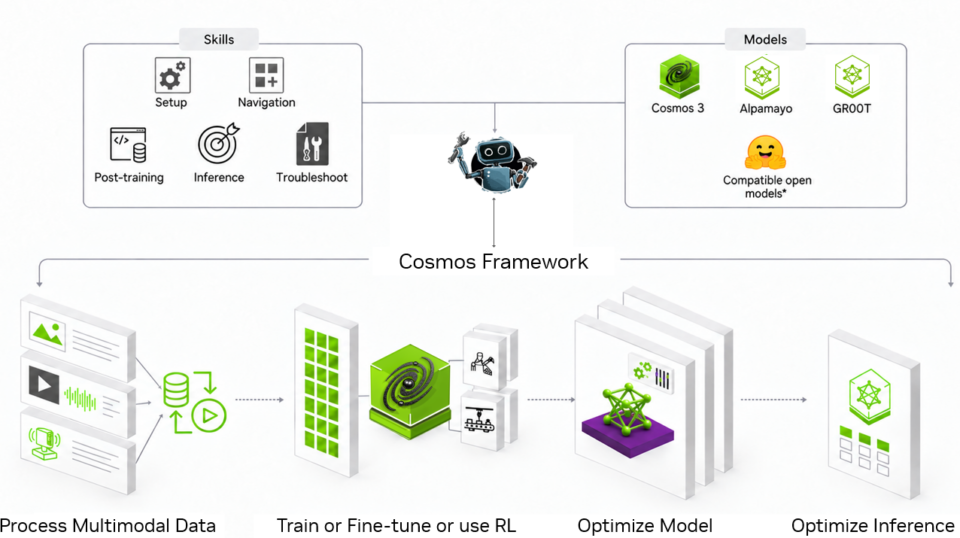
The ecosystem supports an open and modular approach. Developers can curate training datasets with Cosmos Data Factory, train and fine-tune models with the Cosmos Framework, and deploy them through scalable microservices. This integrated pipeline facilitates efficient iteration cycles and higher confidence in deploying AI systems that operate safely and effectively in physical environments.
Together with partners including Microsoft Azure and Voxel51, NVIDIA underscores its commitment to enabling an engineering-driven AI development process focused on repeatable validation and control. As demonstrated by Porsche’s modular data flywheel model, this collaborative yet OEM-controlled approach to data and model management is expected to accelerate autonomous vehicle development and beyond.
NVIDIA’s continued investments in the Cosmos platform reflect the growing importance of physical AI in real-world applications, making it easier for developers to build sophisticated AI models that perceive and act in the physical world with improved reliability and efficiency.
Sources and original reporting
Read the original source ↗
Comments (0)
No comments yet. Start the discussion.
Write a comment
Comments are published after moderation. Your name and comment will be visible publicly. Account