
Google and Ignite Energy Access Expand Off-Grid Solar Electrification in Sub-Saharan Africa
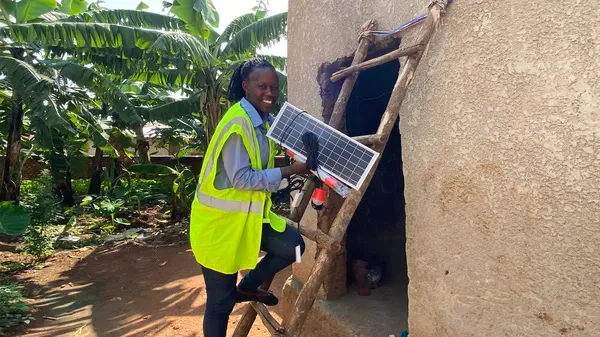
Image: Google · Source
Google partners with Ignite Energy Access to map remote homes and optimize solar delivery, enabling emissions reductions and planning for clean electric cooking solutions in sub-Saharan Africa.
Nearly 600 million people in sub-Saharan Africa live without electricity, relying heavily on costly and polluting fuels such as kerosene and wood. To address this, Google has collaborated with Ignite Energy Access over the past three years through its Startups for Sustainable Development program, aiming to bring off-grid solar power to millions of households in the region. This partnership leverages satellite imagery, advanced geospatial data, and artificial intelligence to overcome logistical challenges in reaching remote communities.
One key hurdle has been locating homes that lack formal addresses and are absent from typical mapping systems. Google and Ignite combined satellite data with Google's Open Buildings dataset and sophisticated routing algorithms to precisely identify these households. To navigate the rugged and often unmapped rural terrain for hardware delivery, Google has developed advanced geospatial models that incorporate local dirt paths into real-world routing plans, improving supply chain efficiency and lowering costs.
Moreover, the collaboration uses computer vision technology, including Google's Gemini for Science models, enhanced by drone imagery from Ignite, to detect small rooftop solar panels from space despite their minimal satellite image footprint. This enables monitoring of solar system adoption and helps direct resources to underserved villages.
The environmental impact is substantial. Since 2023, the partnership has delivered 3.7 million solar devices, contributing to an estimated reduction of over 160,000 metric tons of CO2 equivalent emissions in the first half of 2026 alone. This progress aligns with Google's commitment to assist partners in collectively cutting one gigaton of carbon-equivalent emissions annually by 2030.
Looking ahead, Google and Ignite are expanding their efforts to support clean cooking solutions. Many rural families still depend on wood and charcoal, causing indoor pollution and requiring significant time for fuel gathering. The partners are modeling community micro-grids capable of supplying sufficient power for modern electric cookstoves, aiming to improve health outcomes and reduce emissions.
This collaboration exemplifies how combining AI, satellite data, and supply chain optimization can accelerate sustainable energy access in underserved regions. Google encourages climate-focused founders to engage with the Startups for Sustainable Development program to contribute to similar impactful projects worldwide.


Sources and original reporting
Read the original source ↗
Comments (0)
No comments yet. Start the discussion.
Write a comment
Comments are published after moderation. Your name and comment will be visible publicly. Account