
Laurentide Ice Sheet Began Re-Expanding 2,000 Years Ago Before Human Warming Reversed It
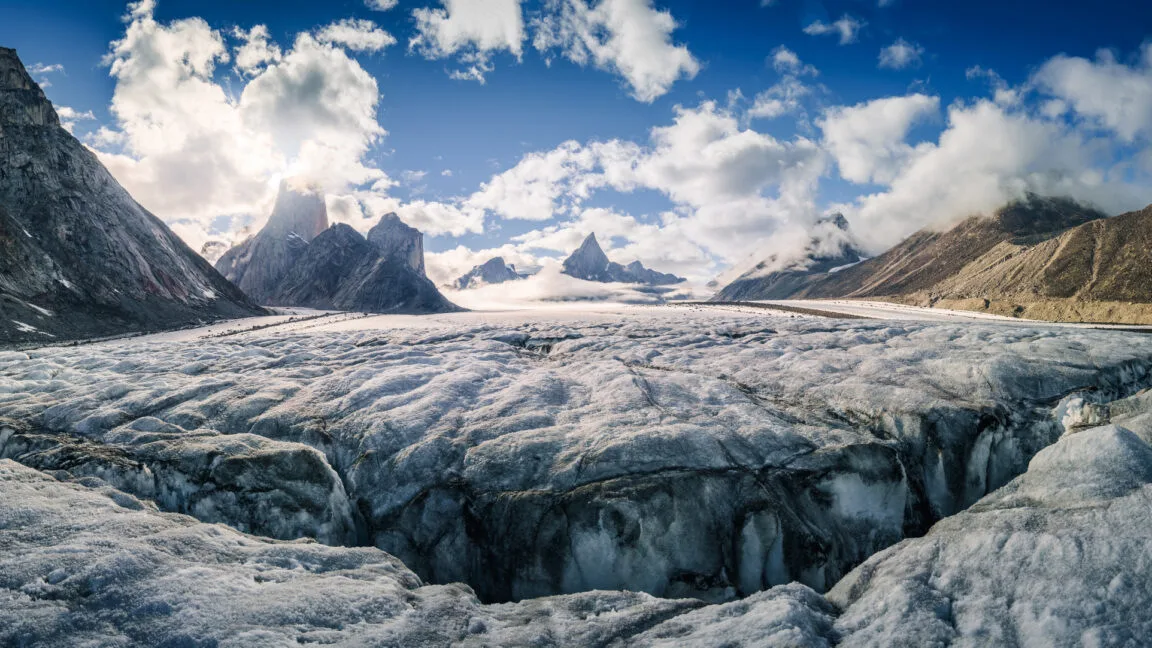
Image: Ars Technica · Source
New research reveals the Laurentide Ice Sheet started growing again around 2,000 years ago, marking a natural advance toward a new ice age that was halted by human-induced climate warming after 1960.
The Barnes Ice Cap, located on Baffin Island in the Canadian Arctic, is the last remnant of the Laurentide Ice Sheet—the vast ice mass that once covered much of Canada during the Pleistocene epoch. Recent research published in Science provides direct evidence that this ice sheet began to reverse its retreat and grow again roughly 2,000 years ago, signaling the onset of the next glaciation period. This natural cooling trend, however, was interrupted by anthropogenic climate warming around 1960, which reversed the ice's advance.
The study, led by geologist Nicolás Young of Columbia University, capitalized on Barnes Ice Cap’s unique characteristics. Being cold-based, it is frozen to bedrock rather than sliding over it, which preserves ancient plants beneath the ice that were overtaken when the ice sheet re-expanded. By analyzing these preserved tundra plants using radiocarbon dating, the researchers pinpointed the timing of ice advance. Independent dating using beryllium-10 isotope measurements on exposed rocks corroborated these findings, demonstrating that the Laurentide shrank to its minimal extent about 3,600 years ago and began re-expansion approximately 2,000 years ago.
This ice growth coincides with a period of decreasing solar energy reaching high northern latitudes, a natural driver toward glaciation, which initially overwhelmed a modest increase in atmospheric carbon dioxide. The ice sheet’s expansion continued through the Little Ice Age, with radiocarbon kill dates of moss samples clustering around 1800 CE. However, since 1960, the Barnes Ice Cap has been retreating rapidly as rising greenhouse gases from industrialization have caused warming significant enough to prevent further ice growth.
The researchers argue that the current conditions have effectively canceled the natural progression toward a new ice age that had been underway. While this has spared modern society from the harsh conditions of a full glacial climate, the interruption of one of Earth's most consistent climate cycles—the ice age pacing over the last 2.5 million years—is unprecedented and driven directly by human greenhouse gas emissions.
According to the study, continued warming ensures the eventual disappearance of Barnes Ice Cap within centuries, demonstrating how anthropogenic effects have radically altered Earth's natural climate rhythms. Ultimately, while humans have averted an approaching ice age, they have done so by initiating a new and profound change to the planet’s climate system, rather than preserving it unchanged.

Sources and original reporting
Read the original source ↗
Comments (0)
No comments yet. Start the discussion.
Write a comment
Comments are published after moderation. Your name and comment will be visible publicly. Account