
US Government Takes Equity Stakes in Fusion Startups Amid Renewed Funding Push
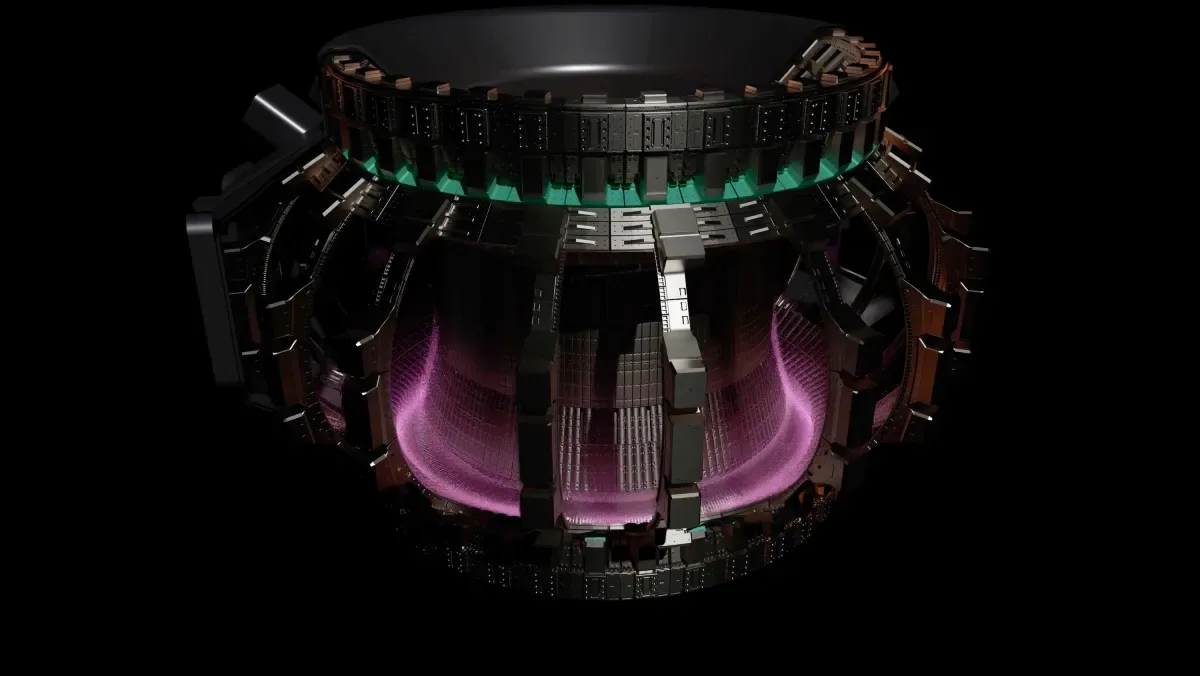
Image: TechCrunch · Source
Helion and Commonwealth Fusion Systems received $260 million in government awards but must give non-voting shares in return, marking a shift from traditional non-dilutive funding in US fusion sector support.
The U.S. government has renewed significant engagement with the fusion energy sector, awarding Helion and Commonwealth Fusion Systems (CFS) a combined $260 million under the Department of Commerce through the CHIPS and Science Act funds. This funding aims to develop advanced semiconductors critical for reactor power and control. Helion secured $175 million while CFS received $85 million.
Unlike previous government support, which typically provided non-dilutive capital that did not affect existing investor ownership, these awards come with the government receiving non-voting equity stakes in both companies. Helion’s stake corresponds to roughly 1% based on its latest $15.5 billion valuation. The exact size of the government’s stake in CFS is undisclosed.
The shift to equity-linked awards, influenced by the Trump administration’s push for government investment returns, aims to align the interests of these fusion startups and U.S. taxpayers. This methodology reflects a trend seen in other strategic sectors, where critical mineral companies and even Intel have ceded equity in exchange for federal investment.
Fusion power development, which involves complex and costly technology to replicate the sun’s energy production process on Earth, has attracted over $14 billion in private funding globally. Nonetheless, industry representatives and the Fusion Industry Association have urged the government for more substantial funding—recommending a one-time $10 billion infusion to enable the U.S. to remain competitive, particularly against countries like China.
Previously, government support for fusion had been sporadic and limited. The Biden administration’s Milestone Based Fusion Development Program paid companies against technical achievements but was underfunded. The recent $260 million awards signal increased federal commitment, albeit accompanied by equity participation terms not uniformly supported by fusion advocates.
Other fusion startups have received federal contracts or awards without giving up equity, illustrating varied approaches within the industry. Internationally, German fusion startups reported government and EU equity involvement via innovation funds.
The government’s new investment model could bolster confidence by sharing in commercial success but also introduces complexities for venture capitalists regarding dilution and capital structure prioritization. The fusion sector will require billions more in investment to realize practical fusion power.
Whether these equity-backed government awards prove beneficial or a deterrent remains to be seen, as startups weigh the tradeoffs between non-dilutive capital and government investment stakes on their path to commercial fusion energy.
Sources and original reporting
Read the original source ↗
Comments (0)
No comments yet. Start the discussion.
Write a comment
Comments are published after moderation. Your name and comment will be visible publicly. Account