
Siri Co-founder Supports Helix's Voice ID Technology for Human Verification
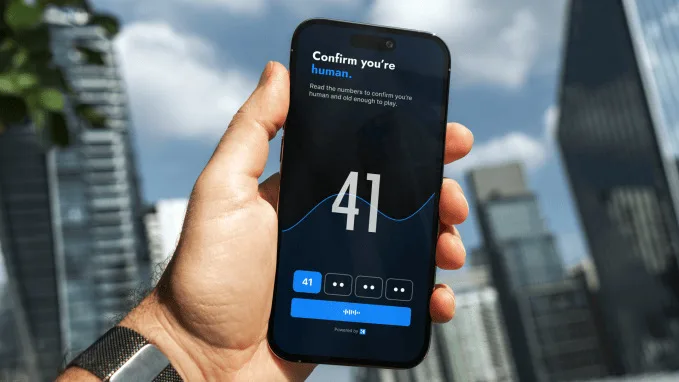
Image: Image Credits:Helix · Source
Helix introduces device-based voice ID technology to verify humans online, aiming to replace traditional CAPTCHA and address AI-driven identity challenges. The startup secured $6.2M funding with backing from Siri co-founder Dag Kittlaus.
The increasing presence of AI agents on the internet complicates the challenge of distinguishing human users from bots and automated programs. Traditional methods such as CAPTCHA tests, email verification, or device identifiers are becoming less effective or raise privacy concerns. To address these issues, Helix, a startup founded in 2025 by Alex Oberg, Anna Dorofiyenko, and Mike Hall, is developing voice identification technology that runs locally on user devices to verify if a user is human.
Helix’s core technology analyzes a user’s voice to confirm human identity and estimate age without requiring users to share sensitive personal information. This approach can supplement or replace CAPTCHA systems and help block bot attacks with minimal deployment costs, as the processing is done on-device, even compatible with models as old as the iPhone 13. The technology is being piloted for use cases including detecting intoxication or distress through voice biomarkers.
The startup recently raised $6.2 million in a funding round led by Chicago Ventures, with participation from multiple investors. Notably, Dag Kittlaus, co-founder of Siri, has backed Helix and serves as an adviser. He highlighted that voice-identification technology has reached a level of reliability that allows it to scale and counter acts of AI-driven fraud.
Helix’s CEO, Alex Oberg, explained that the rise of sophisticated AI agents like Instinct and Muse necessitates a reevaluation of digital identity verification, moving towards biometric signals such as voice. The company’s technology focuses on verifying the uniqueness and humanity of users rather than identifying individuals, emphasizing privacy protections such as the inability to reconstruct voices from stored voiceprints.
Further applications under exploration include verifying service providers who visit clients’ homes, such as healthcare workers and cabdrivers, an area exemplified by a partnership with Zeel, an in-home healthcare provider. Additionally, Helix aims to assist social media platforms facing global age-verification regulations by providing a privacy-friendly alternative through a brief voice challenge.
While the technology cannot yet reliably detect deception or distinguish AI-generated voices in live interactions, Helix represents a notable advancement in human verification that leverages biometric signals securely and efficiently, addressing emerging risks as AI becomes more prevalent online.
Sources and original reporting
Read the original source ↗
Comments (0)
No comments yet. Start the discussion.
Write a comment
Comments are published after moderation. Your name and comment will be visible publicly. Account