
YC-Backed Startup Discovered Materials Launches $1M AI Challenge to Solve Key Materials Science Problems
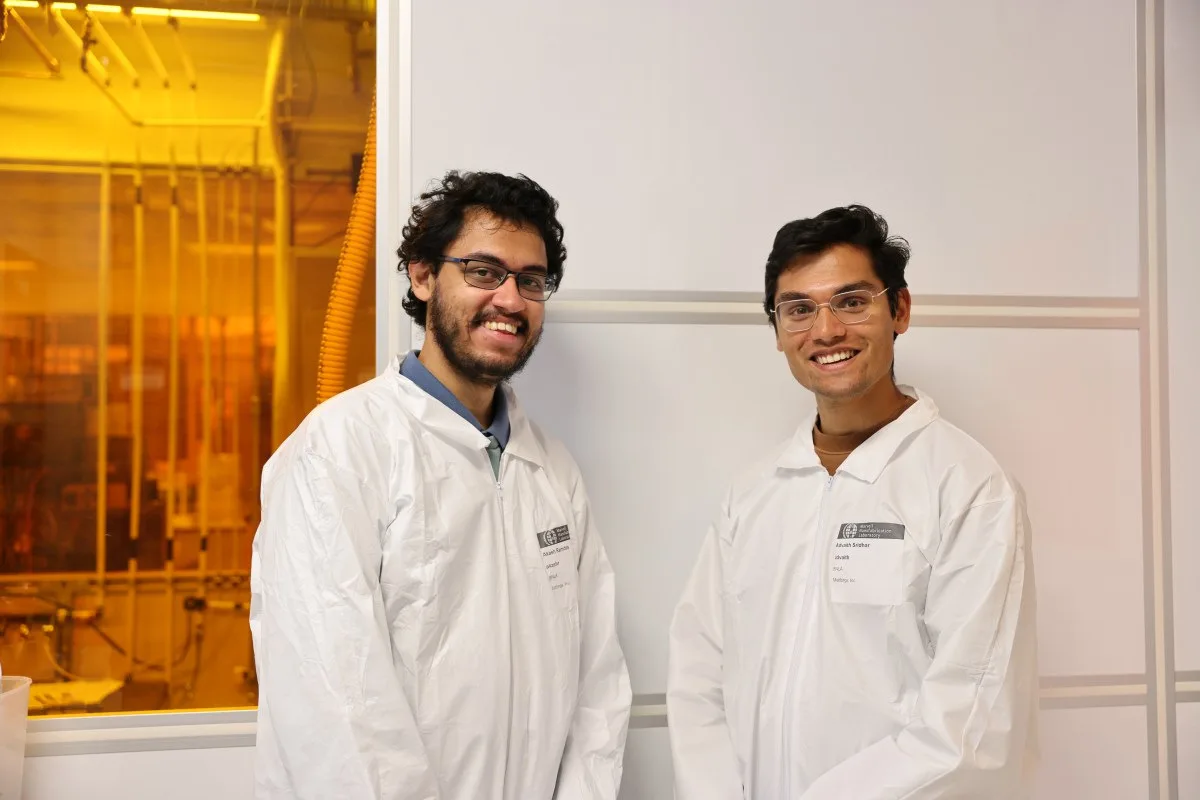
Image: TechCrunch · Source
Discovered Materials, a Y Combinator-backed startup, has announced a $1 million challenge aimed at harnessing AI to solve five critical open problems in materials science, potentially advancing semiconductor design and physics understanding.
Discovered Materials, a San Francisco-based startup incubated at Y Combinator’s spring 2026 batch, is spearheading a $1 million challenge to stimulate artificial intelligence solutions to five foundational problems in materials science. The company, which applies AI models to discover new materials for advanced semiconductor chips, seeks computational breakthroughs that could deepen understanding and improve design in the field.
While AI has recently made remarkable progress in problems across mathematics and life sciences, materials science presents unique challenges due to its complex physics and less clearly defined problem statements. “It’s more difficult to specify problems clearly in materials science because it’s not like math, where you can have a very specific definition and reach a yes or no answer,” said co-founder Advaith Sridhar.
To define their challenge, Discovered Materials convened an advisory panel of academics from leading universities to identify five unsolved core problems. Each problem carries a $200,000 prize, totaling $1 million, to incentivize AI-driven solutions. These problems include:
- Developing a theory to explain cuprate superconductivity, where certain materials exhibit zero electrical resistance at ultra-low temperatures. - Creating a numerical method to predict the structure of interfaces between silicon and silicon dioxide, a ubiquitous material combination in semiconductors. - Designing a numerical method to map grain structure to thermal properties, enabling materials with better heat dissipation. - Formulating a theory to explain how illuminating materials can change their behavior, especially related to superconductivity. - Improving Density Functional Theory, a fundamental computational method for modeling atomic and molecular structures in materials.
Felipe Jornada, a Stanford professor involved in formulating these challenges, emphasized their significance: “Explaining these phenomena would improve our understanding of physics and directly influence how we build electronics, store energy, and manufacture future materials.”
Prior to the challenge announcement, Discovered Materials tested frontier AI lab models equipped with internet access on the problems, but observed limited progress even after several days of autonomous problem solving. Sridhar noted that while other AI labs such as OpenAI or Anthropic could attempt these challenges with more computational resources, the company welcomes any party’s success as a step forward for the field.
The initiative reflects a new paradigm in scientific research, where defining the right questions and verification methods precedes generating explanatory ideas. Sridhar highlighted the critical role of academic collaboration in formulating these well-posed questions conducive to AI exploration.
Discovered Materials continues its primary mission of discovering new semiconductor materials, working with major chip manufacturers and advancing internal research. Following its seed funding round announced in August 2026, the startup has grown more confident in its ability to identify industrially useful materials within a reduced timeframe of under a year.
By setting clear AI challenge goals in materials science, Discovered Materials aims to catalyze advancements that could revolutionize electronics design and push the boundaries of physics understanding through artificial intelligence.
Sources and original reporting
Read the original source ↗
Comments (0)
No comments yet. Start the discussion.
Write a comment
Comments are published after moderation. Your name and comment will be visible publicly. Account