
Tenstorrent Launches MiniMax M3.1 Flash AI Model on Cloud with Enhanced Efficiency
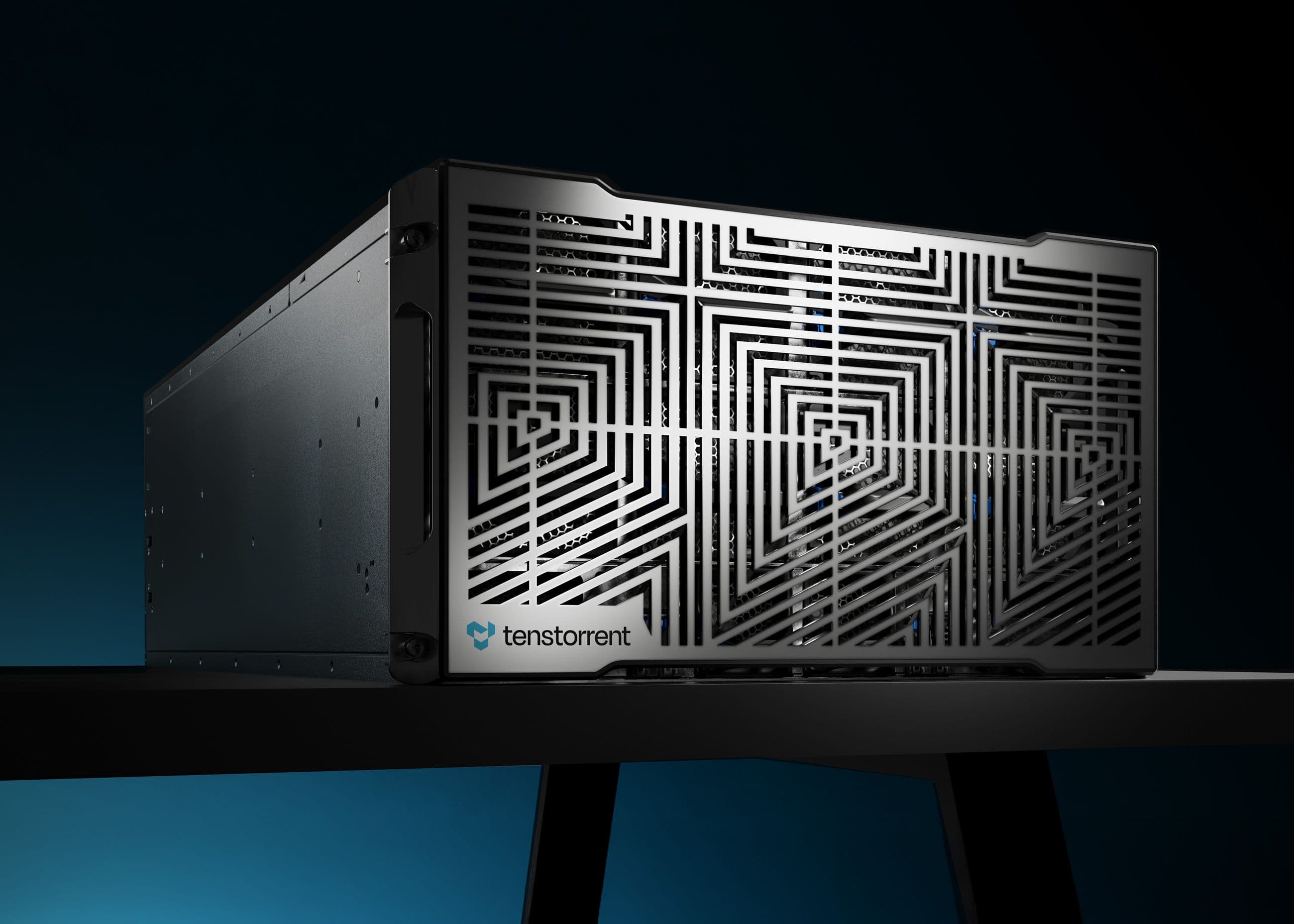
Image: Tenstorrent · Source
Tenstorrent now serves the MiniMax M3.1 Flash model on its cloud platform, offering significant cost reductions and strong performance on agent tasks through architectural innovations and model quantization.
Tenstorrent announced that it has deployed the MiniMax M3.1 Flash AI model on its cloud platform, running both prefill and decode processes on its proprietary Galaxy® supercluster infrastructure. MiniMax released the model’s open weights simultaneously, enabling users to leverage this advanced AI for various applications.
MiniMax M3.1 Flash is designed for production-scale agent tasks, achieving approximately 70% lower operational costs compared to its predecessor, MiniMax M3. Specifically, it reduces the cost per million input tokens to $0.15 and output tokens to $0.60, representing half the price of the previous model. Cached input token costs are even lower, at $0.015 per million tokens.
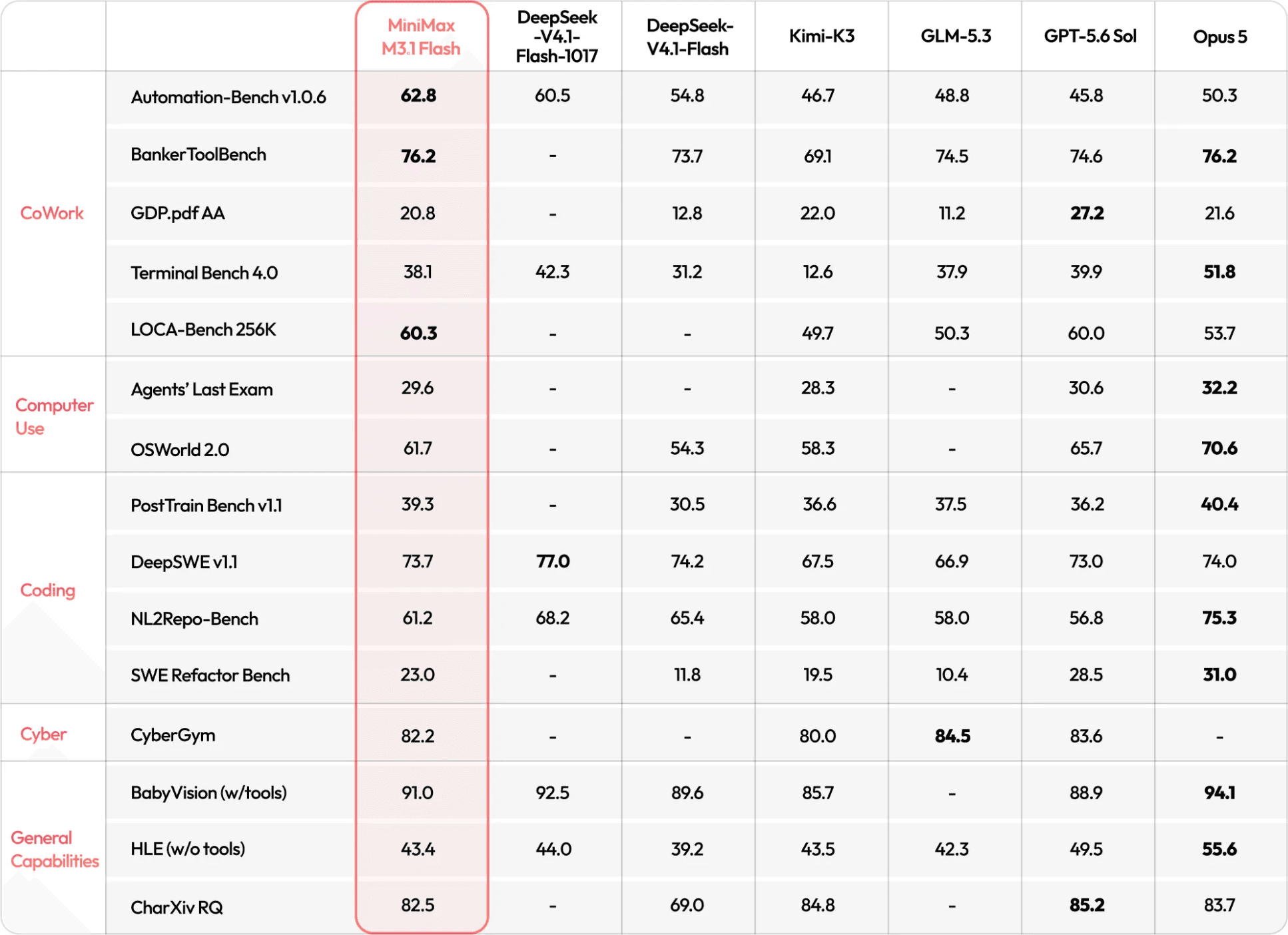
Performance benchmarks position MiniMax M3.1 Flash ahead of all models in MiniMax’s internal comparisons on AutomationBench and LOCA-Bench 256K, and it matches Claude Opus 5 on BankerToolBench. An early iteration of this model, dubbed “Space Bunny Alpha,” already demonstrated scalability by processing over 200 trillion tokens.
Key to the model’s efficiency are architectural enhancements and quantization techniques. The traditional global grouped-query attention mechanism was replaced with sparse attention, limiting each token to reading only a portion of the context. Dense multilayer perceptrons (MLPs) are retained only in the first three layers, reducing computational overhead and memory traffic, particularly for long contextual inputs.
Additionally, MiniMax employed aggressive quantization: MLP weights, attention weights, the indexer, and the shared expert components were quantized to MXFP8 precision, while routed expert weights use NVFP4. This approach allows maintaining or slightly improving the model's capabilities relative to the unquantized M3.
Tenstorrent serves MiniMax M3.1 Flash on a supercluster composed of multiple Blackhole Galaxy systems. These are specialized and divided into prefill and decode functions, optimizing each for its workload. Prefill handles incoming agent prompts across many chips with high inter-device bandwidth, while decode systems generate output tokens independently, ensuring responsiveness during long prefill operations. Communication between chips uses low-latency Ethernet pipelines, and data such as weights and key-value caches are stored in on-device DRAM and SRAM for speed.
A notable feature is the key-value cache offload, which stores reused contextual states in large DRAM and SSD pools (1 TB DRAM and multiple terabytes of SSD per system), minimizing redundant computation on repeated agent interactions.
Tenstorrent’s tuning leverages SemiAnalysis's AgentX coding-agent traces derived from real-world multi-turn sessions and subagent behavior, rather than relying on brief chat benchmarks.
The MiniMax M3.1 Flash model is currently accessible via Tenstorrent’s cloud console, allowing developers to experiment in their Playground environment or integrate directly with agent frameworks.
This deployment exemplifies the synergy between advanced model design, hardware optimization, and cloud infrastructure, targeting practical AI agent applications with reduced cost and strong performance.

Sources and original reporting
Read the original source ↗
Comments (0)
No comments yet. Start the discussion.
Write a comment
Comments are published after moderation. Your name and comment will be visible publicly. Account