
Tesla Begins Production of Optimus Robots as Q3 Profit Drops 43%
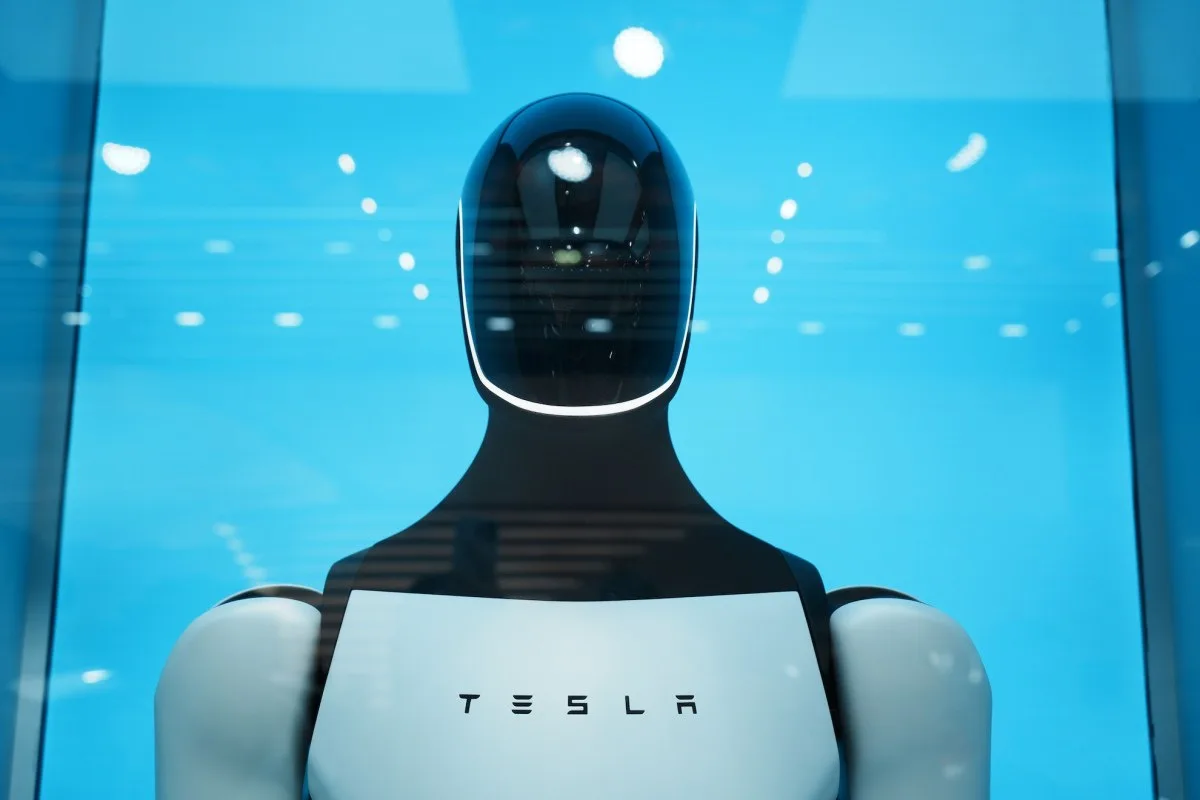
Image: TechCrunch · Source
Tesla initiated production of its Optimus humanoid robots in Fremont, marking a key step amid a 43% profit decline due to high expenses from AI and autonomous driving investments.
Tesla has commenced production of its Optimus humanoid robots at its Fremont, California factory, repurposing space previously used for manufacturing electric vehicles. The company described these initial units as the first production-quality versions and indicated ongoing iterations to refine both hardware and manufacturing processes. According to Tesla's Q3 shareholder letter, the current manufacturing setup is deemed suitable for commercial products.
CEO Elon Musk characterized this phase as "early production," anticipating a slow and somewhat bumpy ramp-up given the novelty of the product. Despite this, Musk expressed confidence that Tesla could scale production to 20,000 units per week by the end of 2027. He highlighted ongoing design adjustments needed to ensure the robots are safe, reliable, and durable, emphasizing the challenge of creating robots that can operate without rapid wear.
Beyond hardware, Musk noted substantial work remains in developing the AI capabilities necessary for Optimus to perform open-ended tasks autonomously. This ambitious robotics initiative coincides with Tesla's significant investments in AI and autonomous driving technologies.
Financially, Tesla's third-quarter performance reflected the company's heavy spending amid its ambitious technological pursuits. Revenue remained largely flat year-over-year at $28.04 billion, a slight decrease from the previous quarter's $28.23 billion. Vehicle sales stood at 486,532 units, modestly higher than the prior quarter but lower compared to the same period in 2025. The solar and energy storage division experienced a 16% revenue decline, partly due to tariff-related customer refunds.
Conversely, Tesla's services segment—which includes subscriptions to its Full Self-Driving (FSD) software—grew 33% year-over-year, generating $4.6 billion in revenue and a record $734 million in gross profit for the quarter. Despite these positives, rising expenses, particularly linked to AI projects and the Optimus robot program, contributed to a 43% drop in net profit to $787 million compared to $1.37 billion in the previous year.
Additionally, reduced sales of regulatory credits further pressured profitability. On the FSD front, Tesla executives remain optimistic despite delays in releasing the unsupervised version of the software, which aims to enable Level 4 autonomous driving equivalent to robotaxi operations. Vice President of AI Software Ashok Elluswamy indicated expectations to enable unsupervised driving capabilities in customer vehicles as part of a robotaxi fleet around the second quarter of 2027.
Overall, Tesla's entry into humanoid robot production represents a significant expansion of its AI and robotics ambitions. However, the current financial results reveal the substantial costs involved in advancing these frontier technologies while managing its core electric vehicle business.
Sources and original reporting
Read the original source ↗
Comments (0)
No comments yet. Start the discussion.
Write a comment
Comments are published after moderation. Your name and comment will be visible publicly. Account