
Tesla Plans Cybercab Sales by Year's End Amid Regulatory Scrutiny
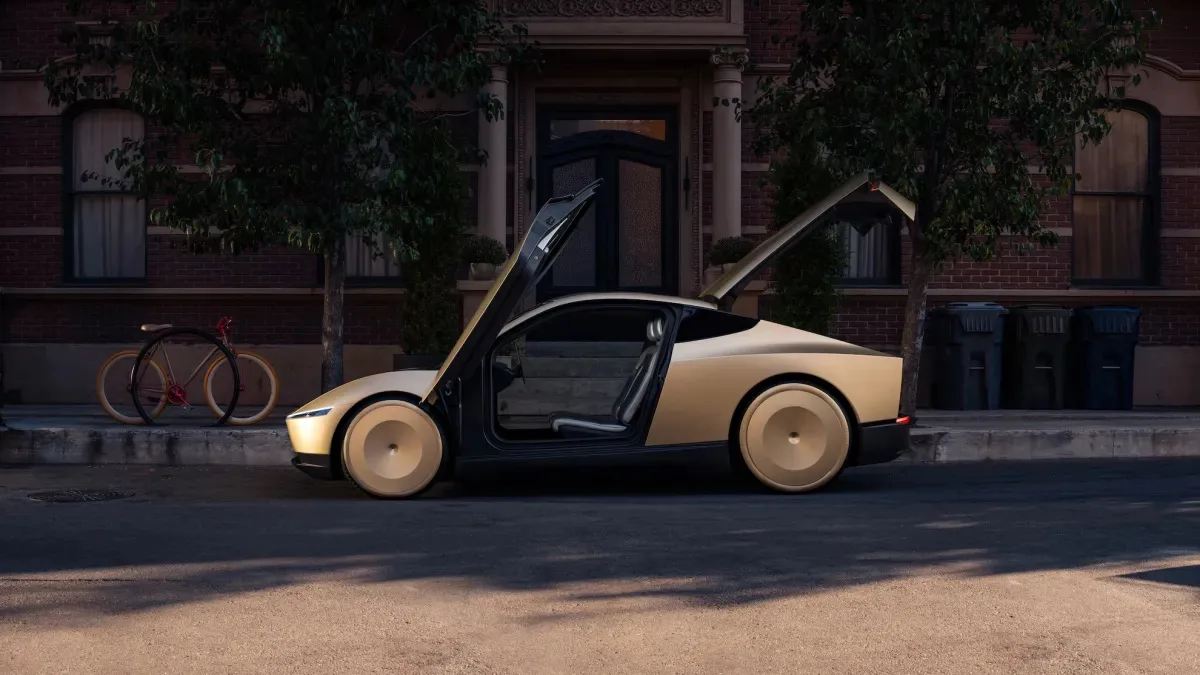
Image: TechCrunch · Source
Tesla will begin selling its autonomous Cybercab to customers by the end of 2026, focusing on robotaxi services, while a federal safety investigation is ongoing.
Tesla announced it intends to start selling its autonomous Cybercab vehicle to customers by the end of 2026. The Cybercab, a gold-colored two-seater without traditional driving controls such as a steering wheel or pedals, is designed primarily for robotaxi services.
During Tesla's Q3 2026 earnings call, Lars Moravy, Tesla's vice president of engineering, explained that current Cybercabs are deployed within Tesla’s own robotaxi fleet. As the fleet expands, Tesla plans to begin delivering fully autonomous vehicles to third-party customers, with a cautious, scaled rollout to manage vehicle delivery, ownership, and fleet management.
Tesla had initially suggested selling Cybercabs to external buyers during its recent Cybercab event in Austin, even offering an interest form. However, details about how this would proceed remained unclear until now.
Tesla CEO Elon Musk has long discussed creating a vast fleet of low-cost robotaxis, previously focusing on enabling privately owned Tesla cars with self-driving capabilities through software updates. Yet, that plan has not yet come to fruition. Currently, Tesla offers a Full Self-Driving (FSD) system that automates many driving tasks but still mandates active driver supervision. Musk stated that a fully unsupervised FSD version is expected for customers in Q2 of 2027, delayed beyond many owners’ expectations.
If Tesla's timelines hold, Cybercab customers may gain access to full autonomous functionality before Tesla owners receive the same software in their personal vehicles. Musk emphasized that Cybercab is intended more as a transport-as-a-service product, largely owned and operated by Tesla, contrasting with vehicles designed for personal ownership like the Model 3, Model Y, and Roadster.
However, regulatory challenges loom. The National Highway Traffic Safety Administration (NHTSA) opened an investigation into the Cybercab shortly after it began public street operations in Austin. Federal safety standards currently require manual controls like brake pedals and mirrors—features absent from the Cybercab. While regulators are considering rule changes to accommodate autonomous-only vehicles, the investigation is examining Tesla’s certification process and data compliance with safety standards.
The outcome could influence the legal operation and wider commercial deployment of the Cybercab fleet. Tesla continues to push forward cautiously amid this scrutiny as it advances its vision for autonomous robotaxi services.
Sources and original reporting
Read the original source ↗
Comments (0)
No comments yet. Start the discussion.
Write a comment
Comments are published after moderation. Your name and comment will be visible publicly. Account