
Google Unveils Gemini 4 Carbon, Advancing AI Cybersecurity and Coding Capabilities

Image: Google launches Gemini 4 Carbon with a ‘significant leap’ in cybersecurity · Source
Google introduces Gemini 4 Carbon, its latest AI frontier model excelling in cybersecurity defense, coding, and multi-step problem-solving, topping industry benchmarks and initially available to select cybersecurity partners.
Google has launched Gemini 4 Carbon, its newest frontier artificial intelligence model designed to significantly enhance cybersecurity defenses and tackle complex coding tasks. Announced on October 28, 2026, Gemini 4 Carbon showcases notable improvements over the recently released Gemini 4 Argon, particularly in vulnerability detection, secure code generation, and long-duration engineering workflows.
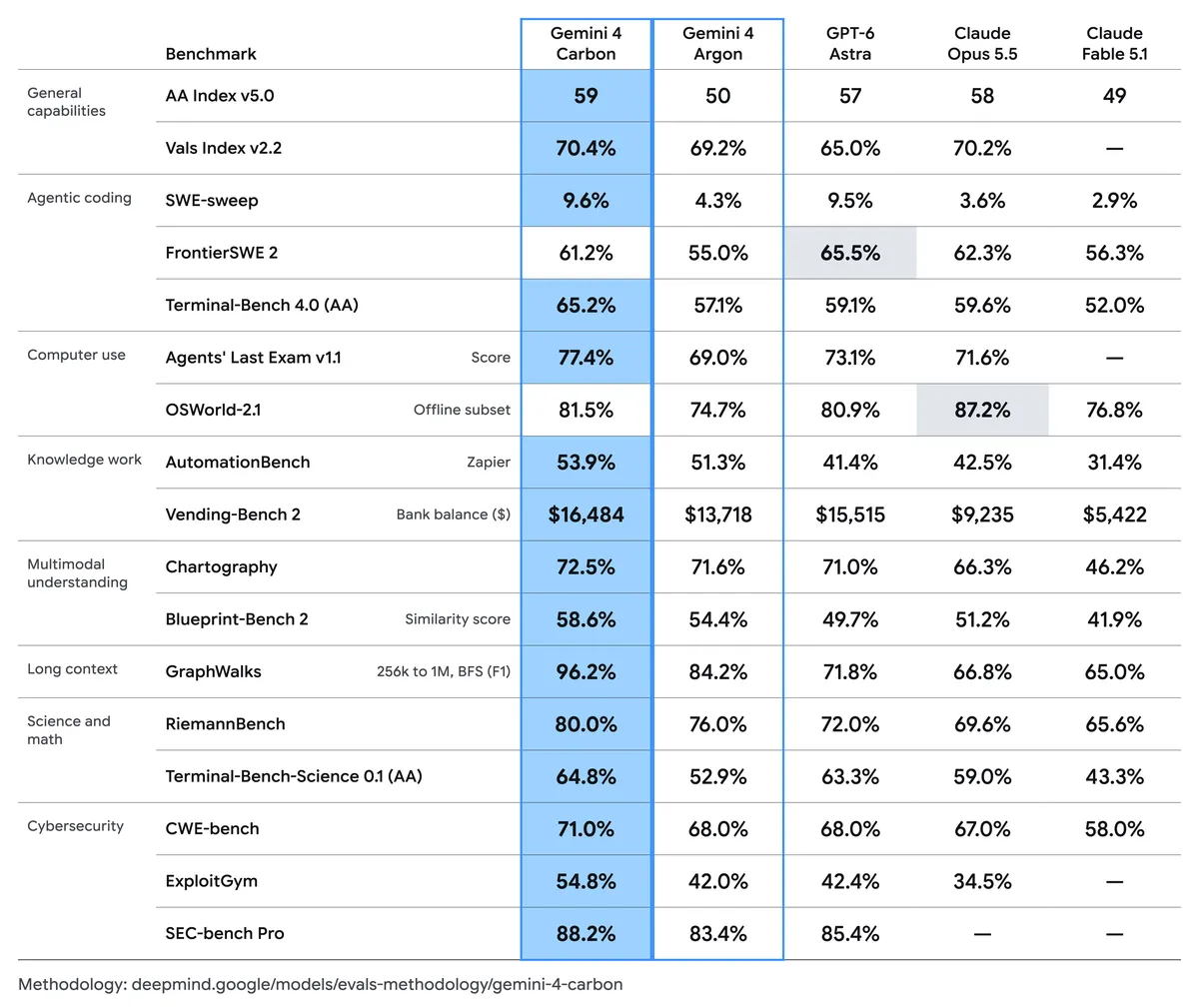
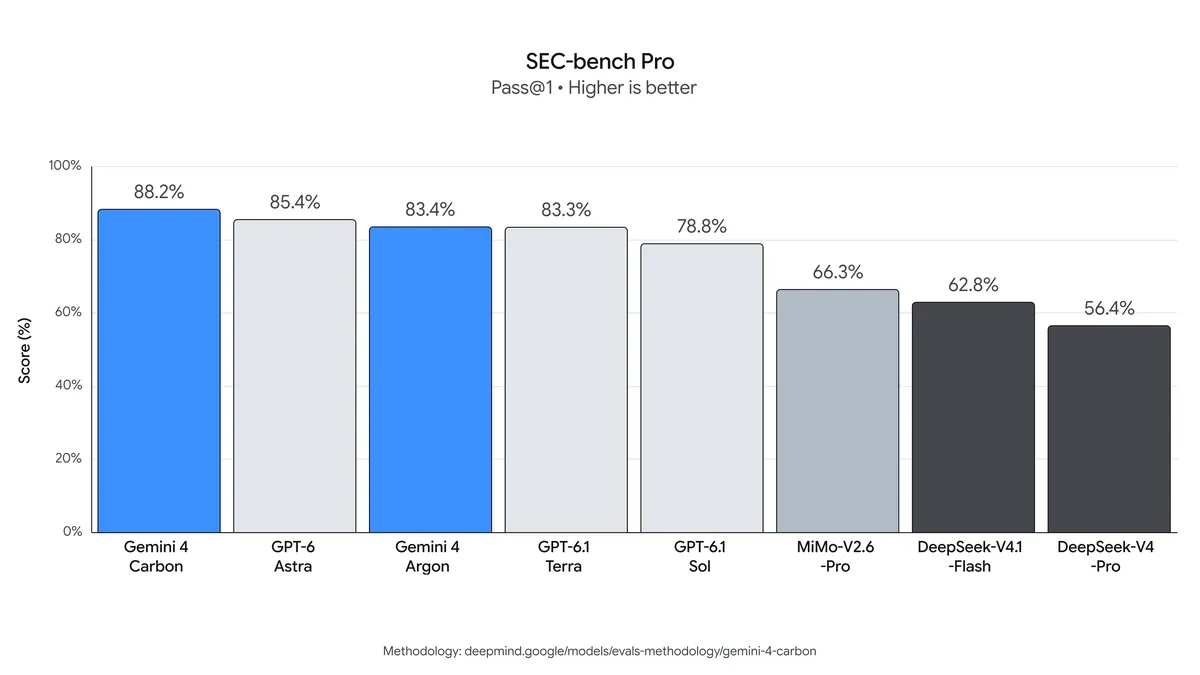
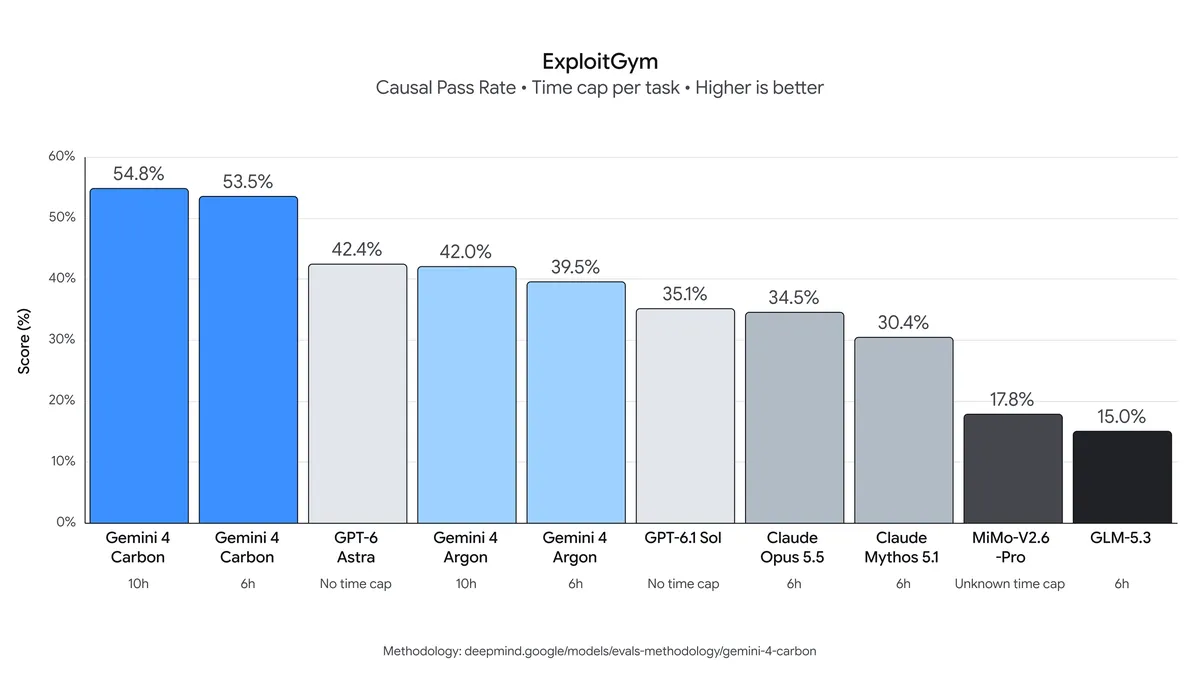
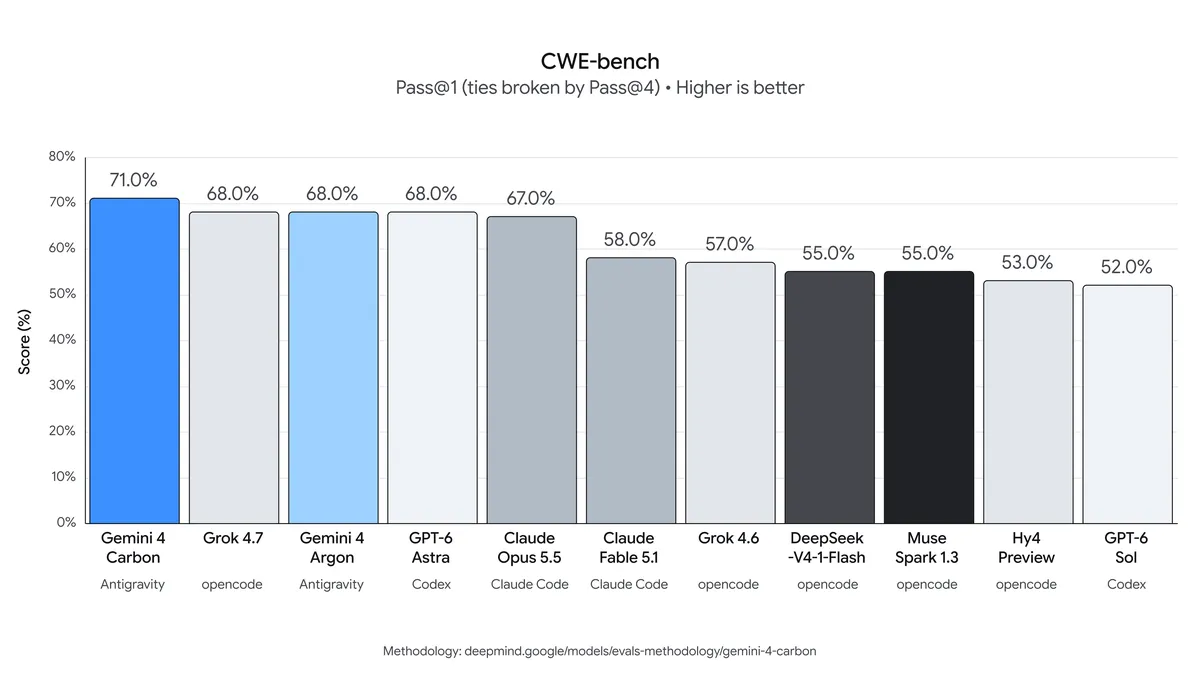
Gemini 4 Carbon currently ranks first on the Artificial Analysis Intelligence Index (v5.0), outperforming competing models such as Claude Opus 5.5 and GPT-6 Astra. Google highlights Carbon’s leadership on specialized cybersecurity benchmarks: SEC-bench Pro, where it achieves an 88.2% success rate in finding real software vulnerabilities; ExploitGym with a 54.8% rate assessing vulnerability exploitation; and CWE-bench at 71.0% for patching those vulnerabilities. These metrics reflect Carbon’s capabilities across the cybersecurity defense lifecycle, from detection through validation and remediation.
In addition to specialized security skills, Gemini 4 Carbon is engineered for sustained agentic workflows with long horizon task support. Internal Google teams report that the model can persist through complex, multi-step engineering problems, including root-cause analysis and patching subtle bugs in extensive codebases. It also shows improved performance across coding, web development, and scientific tasks, climbing to a high rank on the WebDev Arena benchmark.
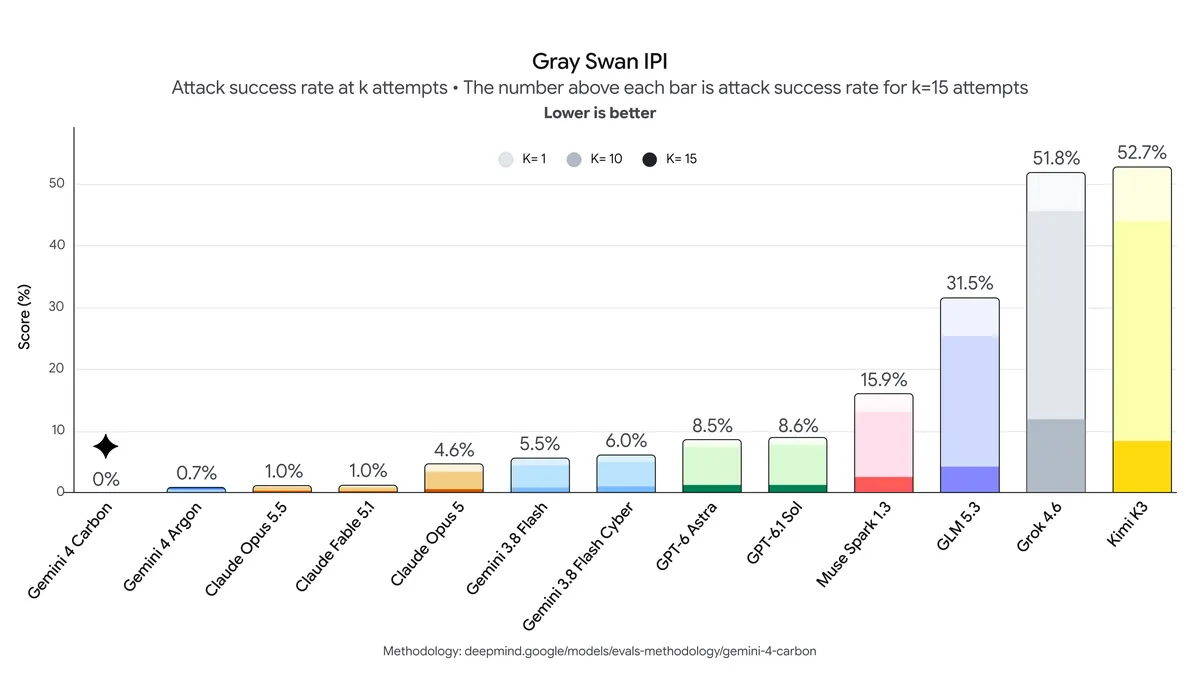
Google emphasizes safety and alignment in the Carbon model’s design. It has reduced tendencies toward shortcuts and cheating strategies in training, nearly eliminating successful shortcut attempts on a relevant benchmark. Carbon resists prompt injection attacks completely in tested scenarios, reducing unsupported claims and fabrications approximately twofold compared to Argon. The model is also designed to enhance user collaboration by surfacing relevant information and clear caveats rather than making unsupported assumptions.
Google is initially providing access to Gemini 4 Carbon to a limited group of cybersecurity defense organizations as part of its Fairwind Program and is actively involved in the U.S. government’s voluntary pre-release testing process. The company plans to expand availability to broader developers, businesses, and consumers after further iterations and safety evaluations. Pricing will match the recently launched Argon model, at $2 per million input tokens and $10 per million output tokens, with significant discounts on cached inputs.
This release underscores Google’s rapid advancement in AI frontier models focused on real-world software security and complex engineering tasks, setting a new benchmark for AI-assisted cybersecurity solutions and coding assistance.



Sources and original reporting
Read the original source ↗
Comments (0)
No comments yet. Start the discussion.
Write a comment
Comments are published after moderation. Your name and comment will be visible publicly. Account