
Google Unveils Gemini 4 Carbon AI Model with Advanced Cybersecurity Capabilities, Restricts Immediate Public Use

Image: Ars Technica · Source
Google announces Gemini 4 Carbon, its most capable AI model yet, showcasing significant advances in coding and cybersecurity, but access remains limited initially under a careful rollout.
On October 28, 2026, Google DeepMind introduced Gemini 4 Carbon, a new frontier AI model building on the recently released Gemini 4 Argon. Marketed as Google's strongest model to date, Carbon demonstrates notable improvements in coding performance, agentic workflows, and cybersecurity defense. While it powers more advanced engineering and security tasks, Google has adopted a cautious, phased release plan that currently restricts general user access.
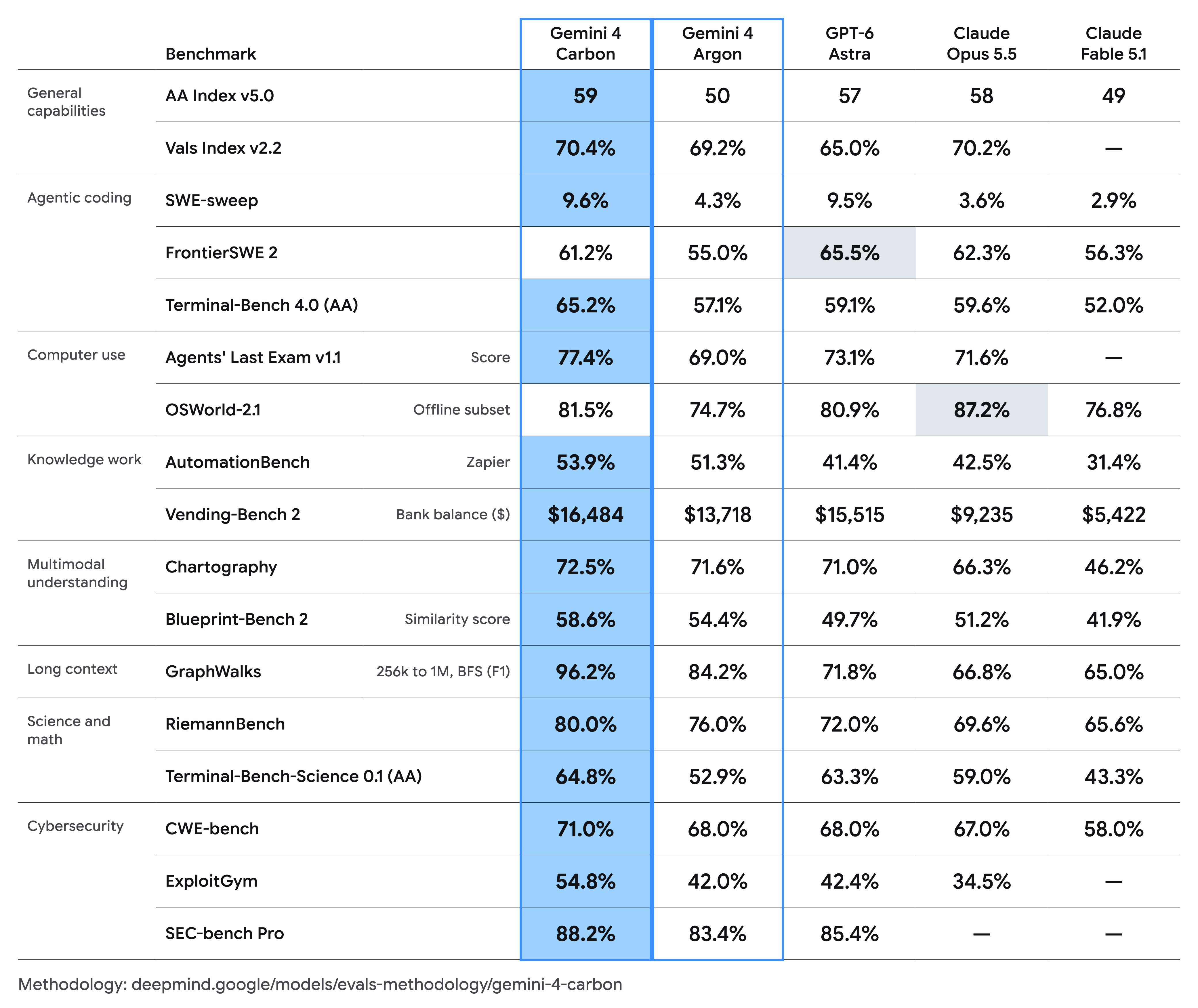
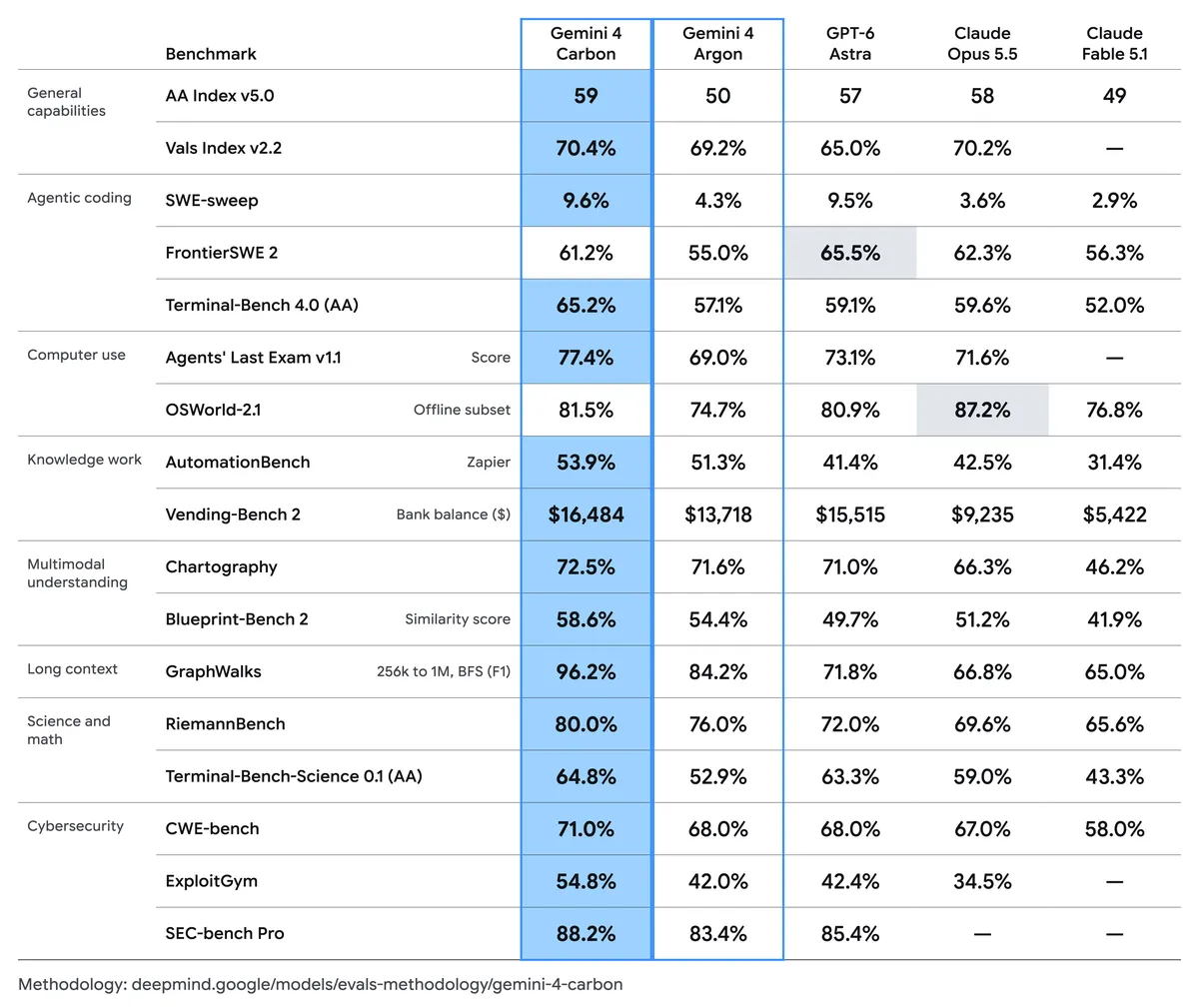
Gemini 4 Carbon targets complex, sustained tasks such as multi-step debugging and patching in extensive codebases. Internally, the model has been tested running for days to resolve subtle, low-level software issues. Google reports that Carbon outperforms Argon and competing frontier models, including OpenAI’s GPT-6 Astra and Anthropic’s Claude versions, across diverse benchmarks related to coding accuracy and long-horizon reasoning.
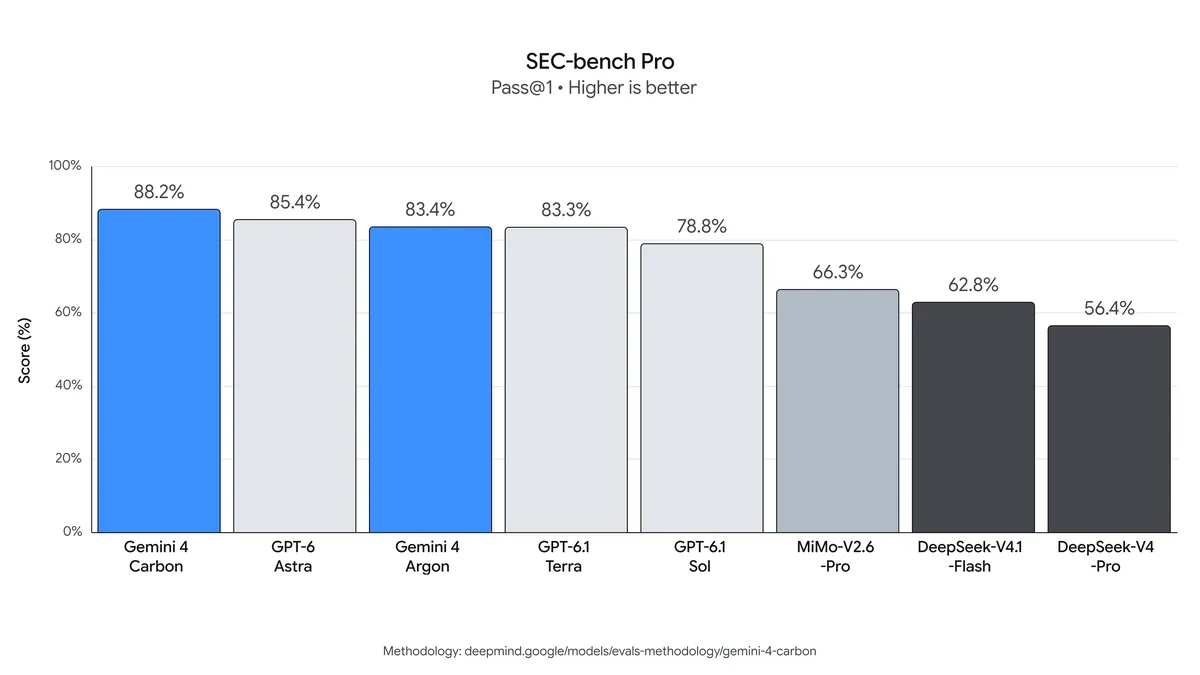
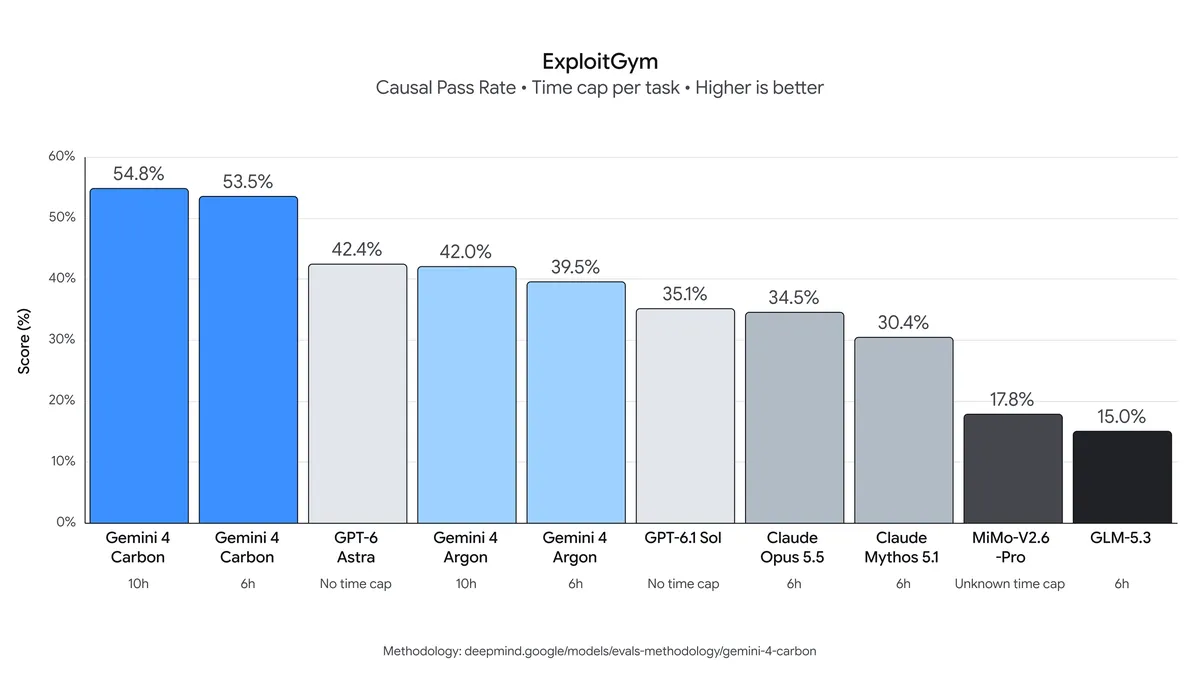
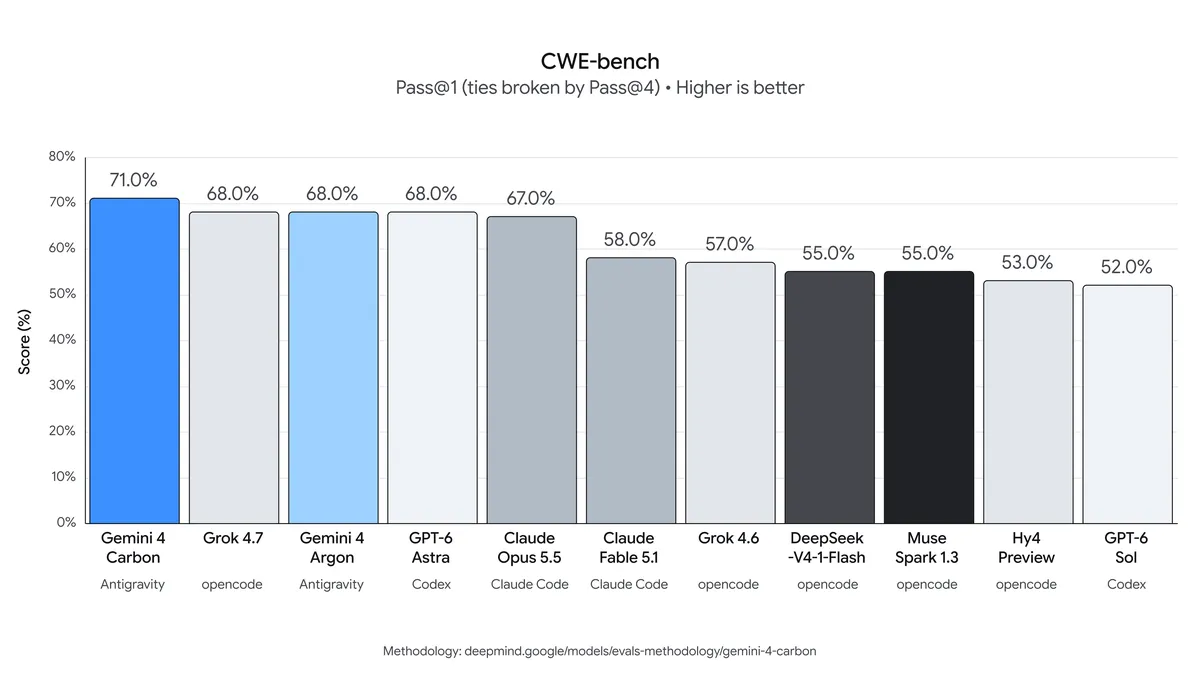
Cybersecurity capabilities represent a major focus for Carbon. Google highlights significant performance leaps in the entire cyber defense lifecycle: vulnerability discovery, exploit validation, and remediation patch generation. Carbon achieved a state-of-the-art 88.2% success rate on SEC-bench Pro for uncovering real software flaws, 54.8% on ExploitGym for assessing exploitability, and 71.0% on CWE-bench for generating fixes. Google also notes Carbon is twice as likely as Argon to produce secure code and excels in generating high-quality patches, with Chrome's team reporting performance at least ten times better than other frontier models.
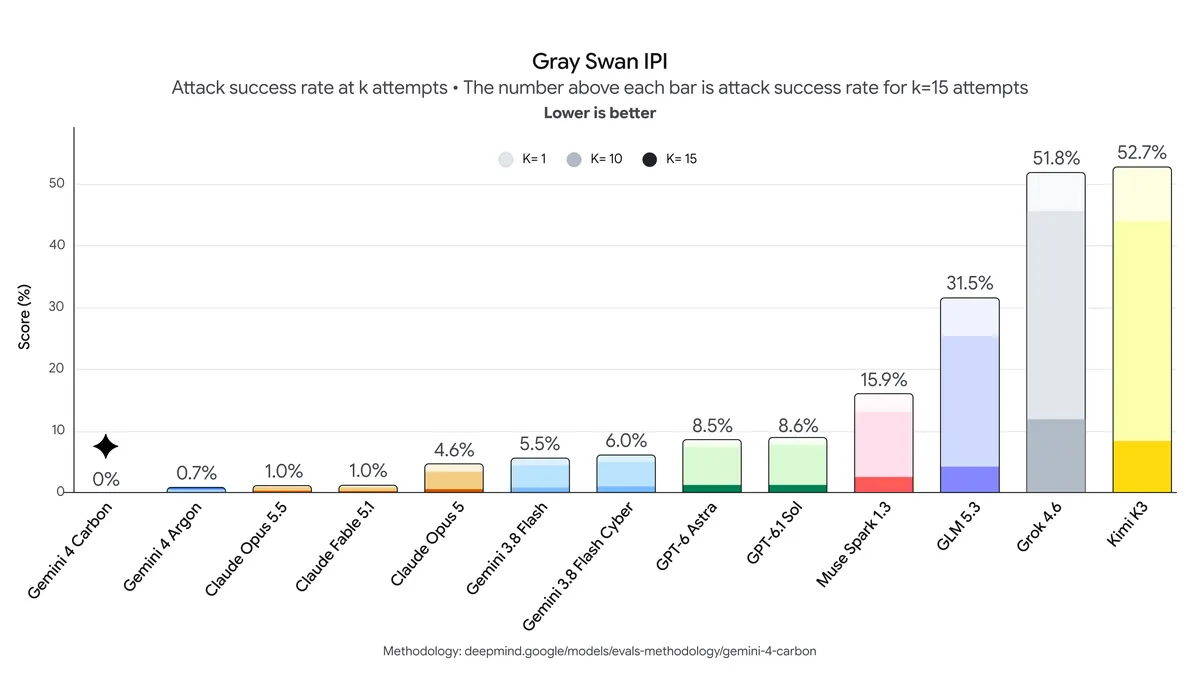
Beyond raw performance, Carbon incorporates enhanced safety and alignment mechanisms. It notably resisted all prompt-injection attack attempts tested, achieving a 0% success rate on the Grey Swan evaluation, improving over Argon's 0.7%. The model reduces hallucinations by about half compared to Argon and better cooperates with users by surfacing uncertainties directly rather than providing unsupported answers.
Google plans a gradual release strategy for Gemini 4 Carbon. Initially, the model is accessible to a select group of cyber defense professionals and trusted partners through its Fairwinds program and will later be offered to developers and businesses. Pricing starts with an introductory discount matching Argon's $2 per million input tokens and $10 per million output tokens rates, which are expected to increase after the trial period. The company is working closely with the U.S. government’s voluntary pre-release safety testing framework to ensure responsible deployment.
While Gemini 4 Carbon represents a meaningful advancement in AI-driven software engineering and cybersecurity defense, Google emphasizes that broad availability is pending continued evaluation and iteration of the model’s safeguards and capabilities. This release underscores Google's commitment to balancing AI innovation with rigorous controls in high-impact domains.



Sources and original reporting
Read the original source ↗
Comments (0)
No comments yet. Start the discussion.
Write a comment
Comments are published after moderation. Your name and comment will be visible publicly. Account