
Google’s Suncatcher Satellite Is Now Operational in Orbit, Running AI and Composing Poetry
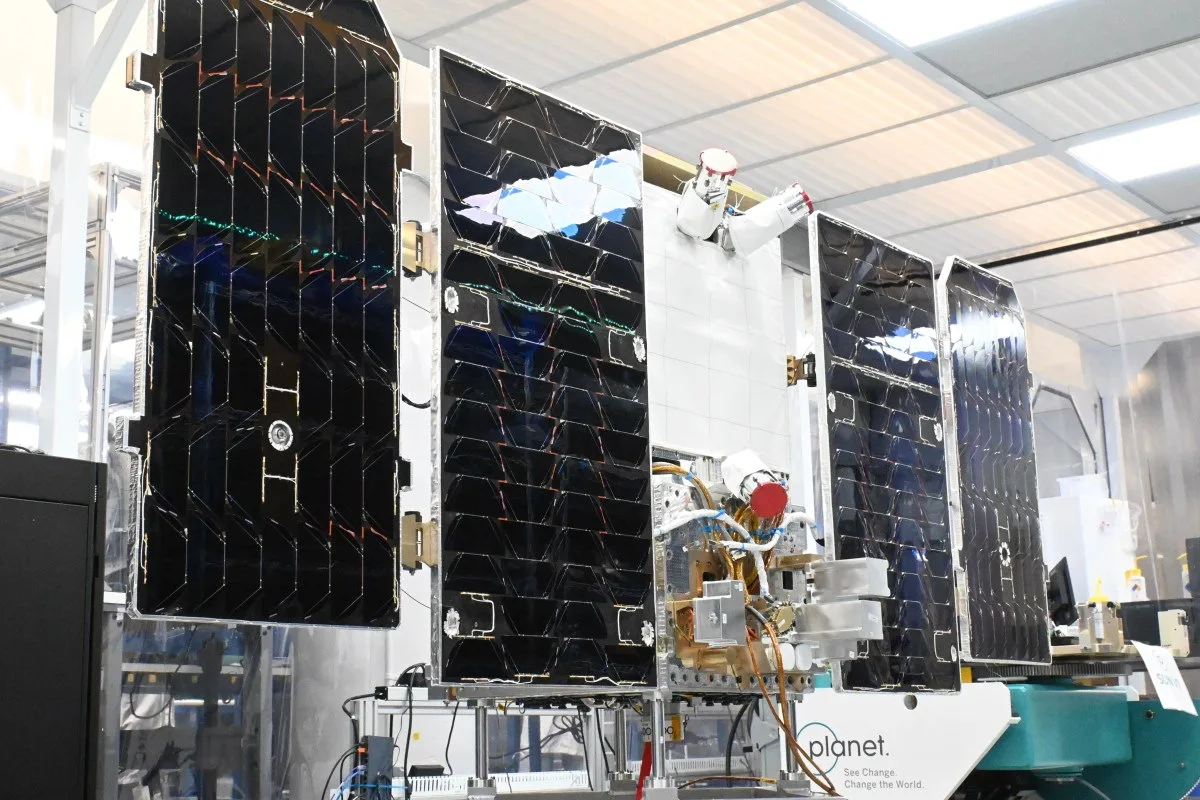
Image: TechCrunch · Source
Google's first space-based data center satellite, Suncatcher, equipped with four TPUs, has begun operation running a DeepMind AI model that generated space-themed poetry, as part of tests exploring advanced AI workloads in orbit.
Google's prototype space data center satellite, named Suncatcher, officially became operational after its launch earlier this month atop a SpaceX Falcon 9 rocket carrying over 100 spacecraft. This experimental satellite is outfitted with four Google Tensor Processing Units (TPUs), specialized AI chips capable of running large inference workloads, and produces up to 1 kilowatt of power.
As the first TPU-equipped satellite, Suncatcher aims to pioneer the concept of networks of nearby satellites collaboratively processing data in orbit, a stepping stone toward cloud computing beyond Earth. However, due to power constraints, only one TPU can be activated at a time for roughly 20 minutes, imposing operational complexities for both the hardware and communication systems linking space and ground stations.
Following a commissioning phase lasting about three weeks to validate the satellite’s subsystems, engineers initiated AI experiments by prompting the onboard model—a version of Google DeepMind’s Gemma 4—to compose a haiku reflecting its extraterrestrial environment. The resulting poem: “Blue marble below / Data streams in silent grace / Starlight feeds my core,” showcased the AI’s capacity for creative language while confirming system responsiveness.
Beyond poetic tasks, the satellite also reports on its orbital conditions to inform engineering assessments. Crucially, the ongoing campaign evaluates how the TPUs withstand thermal fluctuations and space radiation, known to cause bit flips—memory errors potentially corrupting data silently. While ground tests using particle accelerators indicated minimal radiation risk for AI inference (but greater for training operations), real orbital conditions provide definitive insights.
Google confirmed the spacecraft’s systems are functioning nominally at present. Looking ahead, the company plans to launch two additional satellites in 2027, featuring enhanced power generation and inter-satellite optical communication links, enabling more sophisticated distributed AI processing in space.
Suncatcher's strategy contrasts somewhat with other firms like SpaceX, Starcloud, and Cowboy Space, which foresee more isolated AI workloads on individual satellites or sparser constellations. Notably, Alphabet, Google’s parent company, holds a significant investment stake in SpaceX, reflecting an intertwined vision for space-based data infrastructure.
Success of these orbital data centers depends partly on the development of the Starship heavy-lift rocket, central to Elon Musk’s space ambitions, and its prospects for rapid, full reusability, which would facilitate the extensive launch cadence required.
Experts involved in Suncatcher recently published a peer-reviewed analysis estimating that about 1,800 Starship launches would be needed to realize cost reductions in space AI comparable to historical trends on Earth. Meanwhile, Google’s broader AI integration efforts on Earth face market challenges, partly impacting its financial outlook.
Suncatcher exemplifies a forward-looking “moonshot” targeting economically viable space-based AI infrastructure in the 2030s, combining innovative hardware testing with experimental AI applications, such as creating poetry from orbit.
Sources and original reporting
Read the original source ↗
Comments (0)
No comments yet. Start the discussion.
Write a comment
Comments are published after moderation. Your name and comment will be visible publicly. Account