
Axiom Math Achieves Formal Verification of the Massive Stacks Project to Secure AI-Driven Mathematics
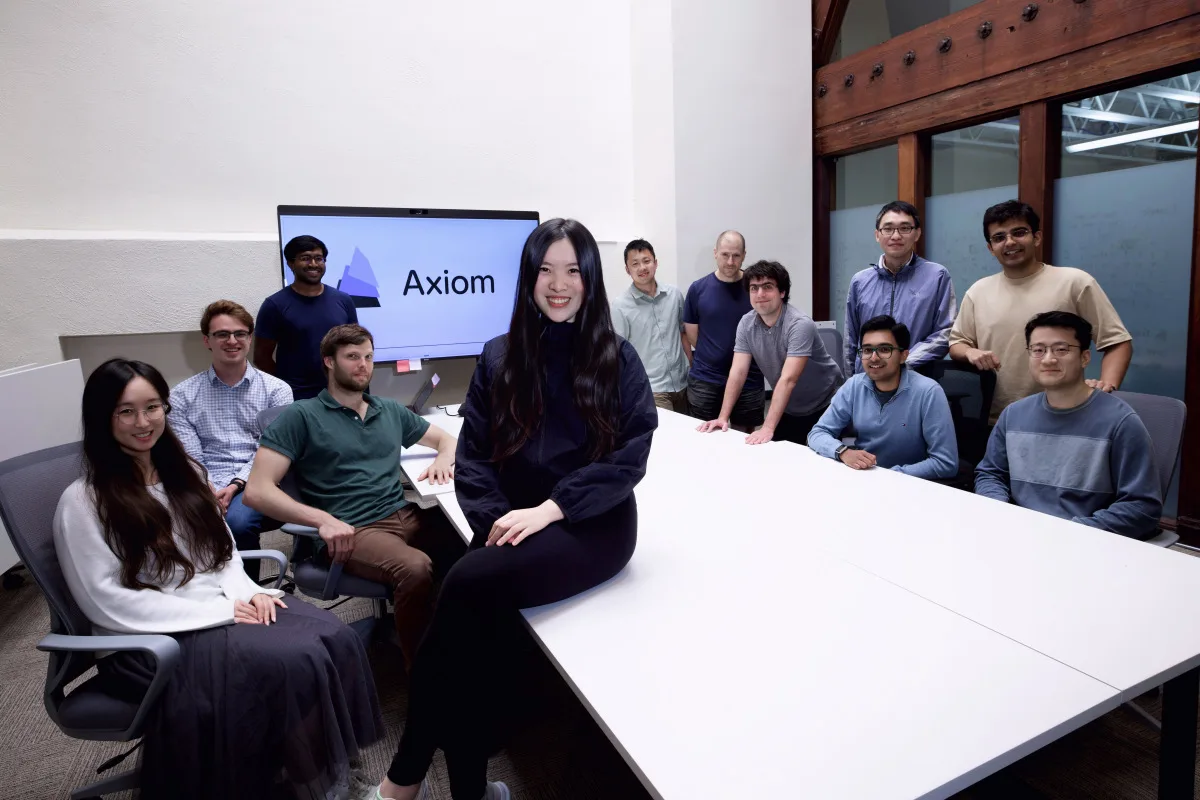
Image: TechCrunch · Source
Axiom Math has formally verified the extensive Stacks Project using AI agents, creating a solid foundation for trustworthy mathematical proofs and paving the way for reliable AI-assisted mathematics and software development.
The rapid influx of artificial intelligence-generated mathematical proofs has raised concerns about the reliability and accuracy of such work. Recent months have seen AI models submit hundreds of manuscripts claiming solutions to difficult mathematical problems, yet even conventional computer checks have sometimes failed to catch errors. Aiming to address this challenge, Axiom Math, a startup valued at $1.6 billion, is focusing on building rigorously verified mathematical foundations through formal verification, ensuring that AI systems can reliably generate and use correct mathematics.
On November 5, 2026, Axiom Math announced a landmark achievement: the formal verification of the Stacks Project, one of the largest and most respected mathematical compendiums. Originating in 2005 by Columbia mathematician Johan de Jong, the Stacks Project has grown into an open-source, collaborative work that covers a vast range of topics from algebra to geometry and number theory, spanning roughly 7,654 pages.
Axiom’s AI agents translated the entire Stacks Project into about 16 million lines of code written in Lean, a formal proof language. This translation allowed a proof assistant software to check every proof rigorously, confirming logical soundness throughout this extensive and deeply interconnected body of work. Ensuring the integrity of these linkages was a significant challenge, likened by CEO Carina Hong to reconciling delicate structures within a massive whole without contradictions.
Founded in March 2025 by Hong, a former Stanford math PhD candidate, Axiom raised $200 million in a Series A round led by Menlo Ventures earlier this year. The company’s approach involves granting its AI agents a flexible framework in which to collaborate, enabling parallel work on different tasks while maintaining the overall hierarchical structure necessary to preserve dependencies within the Stacks Project.
Unlike many verification initiatives, Axiom invested in training its own AI models specifically to master the nuances of mathematics and formalization, effectively teaching the agents to develop a sense of mathematical "taste". This advancement fills a major gap in formalized mathematics, particularly in algebraic geometry, providing a broad and reliable base for future formal proofs using Lean.
Beyond pure mathematics, Axiom envisions its verified foundations as critical to software development, especially as AI increasingly generates code. By anchoring AI’s outputs in rigorously checked mathematics, the company aims to reduce bugs and security vulnerabilities prevalent in AI-written code.
Mathematicians like Fields Medalist Terence Tao have recognized the importance of such formalization, noting that verified proofs enable the creation of more verified proofs. For Axiom, the verified Stacks Project is a reusable substrate upon which AI agents can build new mathematical and scientific infrastructure.
CEO Hong emphasizes that the future of AI in research and engineering depends on accessible, reusable, and carefully constructed bodies of knowledge to prevent the proliferation of errors or “slop.” She challenges other coding-focused companies to attempt formal verification at a similar scale and anticipates that collaborative AI agents working asynchronously and strategically will become the norm in scientific and software advances.
By bridging the gap between human mathematical rigor and AI’s computational power, Axiom Math’s work on the Stacks Project signifies a major step toward trustworthy AI-assisted mathematics and software creation, potentially reshaping how complex knowledge domains are formalized and expanded in the years ahead.
Sources and original reporting
Read the original source ↗
Comments (0)
No comments yet. Start the discussion.
Write a comment
Comments are published after moderation. Your name and comment will be visible publicly. Account