
NVIDIA Advances AI Memory Efficiency with Full-Stack Codesign Approach

Image: NVIDIA · Source
NVIDIA addresses rising GPU memory demands in AI by full-stack codesign, optimizing memory use across hardware and software to boost throughput and efficiency despite limited high-bandwidth memory capacity.
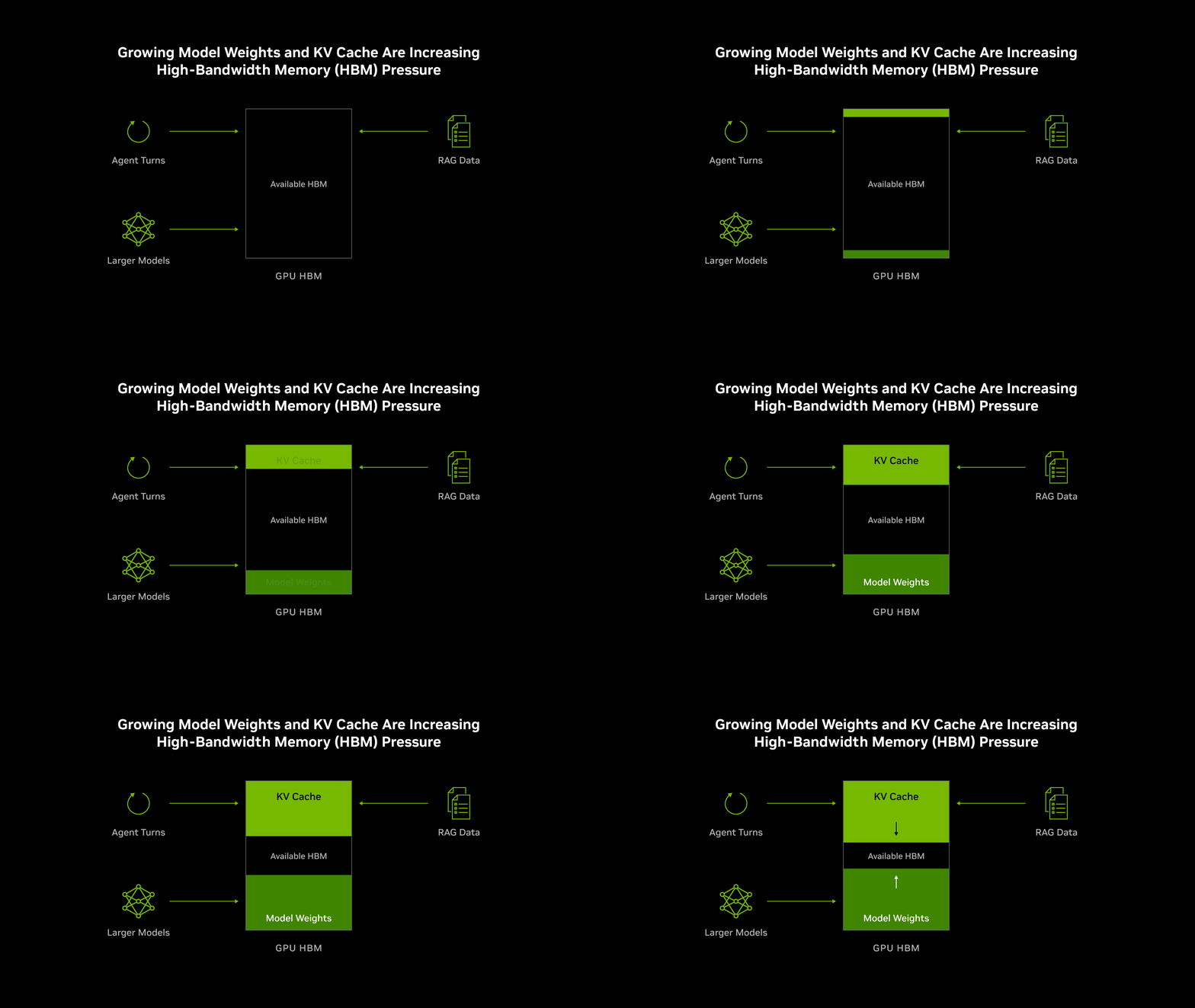
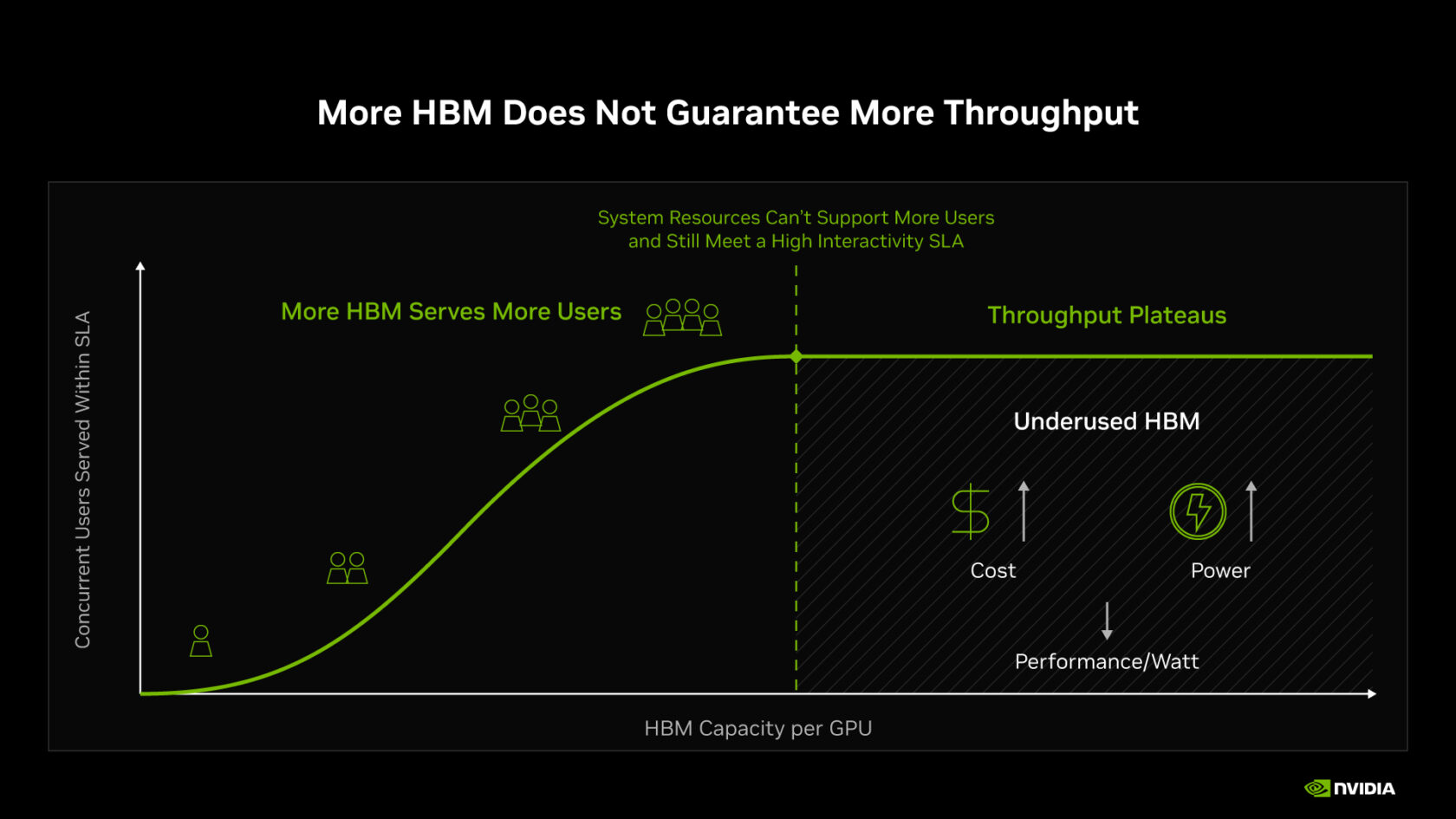
As AI models grow in complexity—with trillions of parameters, longer context windows, and more agentic inference tasks—the demand for high bandwidth memory (HBM) on GPUs intensifies. NVIDIA highlights that this rising pressure clashes with constrained memory supply and increasing prices, a challenge projected to persist in the near term.
Rather than merely increasing HBM capacity, which faces physical and cost limitations, NVIDIA focuses on full-stack codesign. This strategy involves engineering the GPU hardware, CPUs, networking, storage systems, and software cohesively to maximize the effective use of memory at all levels within the AI processing pipeline—referred to as the AI factory.
In these AI factories, a memory hierarchy exists: the fastest and most expensive layer is GPU HBM, which stores model weights and key-value (KV) cache holding active context. Below this lie sizeable but slower CPU memory, local SSDs, and shared storage—all trading speed for capacity and cost efficiency. The goal is to reduce the volume of data stored in the most expensive layer, relocate inactive data to cheaper tiers, and prefetch data back to GPUs promptly, improving throughput and lowering latency.
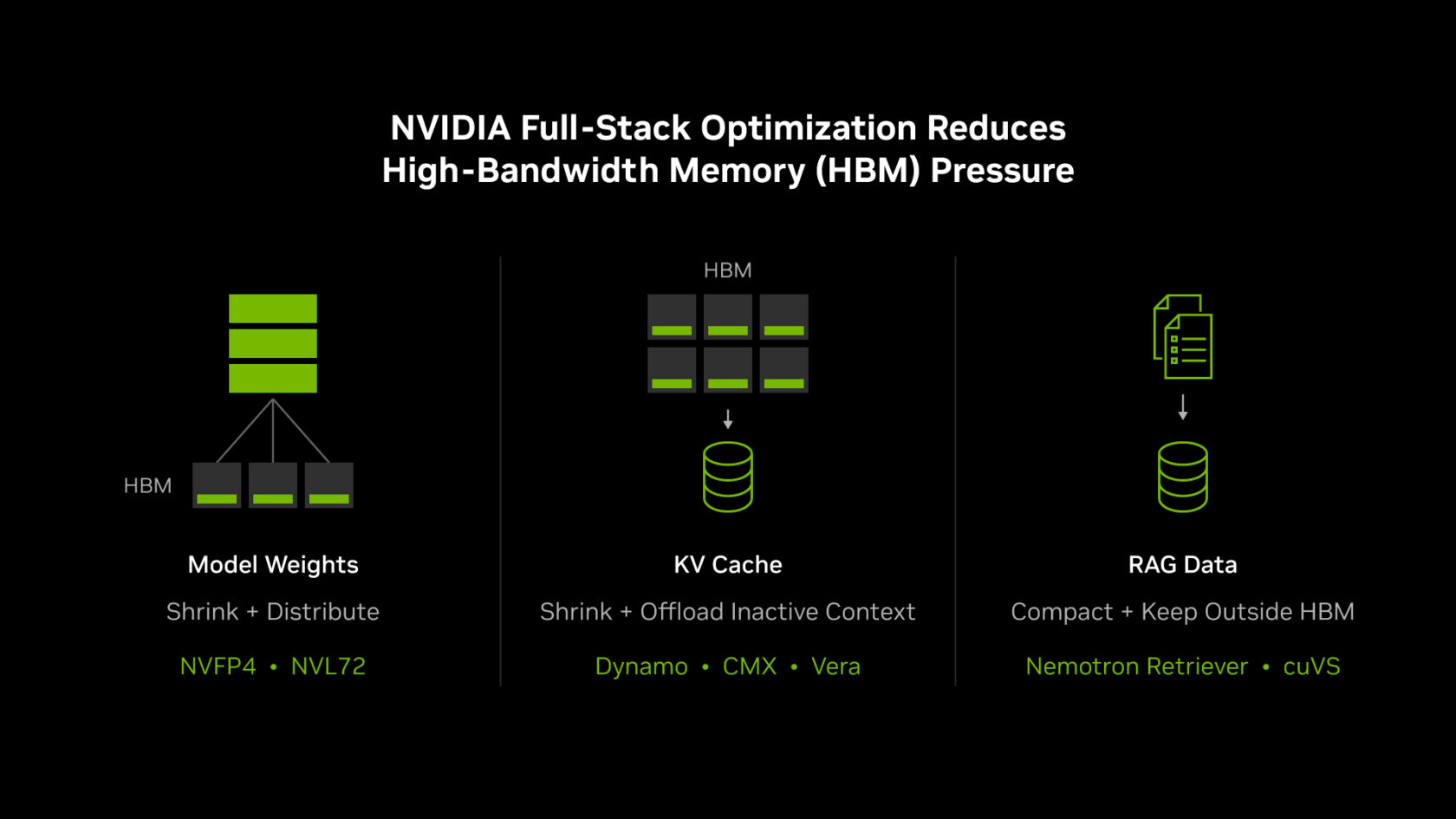
NVIDIA’s approach includes multiple innovations. First, adopting a 4-bit floating-point format called NVFP4 helps shrink model weights and KV caches, cutting the memory footprint. Distributing the whole model across up to 72 GPUs within the NVL72 system further frees HBM for KV cache and user concurrency.
Second, inactive KV cache context can be offloaded from expensive HBM to large CPU-connected memory or shared storage tiers using the new NVIDIA Dynamo inference software and CMX context memory solutions. This software manages KV cache across GPU memory, CPU memory, and storage to enable rapid reuse without holding all data in HBM constantly.
Third, retrieval-augmented generation (RAG) techniques reduce HBM load by keeping large enterprise knowledge bases off the GPU. Instead, NVIDIA’s Nemotron Retriever produces compact vector embeddings, and the cuVS library manages the searchable index across CPUs and storage layers. Only relevant passages enter the high-speed GPU context.
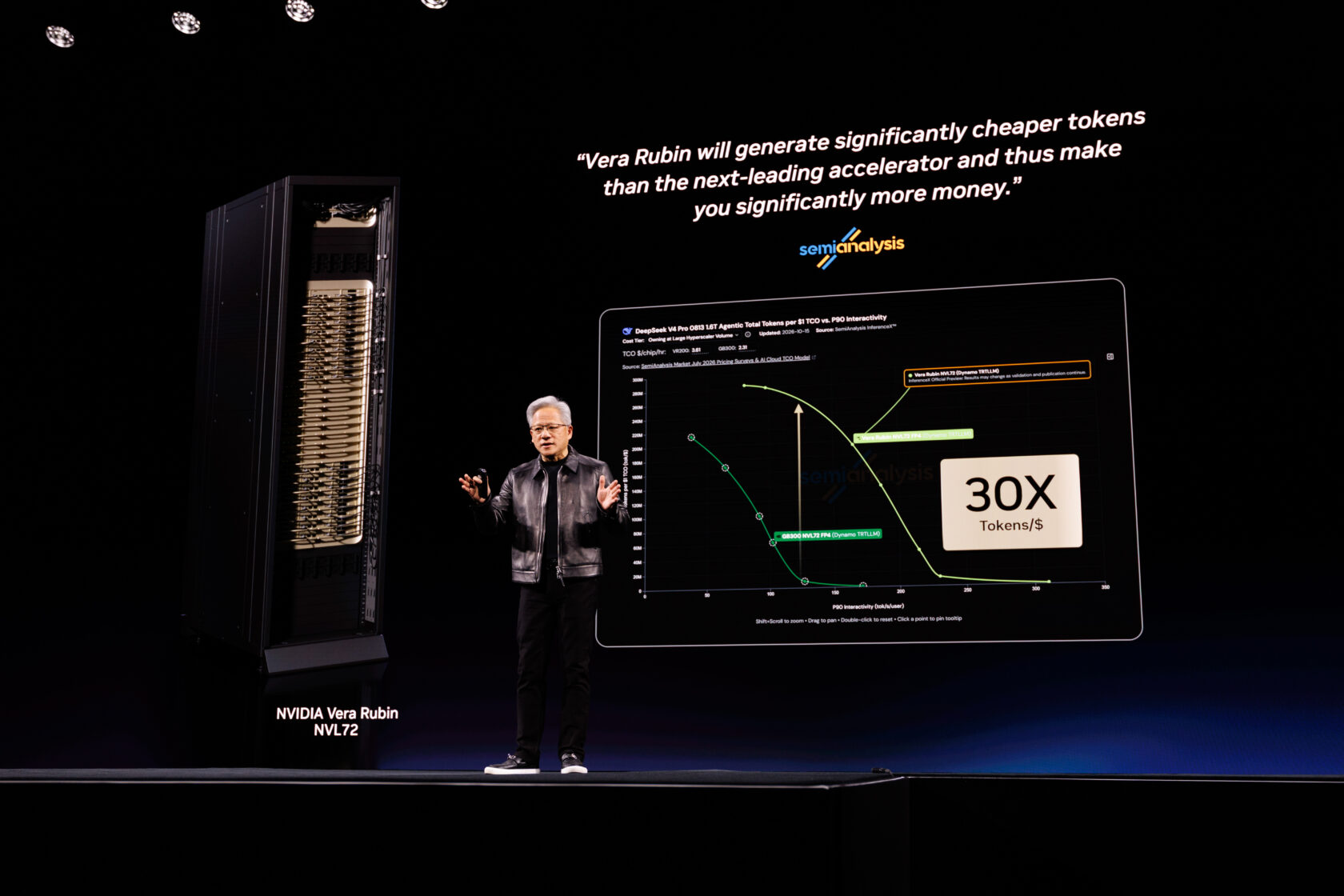
NVIDIA reports that these combined optimizations have led to roughly a 3% increase in HBM capacity per GPU from NVIDIA Blackwell Ultra through the Vera Rubin platform but yielded up to 30 times higher agentic throughput per dollar in test workloads such as the SemiAnalysis AgentX.
By tackling memory bandwidth constraints—the so-called memory wall—NVIDIA’s full-stack codesign enables AI workloads to perform more useful computations per byte of memory, lowering power consumption and costs. This holistic memory management strategy marks a shift from pursuing raw memory capacity to orchestrating efficiency across hardware and software layers for AI’s growing demands.
For detailed technical insight, NVIDIA provides a video explainer and deep dive into how full-stack codesign reduces inference memory pressure and improves AI platform economics.
Sources and original reporting
Read the original source ↗
Comments (0)
No comments yet. Start the discussion.
Write a comment
Comments are published after moderation. Your name and comment will be visible publicly. Account