
DuckDuckGo Targets Schools Amid Controversy Over Google's AI Search Policy
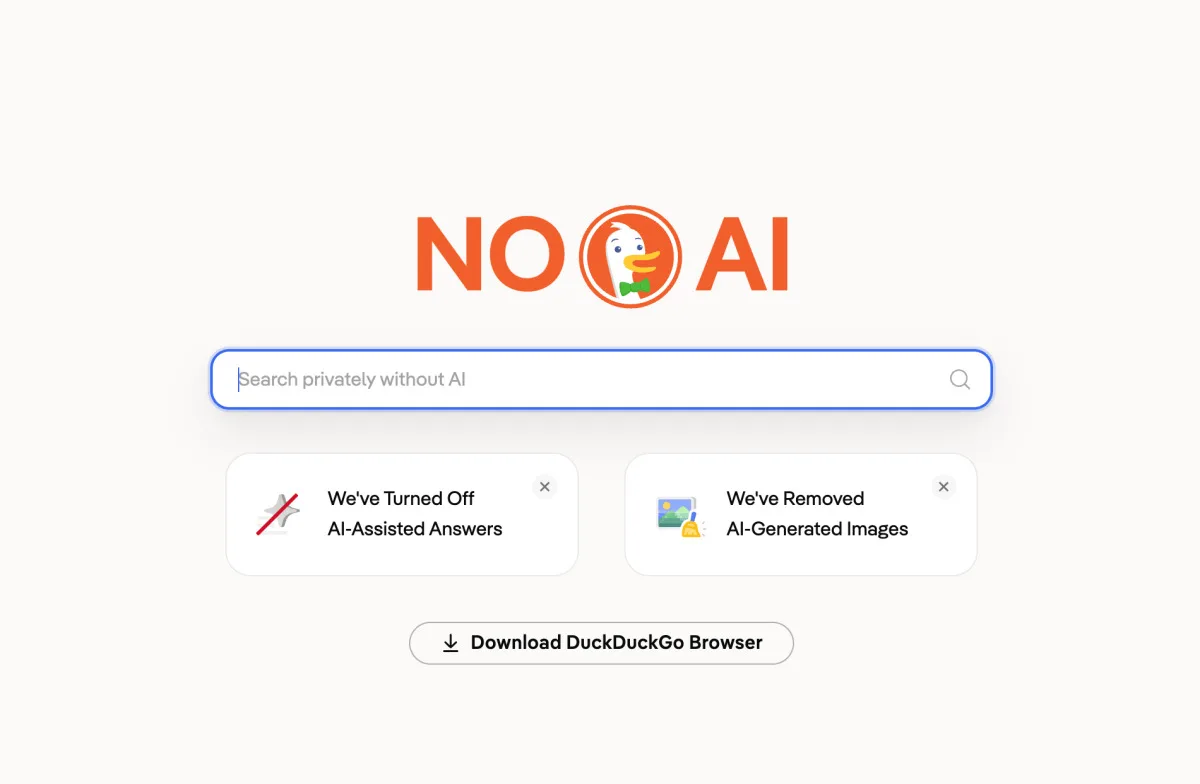
Image: TechCrunch · Source
DuckDuckGo seeks to attract schools frustrated by Google's AI limitations, promoting its privacy-focused search engine with options to disable AI features.
Following Google's recent announcement restricting AI features in its educational products, DuckDuckGo is actively encouraging schools to consider its search engine as an alternative. Google informed schools they could disable Gemini, its AI model, but turning off other AI features would simultaneously disable Google Search entirely. This constraint has created a gap that DuckDuckGo aims to fill.
DuckDuckGo, known for its privacy-centric approach that limits user data collection, sees an opportunity in the education sector traditionally dominated by Google tools. Google reports approximately 50 million Chromebooks are currently used in schools worldwide, with over 150 million users engaged through its Google Classroom platform.
Gabriel Weinberg, DuckDuckGo's founder and CEO, publicly shared online resources guiding schools on switching their default search engine to DuckDuckGo, extending direct support for implementation. Kamyl Bazbaz, the company's chief public affairs officer, criticized Google's insistence on incorporating AI in schools, describing it as a monopolistic imposition on children.
DuckDuckGo emphasized to TechCrunch that Google could have allowed schools to disable AI in Search independently but chose not to. While DuckDuckGo itself offers AI features such as the Duck.ai conversational tool and AI search assistance, it differentiates itself by providing users the ability to completely disable AI components, including via a specialized no-AI site (noai.duckduckgo.com), accommodating preferences to avoid AI in search results.
The debate over AI's role in education is ongoing. Google has introduced “Guided Learning” to help students engage with problem-solving steps rather than just receiving answers, yet educators continue to request full AI opt-out options. Google has clarified post-backlash that AI features like Gemini and Search will be off by default in K-12 settings and can be enabled individually upon school choice.
DuckDuckGo's flexible AI settings have resonated with users, contributing to a reported 30% increase in app installs earlier this year, as users seek alternatives to Google's enforced AI integration. This development underscores a growing desire among educational institutions and the public to control AI exposure in learning environments.
Sources and original reporting
Read the original source ↗
Comments (0)
No comments yet. Start the discussion.
Write a comment
Comments are published after moderation. Your name and comment will be visible publicly. Account