
NVIDIA Expands CUDA-X Libraries to Accelerate Scientific Research Across Multiple Fields
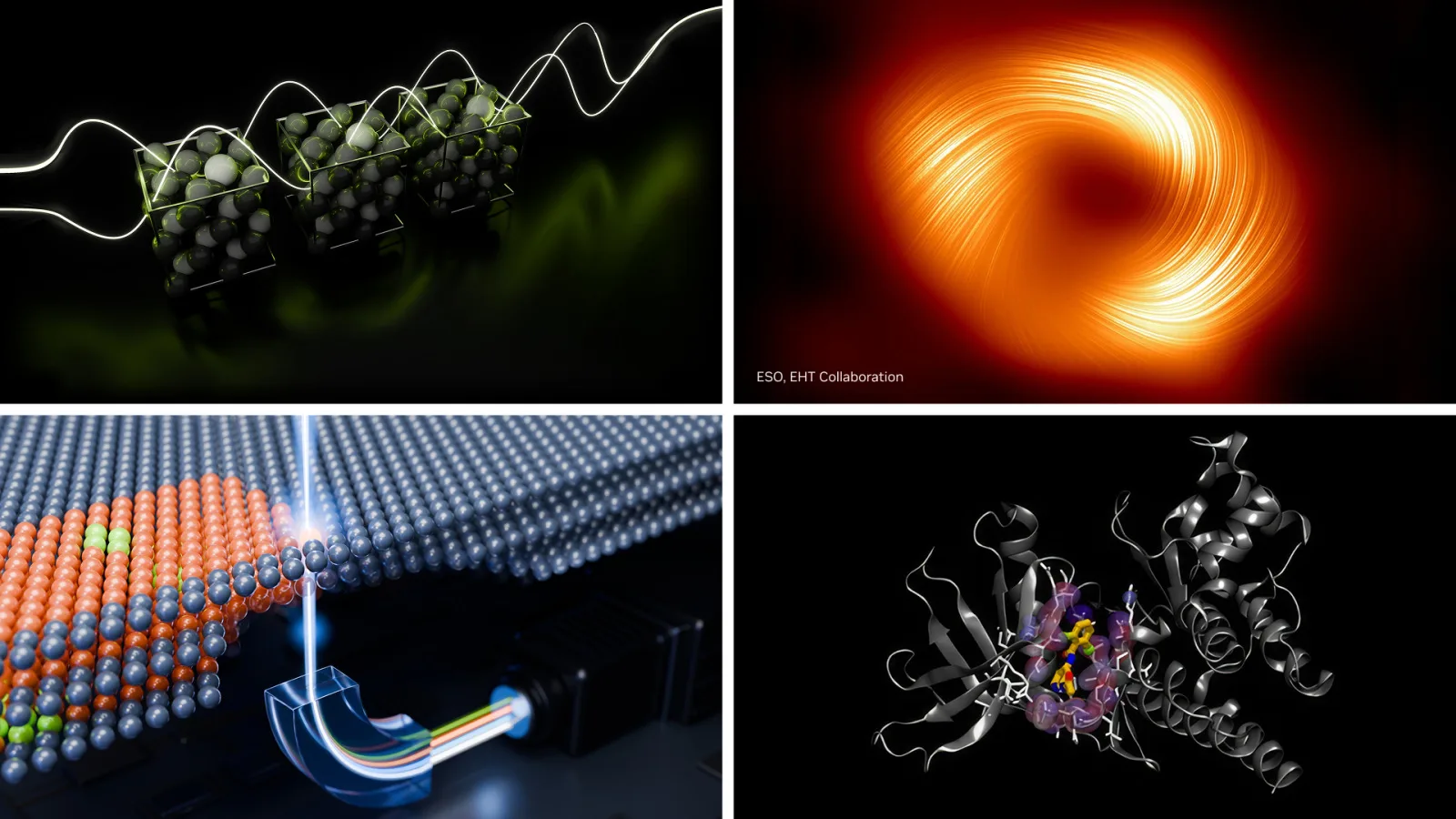
Image: NVIDIA · Source
NVIDIA has enhanced its CUDA-X libraries with new modules like cuPhoton, cuPotential, and cuSpa to accelerate data analysis and modeling in fields from astrophysics to drug discovery, enabling faster and more complex scientific simulations and AI-driven discoveries.
NVIDIA has announced significant expansions to its CUDA-X libraries, introducing new tools designed to accelerate scientific research across diverse disciplines such as astrophysics, fusion energy, molecular biology, and materials science. Key additions like cuPhoton, cuPotential, and cuSpa provide researchers with GPU-accelerated capabilities to analyze large datasets and simulate complex systems much faster than before.
One standout example is cuPhoton.xBeam, part of the cuPhoton Toolkit, which dramatically speeds up data correlation for the Event Horizon Telescope (EHT). The telescope’s global network of radio dishes generates petabytes of data requiring intense processing to create images of black holes. By leveraging cuPhoton.xBeam on multi-GPU systems, EHT researchers have reduced data correlation times from over a month to just eight minutes, enabling near-real-time reconstruction of phenomena like the Messier 87* black hole galaxy and improved study of black hole gas dynamics.
In fusion energy research, NVIDIA's cuPhoton.xLens module supports visualization and insight extraction during plasma simulations. Given that each simulation timestep on petascale computers traditionally takes days, this tool helps researchers interactively steer simulations using AI agents powered by NVIDIA Nemotron, potentially accelerating advances in fusion reactor design.
For drug discovery, the cuPotential library accelerates molecular dynamics simulations by up to three times, improving stability and accuracy. Collaborations with organizations such as the Simons Foundation’s Flatiron Institute and pharmaceutical companies are integrating cuPotential to identify molecular binding sites, generate synthetic training data for AI models, and boost the efficiency of workflows powered by engines like AMBER, NAMD, and GROMACS.
Materials science benefits from GPU-accelerated quantum mechanical calculations through Daviator for the Vienna Ab initio Simulation Package, promising up to 22-fold speed increases. Additionally, Lawrence Berkeley National Laboratory has employed the NVIDIA DAQIRI networking library for real-time electron microscopy data processing, enabling identification of novel elemental features during experiments.
Biological research gains from cuSpa, which accelerates cell polygonal spatial graph computations with speed improvements up to 900 times over CPU methods. Integrated with the rapids-singlecell framework, this enables ultra-fast single-cell data analysis, used by institutions like Memorial Sloan Kettering Cancer Center and companies such as Therna Biosciences and 10x Genomics to expedite therapeutic design and spatial biology insights. Furthermore, the open-source GPU-accelerated HMMER library accelerates protein sequence annotation by as much as 84 times, supporting foundation model development in biological applications.
Overall, NVIDIA’s enhanced CUDA-X libraries provide AI agents and researchers with powerful GPU-driven tools to handle vastly larger datasets and complex models, speeding up discovery across a broad range of scientific fields. Researchers leveraging these advancements can expect substantially faster analysis pipelines, real-time experimental feedback, and improved integration of AI methods in scientific workflows.
For more technical details, NVIDIA offers expanded documentation and case studies on their blog showcasing GPU-powered breakthroughs such as black hole image reconstruction and fusion simulation steering.
Sources and original reporting
Read the original source ↗
Comments (0)
No comments yet. Start the discussion.
Write a comment
Comments are published after moderation. Your name and comment will be visible publicly. Account