
NVIDIA Unveils Nemotron for Science, Rubin HPC GPU, and Vera CPU Expansion at SC26
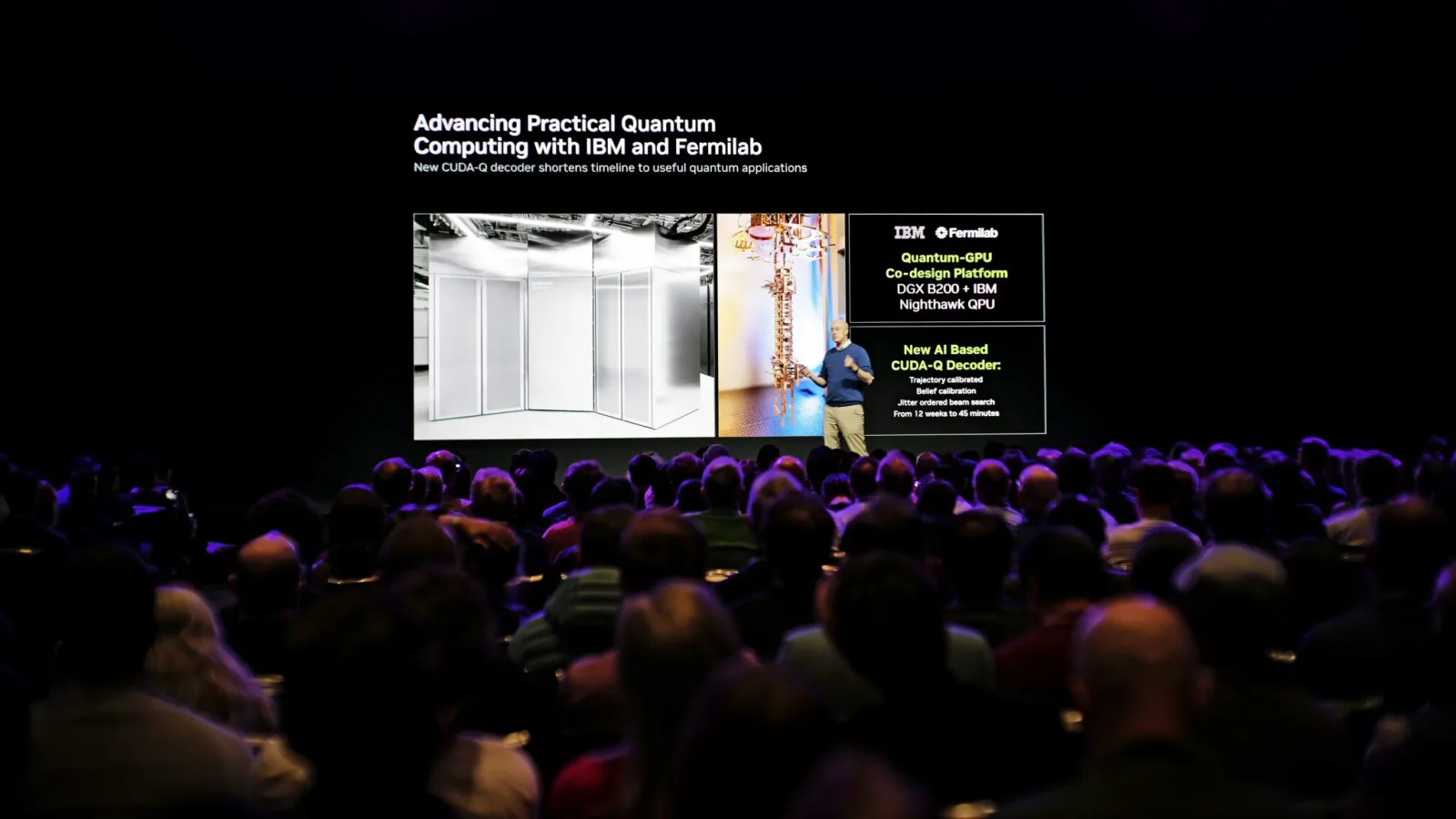
Image: NVIDIA · Source
At SC26, NVIDIA introduced Nemotron for Science to empower AI agents in research, announced the Rubin HPC GPU, and expanded the Vera CPU platform to accelerate scientific computing and quantum research.
At the SC26 conference in Chicago, NVIDIA Vice President Ian Buck presented a series of new computing innovations designed to advance scientific research through AI, high-performance computing (HPC), and quantum collaboration. Central to the announcements was Nemotron for Science, a toolkit combining NVIDIA's open Nemotron 3.5 Super VL model with a new open chemistry dataset and post-training recipes to help researchers build AI agents capable of planning experiments, running code, and validating results locally on systems such as DGX Spark or supercomputers.
Nemotron for Science is being adopted by prominent research centers including the U.S. Department of Energy’s Argonne National Laboratory and Jülich Supercomputing Centre. Argonne has integrated Nemotron into its StructBioReasoner multi-agent system to design and evaluate protein therapeutics, while agents powered by the toolkit have demonstrated the ability to autonomously plan hypotheses and identify novel binding sites. Open datasets like LitmusBench v0.2, containing nearly 50,000 chemistry questions, support model evaluation and post-training for improved reasoning in scientific tasks such as chemical behavior and molecular predictions.
NVIDIA also unveiled the Vera CPU rack-scale platform, designed explicitly for memory-intensive HPC workloads like climate modeling and molecular dynamics. Each Vera CPU contains 88 custom NVIDIA Olympus cores and delivers up to 1.2TB/s memory bandwidth, while the rack combines 192 Vera CPUs with approximately 300TB of memory and petabyte-scale storage in a liquid-cooled system. The German Climate Computing Center (DKRZ) has selected Vera CPUs for its upcoming HLRE-5 supercomputer, expected in early 2028, to enable large-scale climate simulation and AI research with enhanced energy efficiency and performance.
Complementing these platforms, NVIDIA introduced the Rubin HPC GPU within the Vera Rubin product family, engineered for science and analytics with over 50,000 CUDA cores and support for a range of precisions (FP64 to FP4). Rubin HPC adds sparse-data acceleration and seventh-generation NVLink connectivity, providing roughly three times the CUDA cores of the Hopper GPU generation, with availability anticipated in 2028.
Furthering quantum computing research, NVIDIA announced a new partnership with IBM and Fermi National Accelerator Laboratory to create a quantum computing co-design platform focused on error correction and applications research. NVIDIA detailed breakthroughs such as a CUDA-Q algorithm, TCBP-JOBS, which reduces error correction simulation time dramatically, from 12 weeks to 45 minutes. This collaboration pairs NVIDIA DGX B200 systems with IBM quantum computers, including those powered by the IBM Quantum Nighthawk processor.
The conference also highlighted NVIDIA's advancements in networking, showing deployments of NVIDIA Photonics co-packaged optics switches offering significant reliability and reduced bit errors. Overall, these announcements signify NVIDIA's commitment to integrating AI agents, custom CPUs, GPUs, and quantum technologies to accelerate discovery in scientific domains while controlling infrastructure and data ownership.
Sources and original reporting
Read the original source ↗
Comments (0)
No comments yet. Start the discussion.
Write a comment
Comments are published after moderation. Your name and comment will be visible publicly. Account