
Olaf Sakkers Challenges the Venture Capital Status Quo with RedBlue Capital
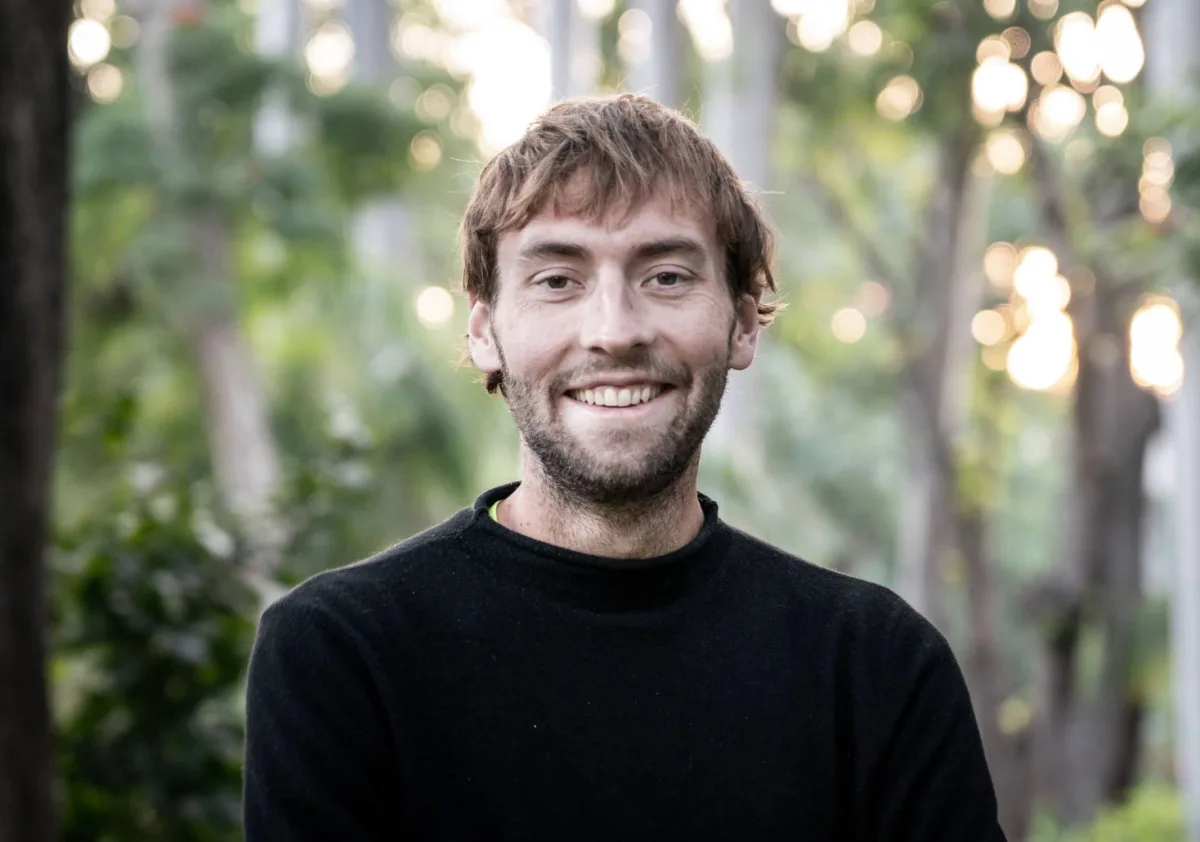
Image: TechCrunch · Source
Olaf Sakkers, founder of RedBlue Capital, is defying tough odds faced by first-time venture fund managers by growing his firm from $5 million to aiming for at least $50 million, focusing on robotics, logistics, manufacturing, and energy startups.
Venture capital has become an increasingly difficult landscape for first-time fund managers, with recent data showing that established firms dominate the investment landscape. According to PitchBook, firms raising their fourth or later funds captured over 88% of U.S. venture capital dollars in the first three quarters of 2026, while new funds attracted just 4.5%. In this challenging environment, Olaf Sakkers is proving that perseverance and strategic focus can overcome the hurdles.
Sakkers, originally from South Africa and educated at Princeton in anthropology with a focus on global health, began his professional journey in Israel, where an introduction led him into venture investing. Partnering early with Michael Granoff at Maniv Mobility, they built a fund by learning on the go, investing initially in Israeli startups that merged cybersecurity with automotive technologies. By 2021, Sakkers became an equal partner, but chose to found RedBlue Capital to pursue a more structured and scalable investment approach.
RedBlue Capital, founded in 2021, closed its first fund at around $5 million in 2023 and has since achieved a first close on a second fund targeted at $50 million. The firm’s investment thesis concentrates on what Sakkers calls the “real economy,” supporting startups in sectors like robotics, logistics, manufacturing, and energy. RedBlue typically invests check sizes between $50,000 and $100,000, often participating as a late-stage investor alongside leading venture firms such as Andreessen Horowitz and Thrive Capital.
Sakkers emphasizes that building trust with institutional limited partners is a long-term effort, as these investors prefer established brands that reduce downside risk. Thus, RedBlue leverages family offices and smaller investors initially, delivering value through active support and making meaningful introductions for portfolio companies. As a result, of 28 investments made, over half show paper gains, with a reported net internal rate of return significantly above 50%, though many gains remain unrealized with only one exit so far.
Supporting evidence includes portfolio companies like HappyRobot, which reached a $1.2 billion valuation following a $150 million Series C in August 2026, and robotics and AI startups such as Westmag, Flai, and Humble Robotics that have secured sizeable funding rounds recently. To manage operations and relationships efficiently, RedBlue employs a custom database built in collaboration with Claude Code, facilitating detailed record-keeping and asynchronous work.
Despite the dominance of large venture funds, data from Carta suggests smaller funds in the $1 million to $10 million range often outperform larger firms at the top end of returns. Sakkers remains undeterred by the lengthy timelines typical in physical-world technology investments, confident that even modest funds can sell stakes on secondary markets to manage liquidity.
In an industry where opportunities tend to accrue to established players, Olaf Sakkers’ journey with RedBlue Capital illustrates how focused strategy, disciplined investment, and persistent relationship-building can carve out a place for emerging managers. As he reflects, the commitment to this challenging path is fueled by a belief that “life is short, and regrets last forever.”
Sources and original reporting
Read the original source ↗
Comments (0)
No comments yet. Start the discussion.
Write a comment
Comments are published after moderation. Your name and comment will be visible publicly. Account