
Tesla to Invest €3 Billion to Expand Berlin Gigafactory for Cybercab Production
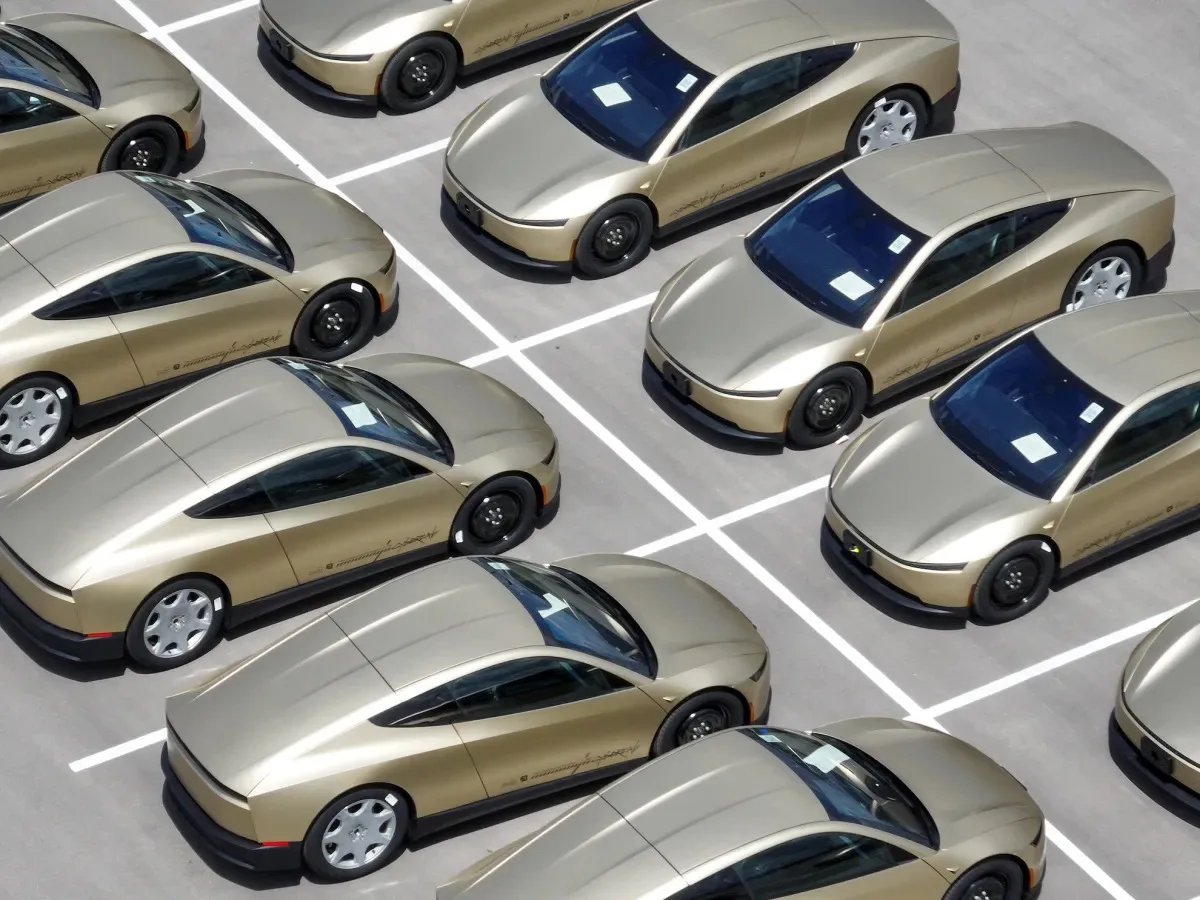
Image: TechCrunch · Source
Tesla announces a €3 billion expansion of its Berlin gigafactory to mass-produce Cybercabs starting 2029, supporting its shift toward autonomous, AI-driven vehicles.
Tesla is making a significant investment to accelerate production of its Cybercab, an autonomous, steering wheel-free robotaxi model. Two months after the initial Cybercab rollout, the company revealed plans to spend €3 billion (approximately $3.3 billion) to expand its Berlin gigafactory, located in Grünheide near Berlin. This expansion aims to enable mass production with an annual capacity of up to one million vehicles, according to André Thierig, Tesla’s senior director of manufacturing for the site.
Construction on the new facility is slated to begin in the first half of 2027, with production targeted to start in 2029. Tesla describes the expanded factory as the most technologically advanced among all its global facilities.
This move aligns with Tesla’s broader strategy to transform from a traditional automaker into an AI and robotics company. The Cybercab, first revealed in 2024 and publicly launched in September 2026, is a two-seat, gold-hued vehicle notable for lacking a steering wheel, pedals, and other conventional controls. It embodies Tesla’s approach to fully automated driving systems designed to eliminate the need for human oversight, contrasting with its current supervised Full Self-Driving system.
Tesla has already planned to end production of the Cybertruck next year to reallocate resources and factory space, including to support Cybercab manufacturing at its Austin, Texas plant. The Cybercab is currently operational in Texas with approximately 573 units in service primarily in Austin and soon in Dallas. While Tesla has historically restricted Cybercab operating hours, the relatively incident-free deployment has encouraged confidence to expand production and geographic reach.
Tesla’s self-driving technology relies exclusively on camera data rather than using sensors like lidar, differentiating it from competitors such as Waymo. Federal regulators are investigating Tesla’s self-certification of the Cybercab given its unique design features that challenge existing safety standards.
With rising electric vehicle adoption in Europe, Tesla’s new Berlin expansion puts the continent firmly on its Cybercab roadmap, supporting its vision for widespread autonomous vehicle deployment over the next several years.
Sources and original reporting
Read the original source ↗
Comments (0)
No comments yet. Start the discussion.
Write a comment
Comments are published after moderation. Your name and comment will be visible publicly. Account