
Superhuman Expands Go AI Assistant Across Docs, Mail, and Third-Party Integrations
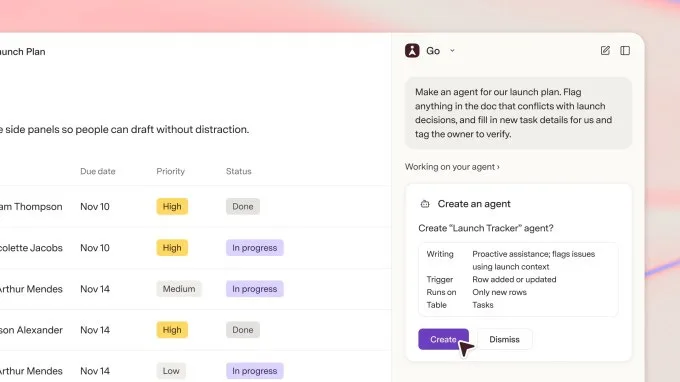
Image: Image Credits: SuperhumanImage Credits:Superhuman · Source
Superhuman enhances its AI capabilities by embedding its Go assistant throughout its platform, including Docs and Mail, and introducing new third-party agent integrations to deliver personalized productivity support.
Superhuman, the productivity software formerly known as Grammarly, is intensifying its focus on AI-driven assistance by broadening the reach of its Go assistant across its suite of products, including its email client and document editor. Following its rebranding last year, Superhuman has increasingly centered Go as the key AI agent to enhance user productivity through context-aware and personalized interactions.
The Go assistant is designed to seamlessly integrate with users' workflows by operating inline with the cursor, similar to Grammarly’s implementation, enabling real-time suggestions. It proactively monitors schedules, emails, and other inputs to draft responses or manage tasks efficiently. The assistant adapts to the user's writing style and preferences, improving its suggestions within both emails and Docs.
To deepen contextual understanding, Superhuman revamped its onboarding process, allowing users to connect various tools upfront, enabling Go to gather comprehensive context about their work. This connectivity is further extended through an SDK that adds 20 new connected agents, including integrations with DeepL for translation, Amplitude for analytics, Databricks for data collaboration, and Blackboard for education, among others.
Superhuman is also enhancing its document editor, enabling Go agents to operate natively within Docs and perform multiple background tasks concurrently. Users can set automated routines that trigger specific workflows upon certain events, streamlining productivity further.
In the email domain, where AI tools were previously central but limited, Go is now the primary assistant. It not only drafts emails but also organizes the inbox across multiple accounts like Google and Outlook, utilizing enterprise search capabilities that tap into company knowledge bases and connected services.
Building on its recent acquisition of Fathom, a live collaborative note-taking tool, Superhuman now enables shared note-taking sessions across teams. Post-meeting, Go can autonomously draft proposals or next steps, further automating follow-up tasks.
Superhuman CEO Shishir Mehrotra highlighted that Go has amassed over one million active users, indicating strong momentum. He emphasized that while Go's core focus is work-related tasks, it also supports personal email and schedule management, recognizing users as complete individuals with both professional and personal needs.
While Superhuman’s Go assistant contends in a crowded AI assistant market, it aims to differentiate by deeply integrating with productivity workflows and offering personalized, context-rich assistance, potentially positioning itself above more general-purpose AI tools like OpenAI’s Dots or Anthropic’s Claude Duet.

Sources and original reporting
Read the original source ↗
Comments (0)
No comments yet. Start the discussion.
Write a comment
Comments are published after moderation. Your name and comment will be visible publicly. Account