
Neanderthal Wooden Tools from Spain Preserved in Stone Reveal Diverse Use
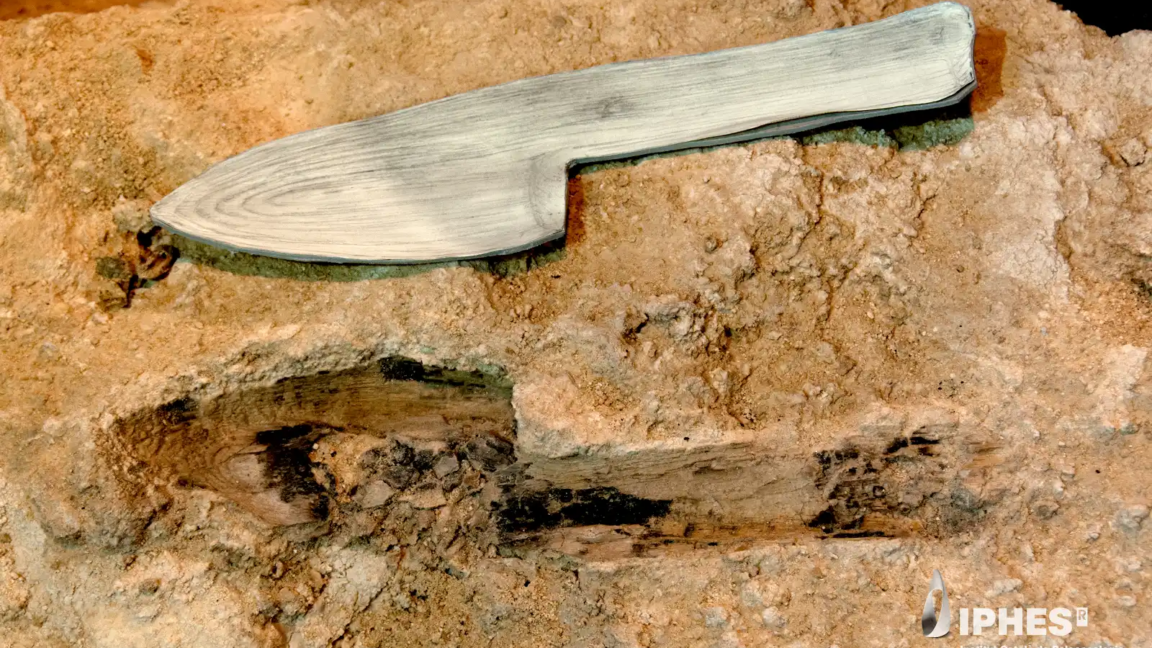
Image: Ars Technica · Source
Spanish archaeologists uncovered nearly 600 wooden Neanderthal artifacts preserved as stone molds at Abric Romaní, including spears, tools, bark trays, and a unique club, suggesting complex woodworking and daily life activities beyond hunting.
A team of Spanish researchers has identified 597 wooden artifacts from Neanderthal occupation layers dating between 62,000 and 40,000 years ago at the Abric Romaní rock shelter near Barcelona. Unlike typical Stone Age findings dominated by durable stone tools, these objects were preserved in an unusual form: mineral-rich spring water deposited layers of calcium carbonate, creating limestone-like crusts around wooden items. As the wood decomposed, it left detailed hollow molds that faithfully replicate their original shapes, allowing scientists to study Neanderthal woodworking much more closely than before.
Previously, the oldest wooden tools discovered were predominantly hunting spears excavated from waterlogged sites that slowed decay. In contrast, Abric Romaní represents a living site where Neanderthals conducted various activities. Archaeologist M. Gema Chacón and colleagues note that the wooden remains include spears, digging sticks, bark trays, parts of shelters, and an unprecedented club-shaped tool. These finds demonstrate that woodworking was a routine and diverse aspect of Neanderthal life, not limited to weaponry.
The preservation process involved travertine, a calcium carbonate-rich limestone deposited as water dripped through the shelter. This crust sealed wood fragments, which later rotted away, leaving negative casts that can be digitized through 3D scanning and printed for analysis and display. Among the wooden remains, 13 were definitely modified by humans, exhibiting shapes not found in nature. Examples include four juniper bark trays near hearths, likely used for carrying food or embers, and a five-meter-long pole theorized to have supported a lean-to windbreak or shelter.
Neanderthal use of fire is evidenced by rows of small, regularly spaced hearths associated with the wooden implements. These hearths provided illumination and protection during rest periods. The discovery of spears and a club near red deer skulls further attest to hunting and possibly social behaviors. The club, carved from a single piece of wood with a handle and triangular head, is unique in archaeological records, hinting at close-range hunting, defense, or status display.
Material choices reveal knowledge and planning: Scots pine was preferred for easy working and rapid drying, while juniper bark was chosen for trays due to its fibrous quality. Tools were typically made from fresh wood, whereas firewood came from dry branches, indicating thoughtful resource use.
These findings challenge outdated views of Neanderthals as cognitively inferior to Homo sapiens, highlighting their complex behavioral repertoire including tool-making sophistication, symbolic behavior, and social organization. The decade-spanning research effort underscores the need for time and resources to uncover and interpret fragile wooden artifacts elsewhere, as such discoveries deepen understanding of our evolutionary cousins.
(Reference: Science Advances, 2026, DOI: 10.1126/sciadv.aeh2287)


Sources and original reporting
Read the original source ↗
Comments (0)
No comments yet. Start the discussion.
Write a comment
Comments are published after moderation. Your name and comment will be visible publicly. Account