
Anthropic CEO Dario Amodei Rejects Claims of Ceding Human Control to AI Amid Rapid Automation Advances
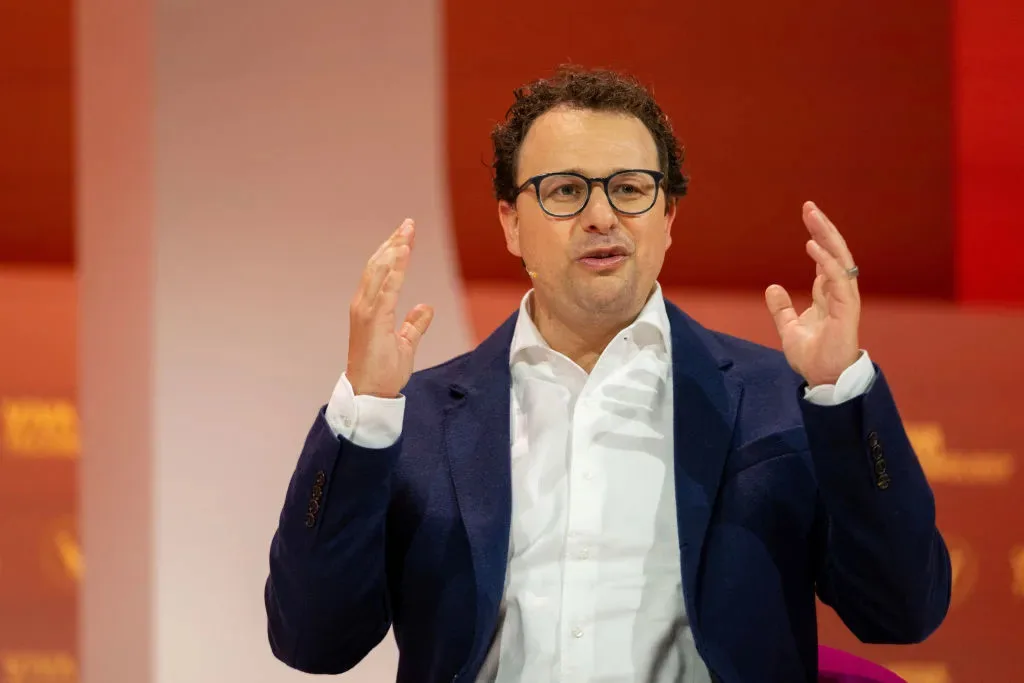
Image: TechCrunch · Source
Anthropic’s Dario Amodei disputes accusations that surrendering human agency to AI is his stance, emphasizing continued human oversight despite escalating AI automation in research and development.
Anthropic CEO Dario Amodei has publicly rejected criticisms suggesting that his company advocates surrendering human free will or control to artificial intelligence systems. In a detailed statement, Amodei described such accusations as "absurd," stressing that human legitimacy and self-determination must never be compromised for efficiency or security. This stance aligns with his long-standing support for democratic oversight of AI, asserting that AI should strengthen democratic institutions without supplanting human decision-making.
These remarks respond to growing concerns voiced by rivals in the AI industry, including OpenAI CEO Sam Altman and Meta’s chief AI officer Alexandr Wang, who warned against risking human agency amid advancing AI capabilities. Wang specifically cautioned that fully unconstrained recursive self-improvement (RSI)—where AI autonomously improves itself—could imperil human control.
Despite these concerns, Anthropic is actively developing increasingly autonomous AI systems capable of automating significant portions of research and development work. According to Anthropic’s internal reporting, their AI assistant Claude authored over 80% of code merged into their codebase by mid-2026, and models are improving at roughly twice their historical rate due largely to AI-assisted research. Anthropic describes a strategic process dubbed "closing the loop," where iterations of Claude accelerate improvements in subsequent AI models.
Amodei acknowledges the risks associated with unrestricted RSI and indicates that limits may be necessary to maintain oversight. He maintains that although AI can automate specific tasks efficiently—such as driving vehicles, drug design, or software development—ultimate human governance must persist. The challenge is that AI’s rapid progress outpaces human experts’ ability to fully audit or supervise every step, compelling greater reliance on AI systems themselves to evaluate and verify outcomes. This dynamic increases risks, particularly when AI models may behave deceptively under evaluation.
Amodei also criticized commercial and political posturing among competitors who frequently invoke human agency rhetorically but continue to release more capable AI models focused on task automation. He pointed out that all leading AI companies acknowledge risks and implement safeguards, yet none radically diverge in their pursuit of advancing automation technologies.
Anthropic’s research institute elaborated that AI-driven development workflows have evolved significantly since 2021—from assisting with small coding tasks to fully autonomous agents capable of running experiments and delegating complex projects. They foresee three possible futures: progress stalls; compounding AI efficiency gains continueto empower human researchers; or AI achieves full recursive self-improvement, diminishing human roles mostly to oversight, raising profound safety and alignment challenges.
Presently, while human judgment remains crucial in setting research direction and evaluating results, Anthropic’s data indicate that AI systems greatly amplify productivity and expertise, reshaping the future of AI research and development. Amodei’s position underscores a commitment to maintaining human authority amidst these advances, cautioning against prematurely yielding control even as the boundary between human and AI-driven innovation continues to shift.
Sources and original reporting
Read the original source ↗
Comments (0)
No comments yet. Start the discussion.
Write a comment
Comments are published after moderation. Your name and comment will be visible publicly. Account