
Record Office Vacancy in Helsinki Spurs Calls for Transforming Commercial Spaces
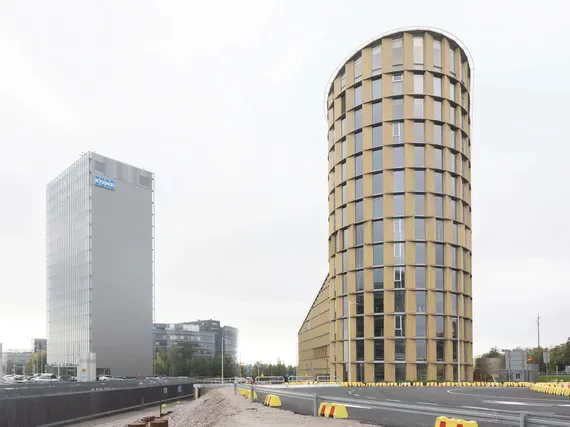
Image: Tekniikka & Talous · Source
Helsinki's office vacancy rate has surged to over 18%, the highest ever, driven by prolonged economic stagnation and remote work preferences, prompting experts to urge repurposing office buildings into housing and other uses.
The Helsinki metropolitan area is facing a severe office space glut, with vacancy rates hitting an unprecedented 18% by the end of September 2026. This marks a sharp rise from approximately 12% at the start of the year and represents the worst office underutilization seen in decades. Several key districts, including Sörnäinen, Pitäjänmäki, Vallila, and Kalasatama, are notably affected by high vacancy.
According to Tero Lehtonen, CEO of real estate advisory firm Axiom Advisors, this situation is deemed unsustainable. He highlights that most major European capitals maintain prime office vacancy rates well below 10%, such as Stockholm at 6.4% and Copenhagen even lower, illustrating Helsinki’s exceptionally poor market conditions.
The oversupply is linked to a combination of a prolonged period of weak economic growth spanning 15 to 20 years and a strong preference among Finnish workers for remote work, reducing demand for office space. The peak of office construction coincided with Nokia’s boom in the early 2000s, when large amounts of office properties were developed in areas like Pitäjänmäki and Keilaniemi. The company’s subsequent decline had lasting repercussions on the market, contributing to structural overcapacity.
The total amount of vacant office space on the Helsinki region market may now exceed 1.5 million square meters, a significant increase from about one million in previous years. Despite the glut, newly signed office leases in Helsinki’s city center have seen rent increases, with prime office rents reaching approximately 42.50 euros per square meter.
Lehtonen advises that simply encouraging workers to return to offices will not resolve the problem because much of the existing stock does not meet modern users’ quality or location requirements. Instead, a systematic approach involving property owners, planners, and developers working collaboratively to repurpose or reduce office stock is needed. Potential transformations include converting offices into residential apartments, hotels, student housing, or service apartments, with demolition as a possibility.
To date, this office space surplus has dampened investment appetite and transaction volumes in Finland’s commercial real estate sector, with only around 200 million euros transacted in office property sales from January to September 2026—an all-time low.
As Helsinki’s office market faces this critical challenge, a decade-long effort to adapt to shifting economic realities and work habits may be essential to rebalancing and revitalizing the sector.
Sources and original reporting
Read the original source ↗
Comments (0)
No comments yet. Start the discussion.
Write a comment
Comments are published after moderation. Your name and comment will be visible publicly. Account