
Tailscale: Practical Zero Trust VPN and Secure Networking for Distributed Teams and IoT
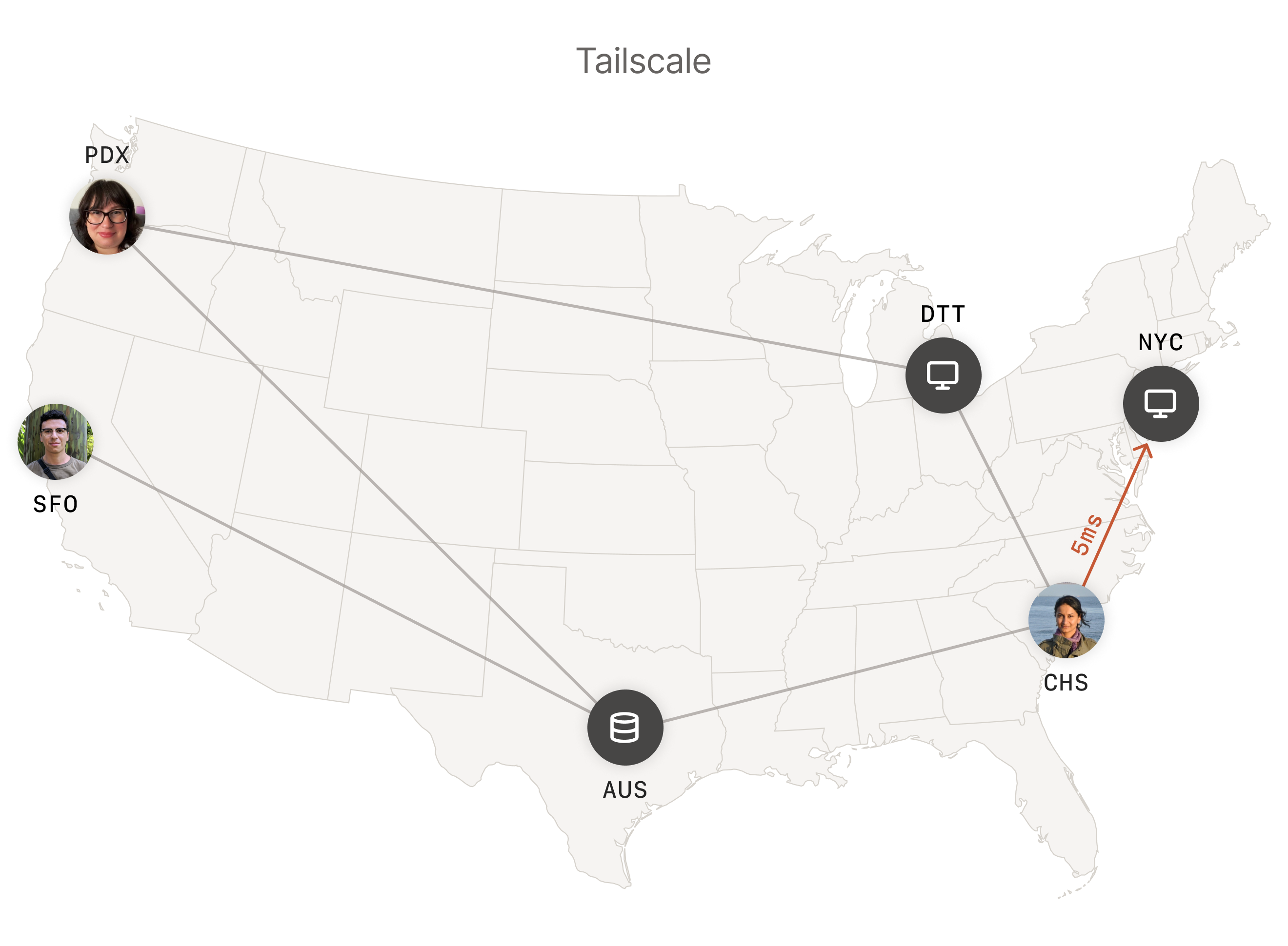
Image: Tailscale · Source
Tailscale offers a modern, zero trust connectivity platform leveraging WireGuard, ideal for secure peer-to-peer networking across devices, replacing legacy VPNs with minimal configuration and scalable security features.
Introduction to Tailscale and Its Core Purpose
Tailscale is a networking platform engineered to provide secure and seamless connectivity across devices and services without the configuration complexity typical of traditional VPNs. It leverages a peer-to-peer mesh topology based on the WireGuard protocol—a modern, open-source VPN technology noted for its minimalistic design, strong cryptography, and high performance. Tailscale’s design embraces Zero Trust networking principles that focus on identity-based authentication and fine-grained access control. This makes it suitable for a wide range of users including remote teams, developers, IT and security professionals, and operators managing distributed IoT and AI workloads. By replacing legacy VPN, Secure Access Service Edge (SASE), and Privileged Access Management (PAM) solutions, Tailscale seeks to simplify secure network access in complex cloud and hybrid environments.
Fundamental Architecture and Mechanisms
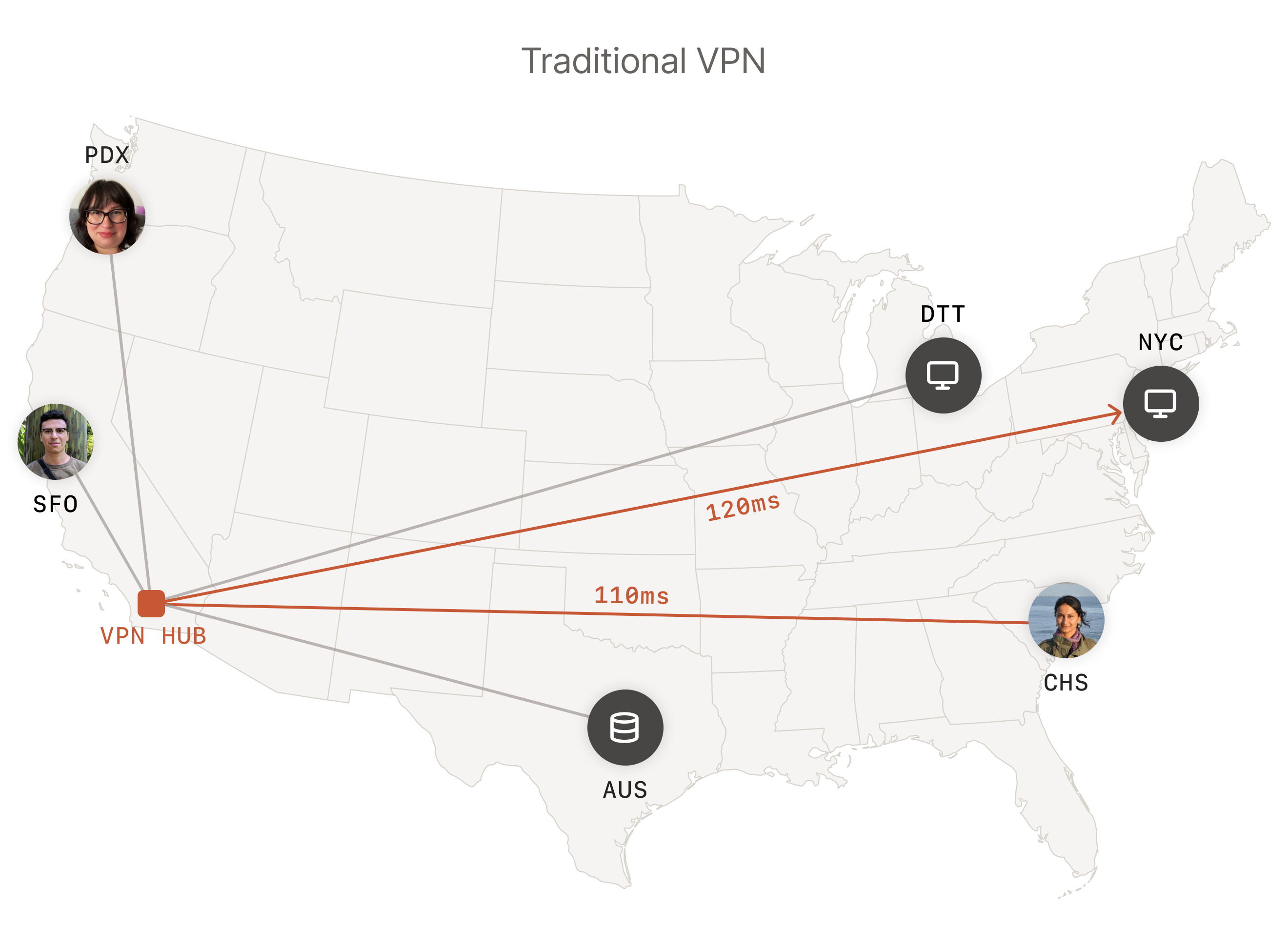
Central to Tailscale is the concept of a “tailnet,” a private mesh network automatically assembled from devices running the Tailscale client software. Each device forms end-to-end encrypted WireGuard tunnels directly with other tailnet peers, enabling point-to-point connectivity and avoiding centralized bottlenecks. Unlike traditional VPNs funneling traffic through a single gateway, this decentralization reduces latency and the risk of a single point of failure. However, for cases requiring centralized control over traffic, such as enforcement of egress policies or routing via specific geographic locations, Tailscale supports exit nodes that act like conventional VPN gateways. The control plane manages device authentication and coordination but does not relay user data, preserving privacy while simplifying key management.
Streamlined Setup and User Experience
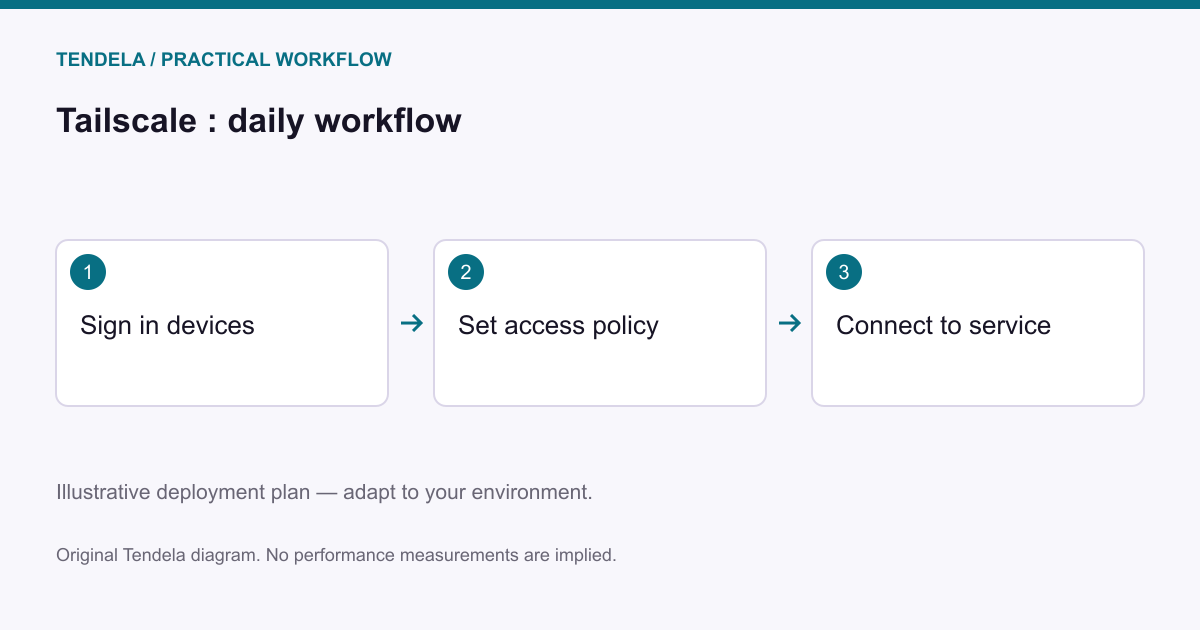
Tailscale emphasizes rapid, user-friendly deployment. After creating an account and authenticating a few devices, a tailnet is automatically created with default access policies that often suffice for many scenarios. Users install the Tailscale client on their devices without needing to configure firewall rules, port forwarding, or complex NAT traversal settings—these are managed transparently. This “zero-config” approach lowers the technical barriers to secure networking, enabling not only IT professionals but also less technical users to establish secure private networks quickly.
Security Model and Privacy Features
Tailscale’s security model employs modern cryptographic best practices inherited from WireGuard, providing strong end-to-end encryption between devices. The platform’s identity-centric model ensures connections are established only between authenticated, authorized devices, enforced by robust access control policies and mechanisms like Tailnet Lock, which restricts network additions to approved devices. The separation of control and data planes means that authentication and device coordination occur through the control plane, while actual data traffic flows directly between devices, maintaining data confidentiality and integrity.
Scalability and Adaptability
The distributed mesh network design of Tailscale allows it to scale from individual personal networks up to large enterprises distributed geographically. Adding more devices or users has minimal performance impact as the peer-to-peer nature removes central bottlenecks. It integrates with existing identity providers and infrastructure agnostically, facilitating smooth adoption in varied IT ecosystems. This adaptability ensures that as organizations grow or shift their requirements, Tailscale maintains its security posture and network performance without extensive reconfiguration.
Use Case Example 1: Remote Developer Collaboration
**User and Task:** Distributed software developers need secure, low-latency connectivity to share backend services and collaborate on in-progress projects.
**Prerequisites:** Each developer installs the Tailscale client on their devices and joins a common tailnet authenticated via an organizational or personal account.
**Steps:** Upon device authentication, connections to the tailnet are established automatically. Identity-based access controls govern which services and devices each developer can reach. Developers access back-end services, databases, or test servers directly over encrypted tunnels.
**Successful Outcome:** Developers communicate securely and effortlessly without VPN complexity, enjoying direct device-to-device connections with minimal latency and seamless firewall traversal.
**Limitations and Checks:** Internet access is necessary on all devices. Administrators should enforce rigorous access policies to prevent unauthorized resource exposure. Integration with CI/CD pipelines requires reference to official documentation to ensure secure automation.
Use Case Example 2: IT Management of a Distributed Enterprise Workforce
**User and Task:** IT administrators want to provide secure remote access to internal resources for employees and contractors with minimal technical overhead.
**Prerequisites:** The organization sets up Tailscale accounts linked to corporate identity providers (e.g., Single Sign-On) and centralizes policy management.
**Steps:** Remote users install the client, authenticate using corporate credentials, and automatically gain appropriate access to internal resources based on policy. Zero Trust principles are enforced dynamically with audit logging.
**Successful Outcome:** Users securely connect without complicated VPN client setups. IT gains centralized control and visibility, with the ability to revoke or adjust access instantly and audit sessions.
**Limitations and Checks:** Reliance on external identity and control infrastructure introduces operational dependencies. Regular policy reviews are essential to avoid privilege creep. Compliance with organizational monitoring or reporting requirements must be validated against current documentation.
Use Case Example 3: Home Media Server Access for Enthusiasts
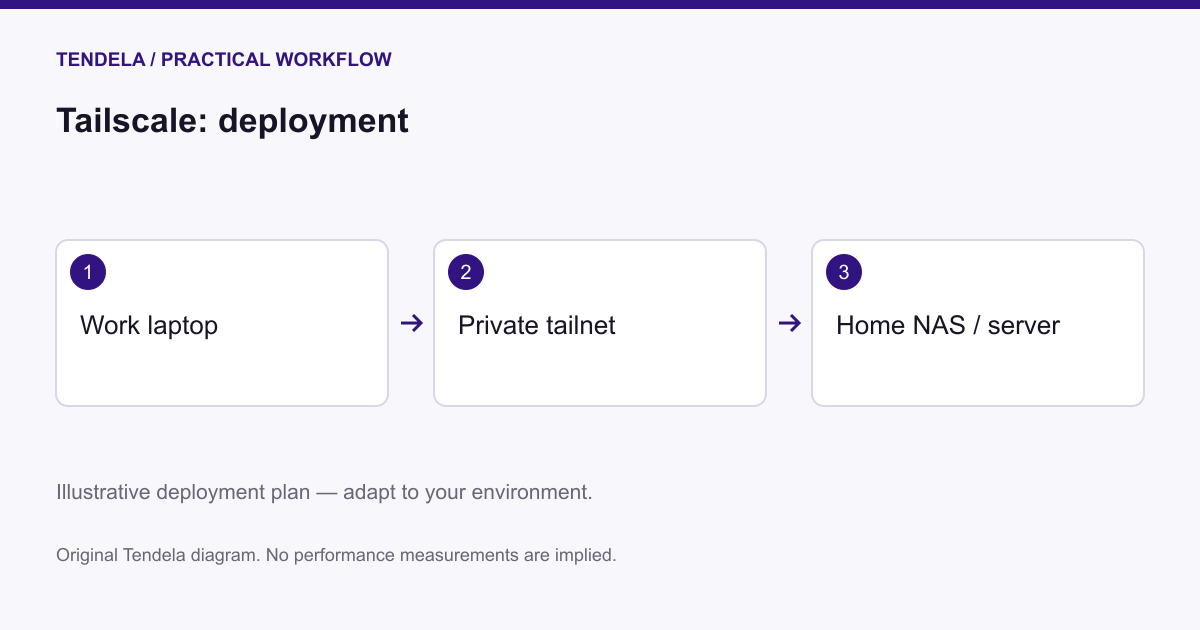
**User and Task:** Individual users want to access personal media servers remotely without exposing devices to the public internet or complex network setups.
**Prerequisites:** The media server and client devices install Tailscale clients and are linked in a personal tailnet.
**Steps:** After authenticating devices, client devices connect over encrypted tunnels directly to the media server without needing port forwarding.
**Successful Outcome:** Users enjoy private, reliable, low-latency streaming of media remotely with no public IP exposure or firewall modifications.
**Limitations and Checks:** Successful device discovery depends on Tailscale's infrastructure. Complex home network topologies could require reviewing advanced routing features in documentation.
Use Case Example 4: Managing IoT Device Fleets Securely
**User and Task:** Operations teams manage thousands of IoT devices distributed globally and require secure, auditable access without opening devices to the public internet.
**Prerequisites:** IoT devices run Tailscale clients (where supported) or connect via gateways into the tailnet. DevOps configure centralized identity and access policies.
**Steps:** Each IoT device joins the tailnet and establishes encrypted tunnels to management consoles or automation systems. Fault-tolerant mesh topology ensures devices stay reachable even if some network paths fail.
**Successful Outcome:** Management teams perform remote monitoring and updates securely with fine-grained, logged access, avoiding the security risks of exposed device endpoints.
**Limitations and Checks:** Hardware or OS limitations may restrict Tailscale support on some IoT devices; gateways may be needed. Network constraints requiring UDP blocking or restrictive firewalls may necessitate additional configuration as per documentation.
Platform Compatibility and Network Requirements
Tailscale supports Windows, macOS, Linux, iOS, and Android, enabling broad cross-platform connectivity. The underlying WireGuard protocol requires UDP support for tunnels; while Tailscale automatically handles NAT traversal and firewall piercing, some restrictive network environments may require manual adjustments, detailed in official guides. For enterprise use, integration with identity providers and single sign-on systems is supported but must be configured per organizational policies.
Administrative and Maintenance Considerations
Ongoing operation focuses on managing user and device access controls, updating client software promptly to incorporate security patches, and auditing network usage. Since the control plane automates key management and coordination, administrators concentrate on governance rather than low-level network maintenance. Periodic review of device membership and access policies is essential to maintain security and compliance, especially in dynamic or large-scale deployments.
Security Boundaries and Operational Considerations
While all data traffic benefits from strong end-to-end encryption, Tailscale’s security depends on the integrity of identity providers and the control plane. Compromise of these components could expose the tailnet. Remote devices outside the tailnet cannot communicate unless routed through exit nodes or gateways, which affects architectural designs. Organizations with stringent on-premise routing rules or those needing completely self-hosted control planes should evaluate whether Tailscale meets their requirements.
Suitability and Target Audience
Tailscale suits teams and organizations seeking rapid, secure connectivity deployment without maintaining complex VPN infrastructure. Its appeal spans developers, IT administrators, and security teams managing geographically distributed workers, multi-cloud workloads, or IoT fleets. It is less suitable for environments requiring exclusively on-premise control planes or very restrictive network conditions disabling UDP traffic.
---
This review is based on Tailscale’s official documentation as of September 30, 2025. It presents vendor-described features, architectures, and typical use cases without independent testing or performance validation. Interested readers should consult the latest official resources for detailed implementation requirements and compatibility guidance.
Sources and original reporting
Read the original source ↗
Comments (0)
No comments yet. Start the discussion.
Write a comment
Comments are published after moderation. Your name and comment will be visible publicly. Account